



The house has always been in business to make money. That is hardly a revelation, and anyone who has spent meaningful time gambling understands it. What is changing, and changing rapidly, is the relationship between the house, the player, and the market itself. Technology, artificial intelligence, sophisticated modeling, and entirely new wagering platforms are reshaping an industry that has existed in one form or another for centuries. For the professional gambler, the question isn’t whether these changes are coming. They’re here. The question is whether you understand them well enough to recognize an opportunity before somebody else does, and whether you possess the discipline to take advantage of it when you find one.
I spent years making my living as a professional horseplayer. I learned a great deal about gambling during those years, sometimes the hard way, and perhaps the most important lesson was that knowing the rules of the game and knowing how to play the game are two very different things. The rules extend well beyond what is permitted, how a wager is calculated, or what happens when you win. They include understanding the people you’re competing against, the price you’re paying, the structure of the market, and the circumstances under which you’re better off keeping your money in your pocket. Sometimes the best bet is no bet. That is a rule, and one that more gamblers should learn before worrying about anything else.
The House Knows More Than You Think
Over the weekend, The New York Times published an investigation into DraftKings that should interest anyone who gambles, whether recreationally or professionally. The reporting, based on internal documents and interviews with former employees, described the company’s use of customer data and artificial intelligence to identify bettors likely to respond to promotions by gambling and losing more. One former analyst, Jayden Butts, described testing a model that assigned customers an internal score called elasticity, helping determine who would receive additional incentives. Other former employees described concerns about how such targeting might affect vulnerable gamblers and said separate projects designed to predict problem gambling had been discontinued. DraftKings disputed aspects of the reporting, described the promotional testing as preliminary and inconclusive, and said its existing responsible-gambling approach was preferable to the predictive technology it evaluated.
CBS News followed with reporting involving FanDuel, including allegations from a former employee that customer data could be used to identify people whose betting activity had declined and encourage them to return. FanDuel strongly disputed claims that it fails to address problem gambling, telling CBS that it had invested $158 million in responsible gaming and removed 5,700 customers because of their gambling behavior during the previous year.
I have no difficulty understanding why a gambling company wants to identify its profitable customers. That’s business. I do think there is an important difference between identifying someone who enjoys gambling and identifying someone whose losses or behavior suggest they may be vulnerable, then using that knowledge to encourage more activity. The difference matters, and the companies’ responses deserve to be considered alongside the allegations. Still, the larger lesson for anyone entering a wagering market is unmistakable. The operator is studying you. Are you studying the operator?
Sportsbooks employ people and technology to identify customers who consistently beat their prices. Winning bettors can find their limits reduced or their accounts restricted. It is a familiar part of the business, and it presents a practical challenge for anyone attempting to gamble professionally. Your edge is of limited value if you cannot get enough money down to make it meaningful. At the other end of the spectrum, a sportsbook’s willingness to take a particularly large bet is not necessarily a compliment to the player. If a casino is happy to accept your million-dollar wager, I wouldn’t automatically consider that something worth bragging about. To the contrary. I’d want to know what the casino knows that I don’t.
Professional gamblers have long understood the importance of managing their exposure to the people taking their action. The landscape is different today, with greater surveillance, faster information sharing, and increasingly sophisticated customer profiling, but the principle hasn’t changed. The house is trying to maximize its return. You are trying to maximize yours. Understanding that relationship is part of understanding the game.
What Happens When the House Is No Longer Your Opponent?
Prediction markets introduce an interesting alternative to the traditional sportsbook model. Instead of simply accepting a price offered by a bookmaker, participants can buy and sell contracts in a marketplace. The exchange generally earns revenue through transaction-related fees rather than needing an individual customer to lose a wager. The essential economic relationship changes. You are competing against the market, although market makers and other participants may still have direct financial interests in the outcome of your trades.
That distinction matters to me. A traditional sportsbook generally has a financial interest in the bets it accepts, even when it manages or offsets that exposure. A prediction-market exchange can earn fees from trading activity regardless of which side of a particular contract ultimately wins. Neither structure eliminates the need to understand the price, the costs, or the competition. Replacing the bookmaker with a marketplace doesn’t eliminate the sharks. It changes where they swim.
The prediction-market industry is developing at a remarkable pace, and its legal framework is struggling to keep up. In a September 17 article for InGame, Brett Smiley examined why the Supreme Court may be the wrong institution to determine the industry’s future. His argument centers on the Commodity Exchange Act, a law amended repeatedly over decades for purposes that were not necessarily designed around today’s sports-event contracts. Courts are now being asked to determine how that accumulated legislation applies to an industry that looks very different from the one lawmakers were addressing when many of its provisions were written.
I understand Smiley’s argument that Congress is better equipped to establish a deliberate, comprehensive framework. I’m less convinced that Congress will actually do it before the courts make consequential decisions. The Supreme Court has already been asked to review a major dispute involving Kalshi and New Jersey, and other litigation continues over the relationship between federal commodities regulation, state gambling laws, and tribal gaming rights. The courts can interpret the law that exists. Congress can write the law it believes should exist. Whether Congress can agree on what that should look like, and when, is another matter entirely.
My suspicion is that the Supreme Court will end up making determinations that shape much of this industry’s immediate future. I’d rather be wrong about Congress’s ability to address it. What I wouldn’t do is confuse a court’s interpretation of an existing statute with a comprehensive examination of what makes a wagering marketplace fair, competitive, and commercially sustainable. Those are different questions, and gamblers have a stake in both.
For the professional player, however, the legal debate is only one part of the equation. Whether a contract is classified as a swap, a wager, or something else may determine where and how it can be offered. It doesn’t tell me whether the price is right, whether I can obtain the liquidity I need, or whether the person taking the other side knows something I don’t. A position can be traded, and a bet can be locked, but neither terminology nor structure creates an edge by itself.
Horse Racing Had a Hundred-Year Head Start
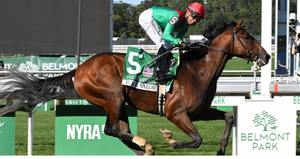
Horse racing offers a particularly revealing comparison because it has operated under a pari-mutuel model for generations. The racetrack takes its percentage, and the remaining money is distributed among the winning wagers. The operator generally isn’t rooting against your horse because it needs your particular ticket to lose. You are competing against the other people in the pool. It is a fundamentally different relationship from the traditional bookmaker model, and one I’ve always appreciated.
Unfortunately, horse racing has done an extraordinary job of squandering its head start in the American gambling marketplace. The industry had the wagering infrastructure, the history, the loyal customers, and a product that could be distributed almost anywhere. In my view, it failed in three critical areas: marketing, product development, and governance. That’s three reasons, and I suspect anyone who has followed my writing knows I could provide a considerably longer list.
The numbers tell their own story. According to Equibase, approximately $11.03 billion was wagered on US Thoroughbred racing in 2025, down from $11.27 billion the previous year. The American Gaming Association reported $166.94 billion in legal US sports betting handle during the same year. These are not identical markets, and the comparisons have limitations, but the difference in wagering volume is difficult to ignore. Racing was once one of America’s principal legal gambling outlets. Today, newer competitors are handling multiples of its business.
What makes the situation particularly frustrating is that horse racing has a product with something many gamblers should find appealing: an opportunity to compete against other players rather than simply accept the house’s price. Yet the industry has spent years marketing itself as entertainment while treating the wagering customer as an afterthought. I enjoy watching a great horse as much as anyone, but I didn’t make my living admiring horses in the paddock. I made it gambling on them. There is nothing wrong with entertainment. There is something very wrong with forgetting who pays the bills. I don’t like mint juleps, and I suspect I am not alone. I don’t care what hat anyone is wearing but me.
Then there is the issue of computer-assisted wagering. I have written extensively about CAW operations, and I have never believed that sophisticated players should be penalized simply for being sophisticated. I want to beat the other guy because I played better, not because the rules were designed to prevent him from using his brain. What I object to is an environment in which differences in access, rebates, technology, and wagering conditions can create materially different economic propositions for participants competing in the same pools.
We are supposedly driving on the same racetrack, but the everyday retail player gets the keys to a Ford Focus while certain well-capitalized players are handed the keys to an AMG. The retail player is then told to compete harder. That’s a pretty good trick if you can get away with it, but it isn’t much of a long-term business model for attracting and retaining the people who provide the foundation of your wagering pools.
There is a lesson here for prediction markets and every other emerging wagering platform. Equal access to a website is not necessarily equal access to an opportunity. Transaction costs, rebates, information, execution speed, and available capital can all influence the economics of a wager. Some participants will always be better informed and better equipped than others. That’s competition. But when the structure itself provides different conditions for different classes of players, the operator should understand the consequences, especially if it expects those players to remain customers.
The Next Edge Won’t Necessarily Look Like the Last One
Technology has changed the wagering business before. It will change it again. The difference today is the speed at which information, computing power, and increasingly sophisticated models are becoming available. Artificial intelligence can analyze quantities of data that would have been unimaginable to most gamblers not very long ago. Markets can react almost instantly. The player sitting across from you may not be another person studying a racing form or watching a football game. It may be a highly capitalized operation using models, automation, and information you don’t even know exists.
That doesn’t mean the professional gambler is finished. It means the professional who refuses to adapt may be.
Gamblers are creatures of habit. We find something that works, develop confidence in it, and become reluctant to change. I understand that instinct. I also understand how dangerous it can be. An edge isn’t a family heirloom. You don’t get to keep it forever because you discovered it first. If the market catches up, the price changes, or the competition becomes better equipped, the advantage you once enjoyed can disappear while you’re still congratulating yourself for having found it.
The professional’s job is not to defend yesterday’s edge. It is to recognize tomorrow’s opportunity. That requires adaptation, evolution, and the willingness to abandon something that once worked when the circumstances no longer justify it. It also requires a kind of mental toughness that I don’t believe can be purchased along with a software subscription. The latest model can tell you a great deal. It cannot make you exercise discipline if you are determined to ignore what it tells you.
I never approached wagering with the goal of cashing the most tickets. I wanted to win the most money. Those are not the same objective, despite how frequently gamblers behave as though they are. If I have a strong opinion on a horse, I don’t necessarily want to dilute that opinion by covering every combination that might beat me. I want to construct a wager that allows me to capitalize when I’m right while preserving enough bankroll to survive when I’m wrong. The same philosophy applies to multi-race wagers, sports betting, and, with adjustments for their different mechanics, prediction markets.
Human nature works against that approach. We want to cash. We want action. We want to be involved in the next race, the next game, and the next opportunity. We convince ourselves that adding combinations makes us smarter because it increases our chances of collecting something. Sometimes it does make sense to spread. Sometimes it simply means spending more money to insure ourselves against the possibility that our strongest opinion was wrong. You can cash more tickets and make less money doing it. I have never understood why that should be considered a victory.
The ability to pass on a wager is just as important. A horse can be the most likely winner in a race and still be a terrible bet. A football team can win comfortably without having been worth laying the points. A prediction contract can settle exactly as you anticipated and still represent a poor decision if the price and risk were wrong when you entered the position. Being right about an outcome is not the same as making a good bet. The professional has to understand the difference, and the increasing sophistication of the competition only makes that distinction more important.
There is another development I find interesting: the evolution of pooled capital and syndicates. The concept is hardly new to gambling, but technology is creating different ways for participants to organize, fund, and manage collective wagers. Companies such as Colossus Bets have developed syndicate products that allow participants to fund shared tickets, with designated captains making selections and technology handling contributions and distributions. Their integration offerings also demonstrate how wagering products can be incorporated into other businesses’ platforms.
That opens interesting possibilities, particularly for skilled players whose opportunities may be constrained by capital or the cost of constructing certain wagers. But pooling money doesn’t automatically create an advantage. A poorly constructed ticket doesn’t become a good one because a hundred people funded it. A captain doesn’t become a professional because someone gave him a title. What matters is whether the structure allows a genuine advantage to be exploited efficiently, whether participants understand the risks and economics, and whether the decisions are being made by someone capable of exercising discipline when everyone else wants action.
The evolution of wagering shouldn’t simply be about finding new ways to persuade people to bet more. The more interesting opportunity is finding better ways for people to participate, obtain information, organize capital, and make informed decisions. Those goals aren’t mutually exclusive with running a profitable gambling business. They may, in fact, offer a more sustainable approach to building one.
The Market Doesn’t Owe You a Living
The modern gambler wants speed, liquidity, convenience, information, and the inherent thrill of having something at stake. Technology has made much of that possible, and it would be foolish to pretend otherwise. There is a reason prediction markets have attracted so much attention while horse racing continues searching for ways to bring people back to a product it once had largely to itself. The customer has options, and increasingly those options are available wherever the customer happens to be.
The next generation of wagering businesses will have to decide what kind of relationship they want with those customers. A sportsbook can use technology to improve its prices, manage risk, identify profitable accounts, and determine which customers receive promotions. An exchange can concentrate on attracting participants, generating liquidity, and facilitating trades. A pari-mutuel operator can collect its takeout and distribute the remaining pool. Each model has its own economic incentives, and each presents different opportunities and challenges for the person putting money at risk.
I don’t think the professional gambler should be particularly sentimental about any of them. My loyalty is to the opportunity, not the operator. If a sportsbook offers me a favorable price, I want to understand it. If a pari-mutuel pool contains value, I want to recognize it. If a prediction market offers a contract at a price that makes sense, I want to know what I’m buying, what it costs to enter and exit, and who might be on the other side. If none of those opportunities exists, I am perfectly content to do absolutely nothing.
That may not be what every gambling company wants to hear, but I never made my living worrying about what the house wanted.
I also don’t believe that making sophisticated tools available to everyone will suddenly make everyone a sophisticated gambler. Information is not judgment. A model is not discipline. Access to a market is not an edge. There will always be people who mistake activity for opportunity, who confuse cashing tickets with making money, and who believe the next wager will somehow correct the mistakes of the last one. The professional who understands those differences may continue to find opportunities, although there is no guarantee that any particular edge will survive the competition.
Fast Eddie Felson understood the appeal of gambling when he observed that money won is sweeter than money earned. I understand the sentiment, although I might take issue with the distinction after spending years earning my money by winning it. There is nothing quite like the feeling of having done the work, recognized something others missed, committed your money, and watched your opinion prove correct. The satisfaction isn’t simply in collecting. It’s in knowing why you collected, and being able to recognize when the circumstances justify trying again.
That is what I find most interesting about where the wagering business is heading. We have new markets, new technology, new ways of organizing capital, and an increasingly sophisticated collection of participants competing for the same opportunities. The regulatory landscape is changing, the established operators are adapting, and businesses that barely existed a few years ago are challenging companies that once appeared to have the market to themselves. Some of those changes will create opportunities. Others will eliminate them. The professional’s responsibility is to recognize the difference.
The house can change. The market can change. The technology can change. The rules can even change while you’re playing. None of it relieves you of the responsibility to understand the game, recognize your advantage, protect your bankroll, and know when to walk away. The next generation of professional gamblers won’t necessarily be the ones with the most sophisticated models, the biggest bankrolls, or the greatest access to information. Those things matter, but so does knowing what to do with them. The ones who endure will have to recognize when an edge exists, adapt when it disappears, and resist the temptation to manufacture one simply because they want to play.
I’ve spent a lifetime learning that lesson, and I don’t imagine I’m finished. There is always another market, another opponent, another opportunity, and another way to get something wrong. That’s what makes this changing landscape fascinating to me. The next opportunity may look nothing like the last one, and the player who insists on approaching it the same way may never recognize it at all. The rules of the game are changing, and the smartest thing any gambler can do is understand them before putting money on the table. Then learn to play better.
Students of Human Moves:


Comments