
The Paulick Report found the Ortiz cockfighting story today, we found it last November.
On May 20th, 2026, the Paulick Report published a piece by Chelsea Hackbarth reporting that the Kentucky Horse Racing and Gaming Corporation had investigated Irad and Jose Ortiz over cockfighting allegations in November 2025 and took no action. It was a well-constructed piece, built on a public records request, and it asked some useful questions.
Past The Wire reported this story in November 2025.
We are not going to belabor the timeline. The industry knows the timeline. What we are going to do is ask the questions the Paulick piece did not ask and that no other major racing outlet has asked in the six months since we first reported them.
What Standard Applies?
The Paulick Report piece correctly cited Kentucky Horse Racing and Gaming Corporation Rule 809 KAR 10:008, which governs disciplinary actions. Under that rule, a licensee may have their license suspended or revoked if they are charged or convicted of a crime involving moral turpitude, or if they engage in conduct that is against the best interests of horse racing.
The KHRG concluded there was no basis for action because the background checks on the Ortiz brothers turned up nothing beyond minor traffic violations. No criminal charges. No convictions. Case closed.
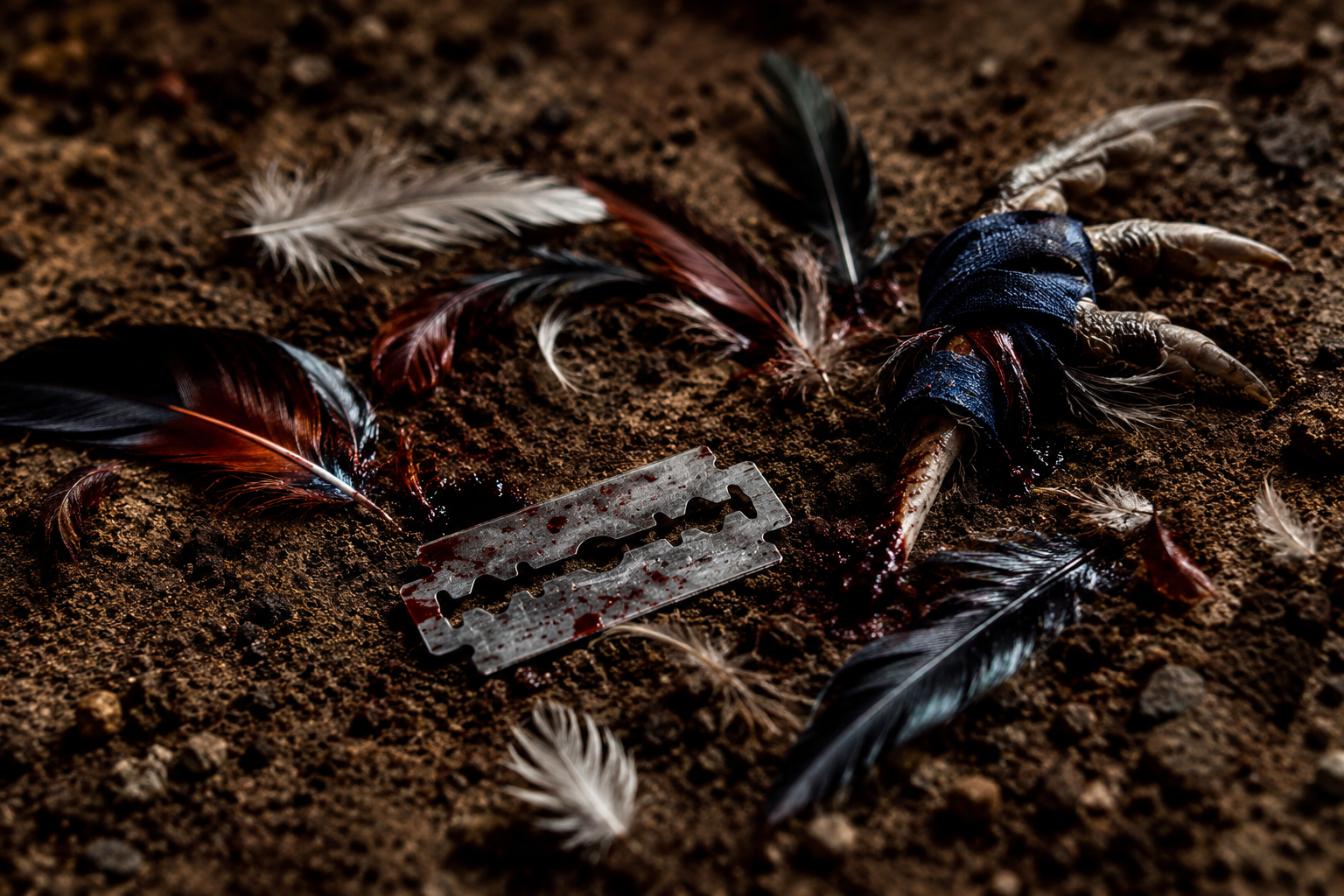
But the rule does not say conviction only. It says charged or convicted. More importantly, the separate conduct clause engaging in conduct against the best interests of horse racing requires neither charge nor conviction. It requires a judgment call. And the question nobody in this industry wants to ask is: who is making that call, and on what basis? Are we to conclude cockfighting and illegal gambling, let alone animal torture and cruelty are in the best interests of horse racing? Has the KHRG already answered this question by lack of action and public statement?
There is video evidence of the Ortiz brothers attending a cockfighting event. There are statements, from the brothers themselves, and those close to them describing cockfighting as a passion and a tradition. There was open promotion of the activity. At what threshold does the evidence become sufficient? If video, public statements, and active promotion do not meet the standard, what does?
The KHRG met with the Ortiz brothers, reviewed Puerto Rico law, and concluded there was nothing to act on. That meeting produced no written report, no summary of what was said, no documented findings. The public record of that investigation is a text message chain and some Google searches.
The Federal Law Question
The Paulick piece acknowledged the murky legal status of cockfighting in Puerto Rico, and quoted Puerto Rico’s executive director of the Commission on Cockfighting Affairs defending the practice as locally regulated. That framing deserves scrutiny.
Federal law is not ambiguous on the underlying conduct. Under 7 U.S.C. Section 2156, the Animal Welfare Act prohibits knowingly sponsoring or exhibiting an animal in an animal fighting venture. The 2018 Farm Bill extended that prohibition explicitly to U.S. territories, including Puerto Rico, effective December 2019. Attendance itself is a federal misdemeanor, punishable by up to one year in prison. Sponsorship or exhibition is a federal felony, carrying up to five years.
Whether federal authorities have chosen to enforce those provisions in Puerto Rico is a separate question from whether the law exists. As Animal Wellness Action has documented, there has not been a single known federal enforcement action targeting cockfighting in Puerto Rico or any other U.S. territory. Lack of enforcement is not the same as legality.
The KHRG’s apparent reasoning no charges, no convictions, therefore no action treats the absence of federal enforcement as a legal clearance. It is not. The conduct at issue is federally prohibited. The question is whether racing’s regulatory infrastructure is willing to apply its own standards independently of whether prosecutors have acted.
Property Rights and the Baffert Precedent
This sport has recently demonstrated that it is capable of acting against licensees on the basis of conduct and integrity concerns, without waiting for criminal conviction. The Churchill Downs ban of Bob Baffert, upheld through federal litigation, established that a racing entity may impose significant consequences based on its own determination that a licensee poses a threat to the safety and integrity of the sport.
Baffert argued that the ban rendered his state-issued trainer’s license valueless, a property interest protected by due process. Federal courts rejected that argument, finding that so long as the license retained meaningful value at other tracks, no constitutional deprivation occurred. The precedent cuts both ways. It confirms that racing entities have broad authority to act on integrity grounds. It also confirms that a licensee’s property interest in a license is not violated merely because one entity chooses to exclude them.
The Ortiz brothers hold licenses in Kentucky, New York, and other jurisdictions. The New York State Gaming Commission has not responded to requests for documents related to any investigation according to the Paulick piece.
What the Silence Means
When Past The Wire published this story in November 2025, the major racing media outlets said nothing. That silence was not an oversight. These are organizations with resources, relationships, and direct lines to the people and regulators involved. They chose not to pursue it.
USA Today pursued it. Their front-page report in May 2026 confirmed PTW’s original reporting and documented the KHRG’s inaction. After that, with the public record established and documents available through FOIA, the Paulick Report published.
We do not say that to be bitter about attribution. We say it because the sequence is the story. The industry’s media apparatus did not fail to find this story. It found reasons not to tell it. Now that the telling is unavoidable, it is being told carefully, with the edges sanded down.
The Paulick piece does not ask whether the KHRG’s investigation was adequate. It does not ask whether the absence of a written investigative report is itself a problem. It does not ask whether the federal law applies. It does not ask whether public statements and promotional activity constitute conduct against the best interests of racing under Rule 809. It reports what happened and moves on.
That is not nothing. But it is not the whole question.
The Question That Remains
Irad and Jose Ortiz are among the most accomplished jockeys in the history of American racing. That is not in dispute. Their talent is real. Their records are real. Their 1-2 finish at the Kentucky Derby this year was historic.
None of that is a reason to look away.
The rule the KHRG cited as the basis for its review does not require a felony conviction. It does not require a federal prosecution. It requires a judgment about whether conduct is against the best interests of horse racing. The people running this sport have decided, repeatedly and across multiple jurisdictions, that it is not.
We are asking them to explain why. We have been asking since November. The answer, so far, is silence.
The puppets have performed their review. The puppets have decided the matter is closed. The puppet masters might not agree.
Past The Wire does not agree.
They Knew:
Related Coverage: