

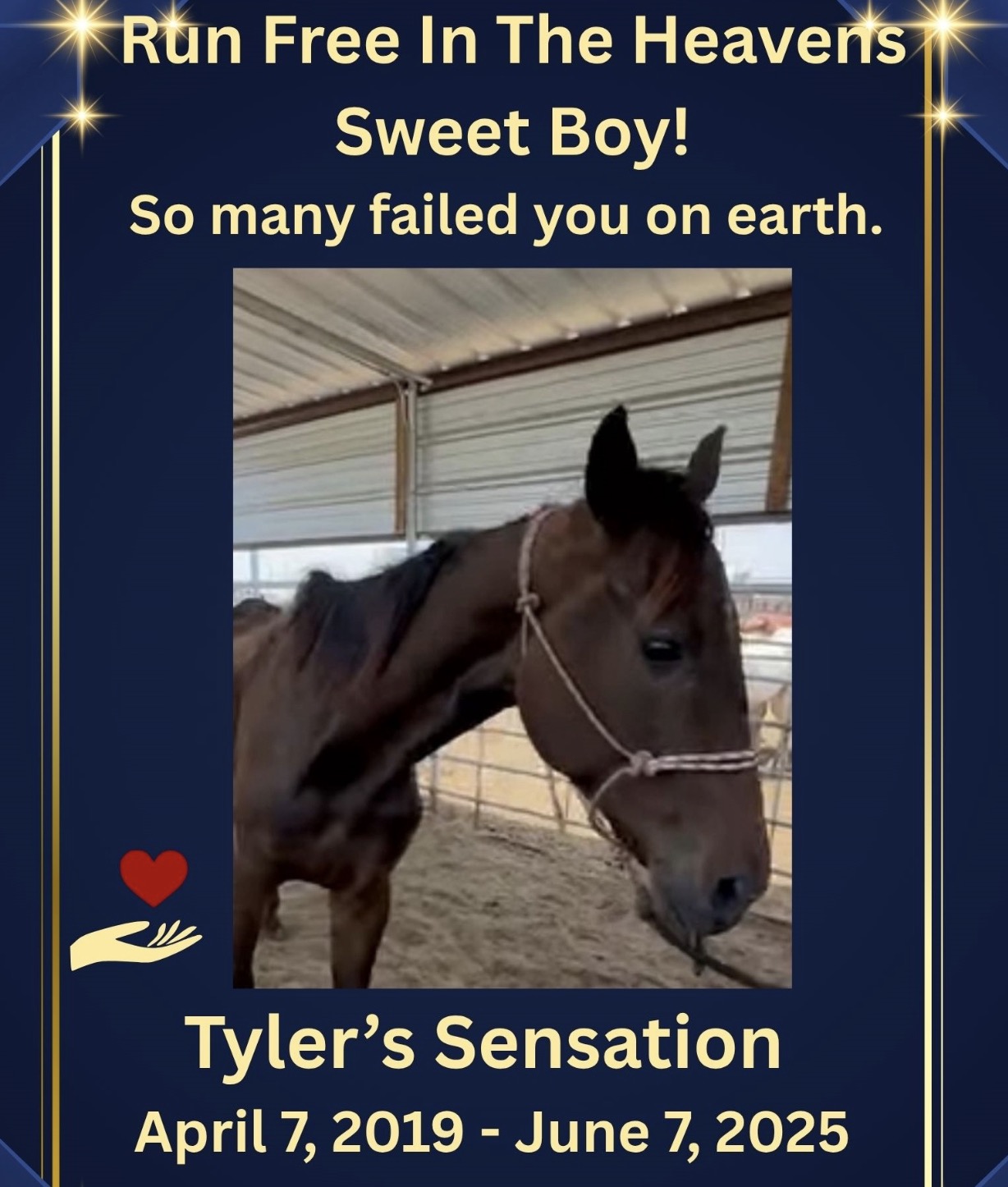

A House committee passed the Van Drew-Titus Amendment, embedding a horse slaughter transport ban inside major infrastructure legislation. The SAFE Act has been introduced in every Congress since 2002. It took an outsider to find the door that was always open.
The U.S. House Transportation and Infrastructure Committee voted 34-30 today to advance the Build America 250 Act and embedded inside that five-year surface transportation reauthorization is the Van Drew-Titus Amendment, language that would prohibit the transportation of horses for slaughter for human consumption. If it survives the full House floor vote, a Senate conference, and final passage, it ends the pipeline that ships tens of thousands of American horses across U.S. borders each year to be slaughtered for meat.
It would effectively do what the Save America’s Forgotten Equines Act, the SAFE Act , has been trying to do since 2002.
The SAFE Act has 230 co-sponsors in the current House. It has been introduced in every Congress for more than two decades. It has never made it across the finish line. Today’s amendment, authored by Reps. Jeff Van Drew (R-NJ) and Dina Titus (D-NV), carries the same language. But it is attached to something Congress has structural reasons to pass. That is not a minor distinction. That is the entire difference.
What the Amendment Actually Does
There are no active horse slaughter facilities on U.S. soil. The pipeline runs through the transportation network, horses purchased by kill buyers, loaded onto trailers, and shipped to facilities in Mexico and Canada. Cut the transport, you cut the practice. The Van Drew-Titus language targets exactly that.
Kill buyers operate by purchasing horses at auction, often healthy, rehomeable animals and turning a profit at the slaughter end. The amendment doesn’t require shutting down a facility that doesn’t exist. It makes the transport itself a federal violation. The enforcement mechanism follows the commerce, not the slaughterhouse.
The Road Here
Repole’s statement today named Chris Heyde and Pat Cummings of the National Thoroughbred Alliance as the architects of this effort. He described his own involvement as beginning “earlier this year” after it became “crystal clear that, after decades, key industry entities were not producing results.”
That is a precise charge, not a rhetorical one. The Jockey Club has lobbyists. It has relationships in Washington. It has resources, institutional credibility, and a stated commitment to horse welfare that spans decades of press releases. The SAFE Act has 230 House co-sponsors a number that reflects years of accumulated advocacy work by multiple organizations.
None of that moved the bill to the floor as a standalone measure. None of it found the vehicle that the NTA found this year.
The strategic difference is worth naming: embedding the language in a surface transportation reauthorization bill gives it political cover that a standalone animal welfare bill never had. It becomes one provision in a must-pass package, not a singular vote that invites special interest opposition. Whether that tactic originated with Heyde, Cummings, or someone in their network, it is the move that nobody made for twenty years.
The Industry Response
The Jockey Club issued a supportive statement today through president Jim Gagliano, calling the amendment “encouraging” and reaffirming long-standing support for the SAFE Act’s goals. 1/ST, the organization led by Aidan Butler, was credited in advocacy organization statements as part of a broader industry coalition that stepped up in “unprecedented” ways.
It is worth noting what “unprecedented” means in context. The precedent being broken was two decades of statements without a floor vote.
What Happens Next
Three stages remain. First, the full House must vote on the Build America 250 Act with the language intact. Second, the Senate must pass its own version and if the Senate version does not include the amendment, it goes to conference. Third, the conference committee must produce a reconciled bill that retains the language before it reaches the President’s desk.
The Senate is the historical graveyard for this effort. In the 117th Congress, the identical amendment passed the full House as part of a surface transportation package. The Senate did not bring the amendment to a vote on its version of the bill. The language died in conference.
That is the cautionary context. A 34-30 committee vote is not a mandate. Senate sponsors will need to carry this explicitly, and the conference stage will require active defense of language that has political opponents particularly from agricultural states where horse slaughter has been framed as an ownership-rights issue.
The difference this time, if there is one, is the bipartisan sponsorship profile. Van Drew and Titus were joined by Reps. Tim Burchett (R-TN) and Jimmy Patronis (R-FL). Three Republicans and one Democrat. That changes the Senate calculus modestly, though not decisively.
The Accounting
Repole closed his statement with a line that deserves to be read plainly: “It also saddens me to think about how many horses could have been saved from a cruel ending if the so-called leaders of our sport had acted with more urgency years ago.”
He is not speaking loosely. Every year the pipeline remained open was a year in which the established leadership apparatus of horse racing with its lobbyists, its relationships, its institutional weight either could not, would not, or did not make this a priority sufficient to find the approach that actually worked. The National Thoroughbred Alliance, formed to operate outside that apparatus, found the approach in a matter of months.
Today is a good day for horses. The work isn’t finished. The Senate still has to act, and the conference still has to hold. But the door that nobody opened for twenty years is open.
Someone found the right door. It just wasn’t who everyone assumed it would be. For the horses who cannot speak for themselves, we simply offer thank you.