
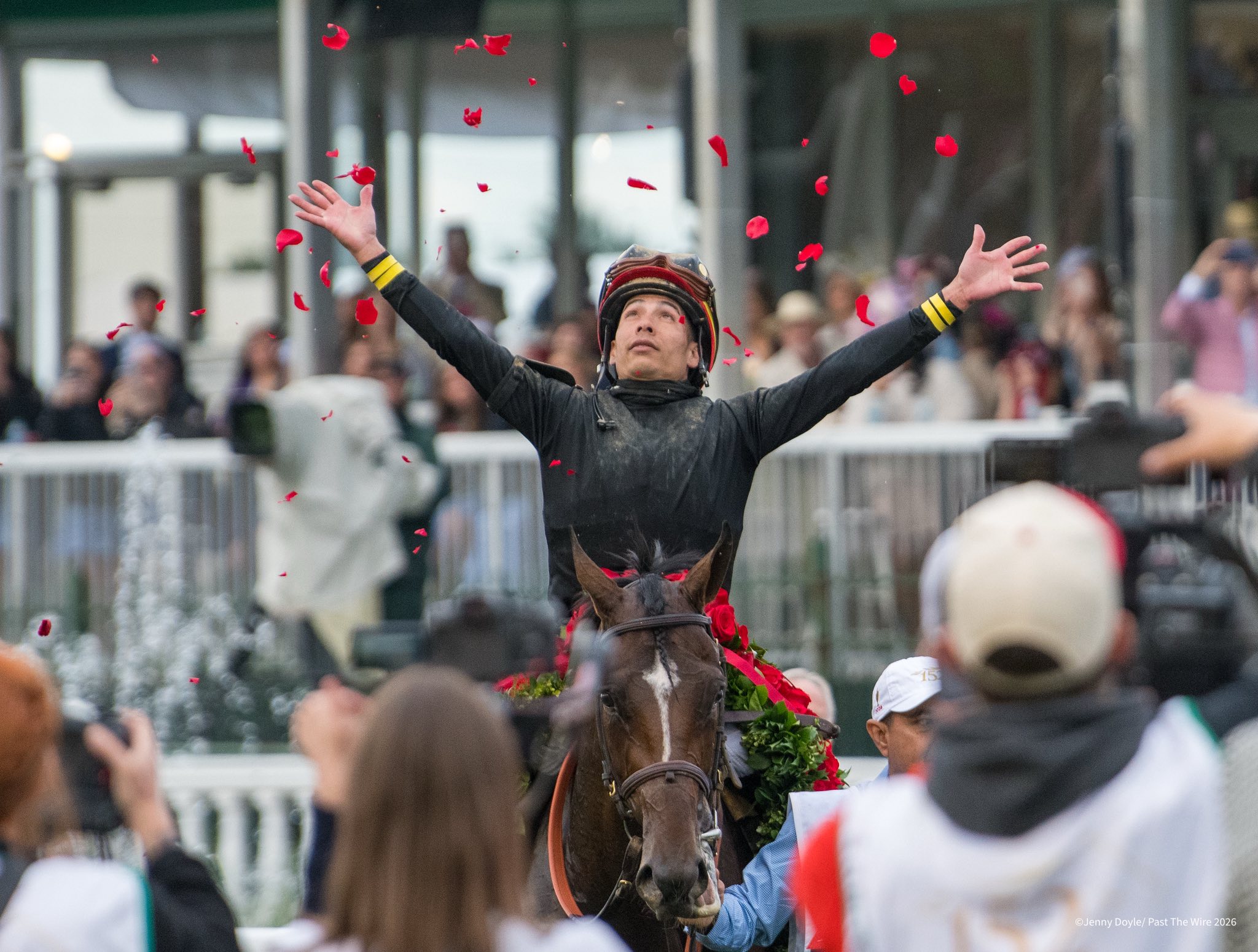
Ten years ago I wrote that the Ortiz brothers would rule American racing. What happened Saturday at Churchill Downs was something I — or anyone — could not have scripted.
There is a piece sitting on the Past The Wire archives dated July 8, 2016. The headline read: The Ortiz Brothers: On Top of the World. I wrote it after watching Irad put Creator in the winner’s circle in The Belmont Stakes with one of the finest Classic rides I have ever seen — a piece of horsemanship I compared in real time to Angel Cordero Jr. aboard Bold Forbes. I spoke to both brothers, their agents, and anyone who would listen, and I put it on the record: these two young men from Puerto Rico were going to dominate American racing for a very long time. You can see or read it HERE.
Nine years later, I believe what I saw Saturday afternoon in Louisville will stand as the single most extraordinary event in the history of the Kentucky Derby jockey’s room. Not the most emotional winner. Not the most improbable stretch run, though it certainly qualifies on both counts. I mean the most historically, cosmically unrepeatable moment in the 152-year history of the race.
Brothers. One-two. A neck apart. The Run for the Roses. Never before. Almost certainly never again.
What I Said Then
I want to be precise about what I wrote in 2016, because context matters and I am not interested in revisionism. I wrote that watching Irad reminded me of Cordero in his prime — a dominator, a force, a rider who could beat you on the lead or from off the pace, who had no exploitable weakness. I wrote that Jose had “the same great instincts” and was deadly on the front end with hands the good speed riders have, where they let a horse lope along and always have more in the tank than you think — reminiscent of Pat Day.
I wrote that neither made many mistakes and that both almost always put their mount in a position to win if the horse had it. I wrote that the safest bet in racing was that these two, together with their agents, now agent, were in for a long, fun, competitive ride at the top of the world.
What I did not write — what I could not have written, because it would have seemed like fantasy — was that they would one day go one-two in the Kentucky Derby. First and second. Winner’s circle and runner-up. Separated by a neck. Under the twin spires. On the first Saturday in May.
But there it was.
The Race Itself
Golden Tempo, post 19, went off at 23-1. The Phipps Stable and St. Elias Stable homebred, trained by Cherie DeVaux, was sitting in last place — dead last, nineteenth of nineteen — entering the final turns of a mile-and-a-quarter race. Jose Ortiz, aboard a horse dealing with cracked heels on both front feet going into the race, was not panicking. He was exactly where he wanted to be. If you go back and watch his prior start, The Louisiana Derby, savvy racers will see that he and Cherie had a plan.
“I knew my horse was a deep closer,” Jose said afterward. “I don’t have any interest in being in front early. You can see the way I broke, when I go to the rail and save ground. I was hoping for a fast pace, and I’m glad we had it.”
On the other end of the field, from post one on the rail, Irad Ortiz Jr. was piloting Renegade — the Todd Pletcher-trained son of Into Mischief who went off as co-favorite at 5-1, wearing three-quarter shoes on both front feet to manage quarter cracks. Irad had chosen Renegade over other Derby contenders. He got squeezed at the start. He overcame it. He came flying late.
Just not late enough.
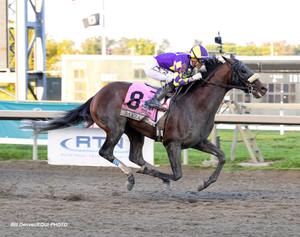
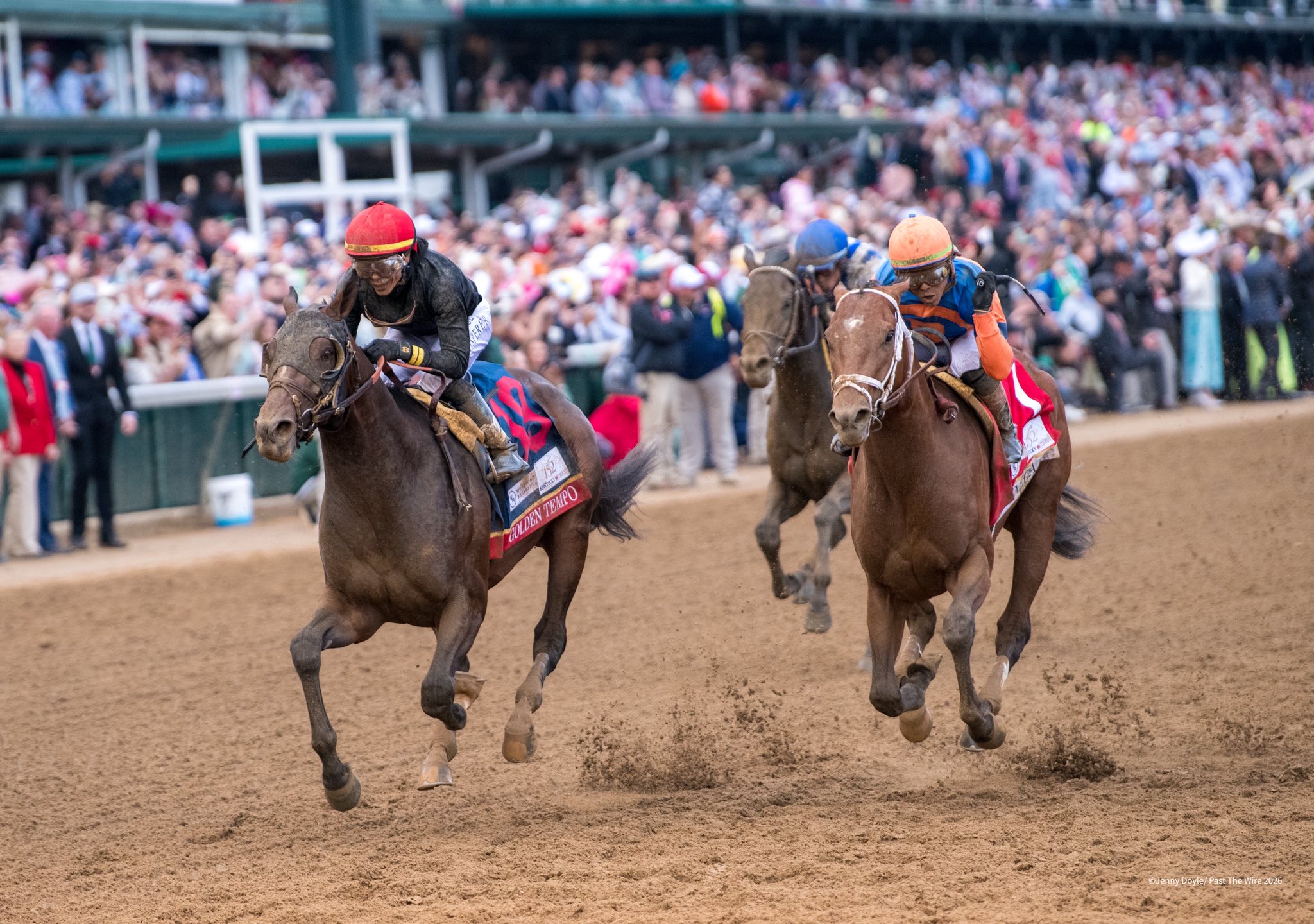
In the final yards of the 152nd Kentucky Derby, with the roar of 150,000 people shaking the grandstand, Jose Ortiz threaded Golden Tempo through traffic, swung to the outside, and ran down his brother at the wire. The margin was a neck. The winning time was 2:02.27. And in the history of this race — in 152 runnings, going back to 1875 — no two brothers had ever finished first and second.
They exchanged a fist bump crossing the finish line. That is the picture of the sport right now. It is not the shot.
The Shot That Tells the Story
We got the photograph. Courtney Snow, shooting for Past The Wire, captured the moment that best encapsulates everything this finish was: sport, thrill, elation, history, competition, sadness, disappointment, and the particular ache that comes with battling your brother at the highest level of your profession.
You see it in both of them simultaneously. Jose’s elation. Irad’s heartbreak, processed in real time through the face of a professional who has been in this situation before and knows how to carry himself. They are brothers first. Champions second. And they are both, always, absolutely focused.
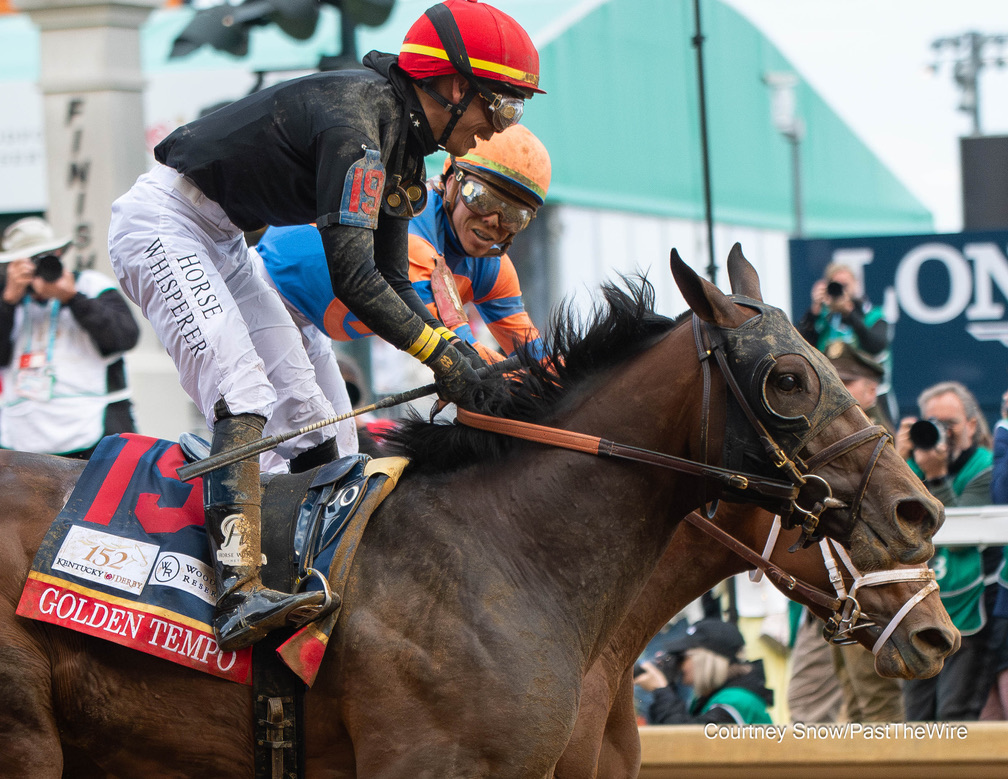
I have said for years, and I will say it again here: I have noticed something about the Ortiz brothers on the biggest days. I have seen it at the Breeders’ Cup, I have seen it at the top races around the country. Something shifts in them when the stakes are highest. The game face goes on the moment they pull up in their cars. There is a different expression, a different look in their eyes. I have seen it before — ringside at a Mike Tyson fight, when the man was in his prime and you could feel the violence radiating off him before the first bell. That is what I see in these two brothers when the calendar hits a day that matters.
Courtney Snow captured that. All of it. In a single frame. Eclipse Award consideration. I stand by that.
As for the race itself, Jenny Doyle captured that for Past the Wire as good as it can be done.
Brothers Before All of It
There have been riding brothers throughout the history of this game. We have had Robert and Alvaro Pineda, both tragically taken from us in racing accidents. Gary and Scott Stevens — Gary reaching the very top, Scott a capable and savvy veteran who never quite rose to national prominence. Ron Turcotte, who rode Secretariat to the Triple Crown and a year earlier piloted the largely unheralded Riva Ridge, had a brother Rudy who rode — something many fans today don’t even know. Brothers in racing are not new.
What is new — what has never existed before — is two brothers simultaneously leading, if not outright dominating, American racing. Not in the same city. Not on the same circuit, though they once did. Across the entire sport, every day, competing for the best horses and the biggest days. And then going one-two in the most famous horse race in the world.
The video circulating on social media of Mike Repole speaking with Irad in the moments after the race tells you everything you need to know about what kind of sport this still is, at its best. Repole — who just watched his horse get beaten a neck in the Kentucky Derby — makes it immediately about his rider and his horse, not about his own disappointment. He joked with Irad. He comforted him. He told him that if you have to lose, losing to your brother is the way to do it. All class. No other word for it.
If you have not seen that video, find it. Watch it. Bookmark it for the next time someone tries to tell you this sport has lost its soul.
History Never Quite Finished Surprising Us
There were layers upon layers to Saturday’s result. Cherie DeVaux — 44 years old, Saratoga Springs-born, trained under Chuck Simon and Chad Brown before building her own stable from scratch in 2018 — became the first female trainer in 152 runnings to win the Kentucky Derby. Only 17 women had ever put a horse in the gate before her. None had won. Mary Hirsch was the first woman to saddle a Derby starter, sending out No Sir in 1937. Before DeVaux’s victory, the closest a female trainer had come to winning was Shelley Riley, who finished second with Casual Lies in 1992. DeVaux, nearly speechless in the winner’s circle: “I’m glad I can be representative of women everywhere. We can do anything we set our minds to.”
And then the footnote that the horseplayer in me cannot let pass without comment: both horses who finished first and second — Golden Tempo and Renegade — went to the gate managing foot issues. Golden Tempo with cracked heels on both front feet. Renegade in three-quarter shoes on both fronts to manage quarter cracks, shod the same way he was when he won the Arkansas Derby by four lengths. Two horses with bad feet, ridden by two brothers, finishing one and two in the Kentucky Derby.
You could write this as fiction and your editor would send it back as too cute.
Jose also won the Kentucky Oaks on Friday aboard Always a Runner, making him just the ninth jockey in history to complete the Derby-Oaks double at Churchill Downs. He was asked after the Derby whether he hoped his brother would get his chance someday.
“I want him to win the Derby. Of course. I know that’s his dream as well. But it happened that way. I think he should be happy. His horse ran a very good race. He’s a very nice horse. But today is my day and Golden Tempo’s day.”
Irad, characteristically, was brief and factual: “He got squeezed at the start. We came flying late. But the winner just got the jump on me.”
Two sentences. No excuses. Total professionalism. That is the mark.
What I Know Now That I Didn’t Know Then
When I wrote that 2016 piece, I had just watched Irad win his first Classic. Jose had won the Mother Goose. They were stars. Rising, dominant, exciting stars. I wrote that one of the safest bets in racing was that these two brothers would dominate for years to come.
I had no idea. Not really.
I did not know that nine years later, Jose would have won Kentucky Oaks and Derby in consecutive days. I did not know that Irad would have won that same award — top jockey at the Breeders’ Cup — five of the last eight years running. I did not know that together they would march into 2026 as the first and fourth leading riders in earnings in American racing, with over 200 wins between them before the first Saturday in May even arrived.
And I did not know that they would one day come down the stretch of the Kentucky Derby neck and neck, brothers, riding horses with bad feet, in a finish that will never be replicated in our lifetimes or anyone else’s. nah, sure I did.
Credit where it is due. I said they were special. I said they would rule this sport. I said watch and see. This morning I am looking for a line on the prediction markets that Irad Ortiz will win The Kentucky Derby by 2030. I think I’m buying.
Watch. And see.
Jose and Irad on Past the Wire TV:
I know it was you Jose, you broke my heart: