
Editors Note: Pimlico Jockey Room was corrected to read Laurel.
Wagering Integrity, Regulatory Abdication, and the Questions Horse Racing Still Won’t Answer
Six months ago, when Past The Wire first reported on the documented involvement of Irad Ortiz Jr. and Jose Ortiz in an illegal cockfighting ring in Puerto Rico, the industry’s response was a masterclass in collective amnesia. The strategy was simple: containment. Keep it inside the racing bubble, look the other way, and hope it faded.
It didn’t.
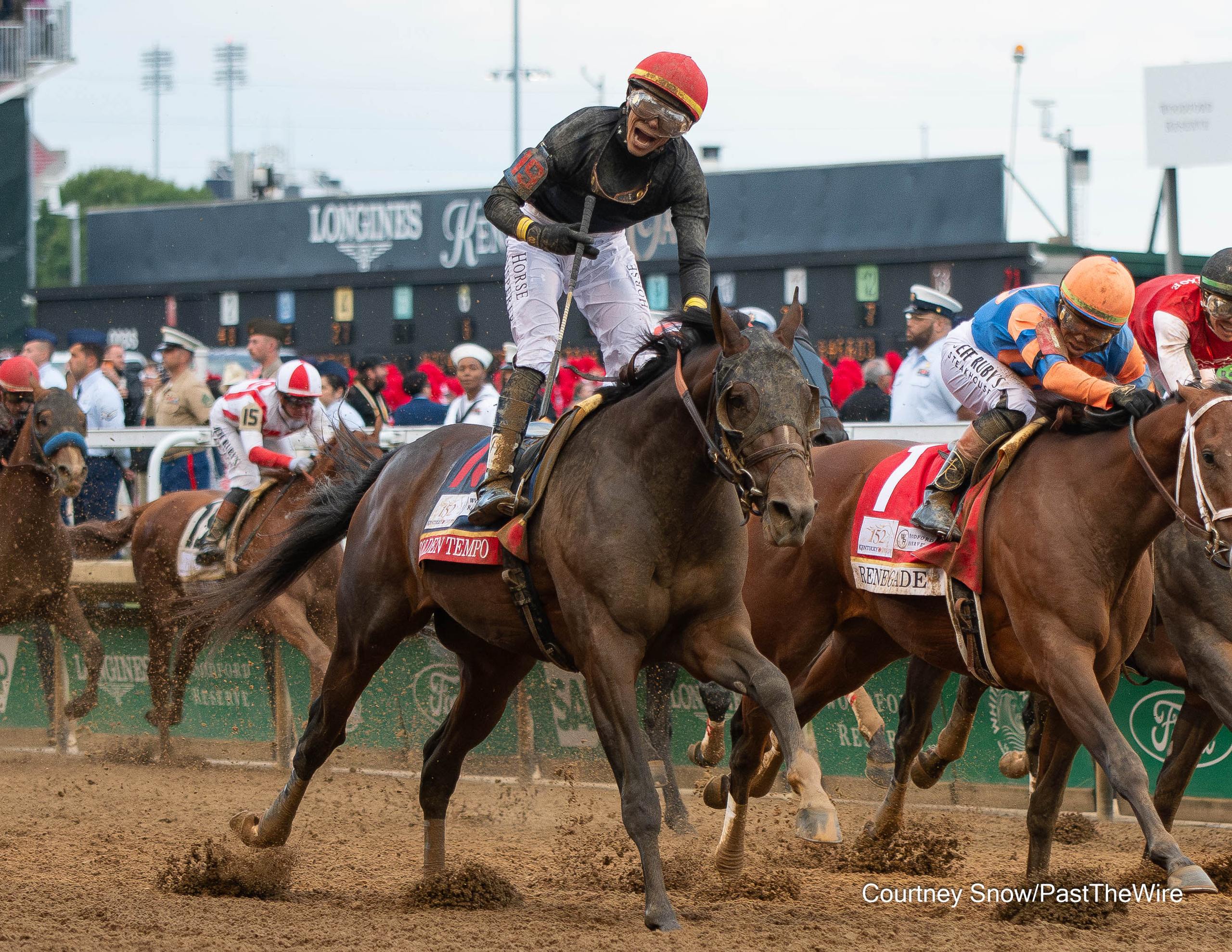
On Thursday, USA Today published a front-page national exposé with photographs, Facebook advertisements, and a documented tournament in which the brothers were billed as featured participants. Hours later, the story was everywhere. Two days before the Preakness Stakes, with the sport’s two most prominent jockeys fresh off a one-two finish in the Kentucky Derby sitting in the Laurel
jockeys’ room, the wall of containment had finally collapsed.
The mainstream coverage will rightly focus on the animal cruelty. The torture is real, it is federal felony-level documented, and it deserves every word written about it. But I have been in this game for over fifty years, and I want to point the camera at the dimension of this story that the regulators are most desperately hoping you will overlook.
This is not just an animal welfare crisis. It is a wagering integrity crisis. And racing has no answer for it.
The Gambling Equation
Let’s be precise about what horse racing is. It is a heavily regulated, state-sanctioned gambling industry. It does not exist without the betting public. Every purse account, every regulatory body, every licensing framework in this sport is funded by the dollars flowing through pari-mutuel pools. That is the foundation.
Cockfighting is not a hobby. It is an underground gambling economy driven entirely by cash, peer-to-peer wagering, and illegal bookmaking. The evidence doesn’t show two licensed athletes casually attending an event. It shows them in the pit, handling money, actively running the game.
That triggers a question every horseplayer in America has a right to ask: how do state racing commissions guarantee the integrity of legal, multi-billion-dollar pari-mutuel pools when the sport’s biggest stars are documented operating inside illegal gambling rings?
Look at how every other major sport handles this. When an NFL, NBA, or MLB athlete is found merely adjacent to illegal gambling or bookmaking — not running it, adjacent to it they are placed on immediate administrative leave pending investigation. The leagues don’t wait for a federal indictment. They act because they understand that their entire enterprise rests on the public’s confidence in the integrity of the competition and the wagering that surrounds it.
Horse racing has been handed documented statutory violations involving its two most prominent licensed participants. The regulatory response has been silence. That is not a defensible posture for a gambling industry in 2026.
The Power They Have and Won’t Use
State racing commissions and individual racetracks possess extraordinarily broad powers of exclusion. These are not narrow, procedural powers. They are deliberately designed to allow racing authorities to deny licenses or bar access to anyone deemed detrimental to the best interests of racing without requiring the standard of proof demanded in a criminal court. The threshold is low by design, because character and integrity are foundational requirements in a regulated gambling environment.
The industry uses these powers routinely. Trainers receive swift, sweeping suspensions for administrative medication overages, paperwork violations, threshold violations, technical violations. The regulatory apparatus moves quickly and decisively when it chooses to.
When confronted with multi-media evidence of licensed participants documented in a federal felony gambling enterprise, that same apparatus has produced nothing. Not a suspension. Not a formal hearing. Not a public statement of any kind from any commission in any state where either Ortiz brother holds a license.
If documented involvement in an illegal gambling ring does not meet the threshold of “undesirable,” the industry owes the public a clear statement of what does.
The Investigations: Demand Verifiable Facts
The USA Today piece references prior inquiries by Kentucky and California authorities. The wagering public cannot accept that at face value. Racing regulators have long used the phrase “we do not comment on ongoing investigations” as a shield against public accountability. It has become a default deflection rather than a legal necessity.
The people whose money funds this sport through takeout, through handle, through the taxes and fees that flow from every dollar wagered deserve specific answers to specific questions.
Did the Kentucky Horse Racing Commission formally interview Irad and Jose Ortiz prior to the Kentucky Derby? Did they conduct a forensic review of the digital evidence, or did they accept a denial and move on to protect the Triple Crown betting pools from a public relations crisis? Did Churchill Downs? Many will recall how protective and proactive they were when a certain trainer received a positive for a now legal ointment costing him a record breaking Kentucky Derby. We heard a lot of talk about protecting the sport and integrity. What constituted California’s inquiry, and why has their response been so opaque?
These are not rhetorical questions. They are accountability questions with direct implications for the integrity of every dollar wagered on a race in which either Ortiz brother participates. When one jurisdiction dismisses what another ignores, the entire regulatory architecture fails the public it exists to protect.
Tomorrow’s Broadcast
The Preakness Stakes is Saturday. NBC Sports will carry it nationally. The two primary subjects of their race coverage are at the center of a front-page federal felony story published forty-eight hours before post time.
Whether NBC addresses it will tell you everything you need to know about whether the sport’s broadcast partners see themselves as journalists or as content providers for the industry that pays them. The public will be watching. Their sponsors will be watching. So will we.
The Bottom Line
When Past The Wire reported this story six months ago, the industry chose silence as its strategy. That strategy has failed. The story is now national, it is documented beyond dispute, and the two men at the center of it are riding in the Preakness tomorrow.
The time for closed-door deliberations and jurisdiction-dodging is over. The betting public deserves to know exactly how state licensing boards intend to protect the integrity of legal wagering from documented involvement in illegal gambling rings. They deserve answers to the Kentucky investigation question. They deserve to know what standard of evidence is sufficient to trigger a licensing review.
Horse racing has spent decades asking the public to trust it. Trust is not a one-way transaction.
Racing can no longer afford to protect its stars at the expense of its soul.
Related Coverage:
The Consequences Paulick Forgot to Mention
You’ll Be Sorry You Ever Met Me: