
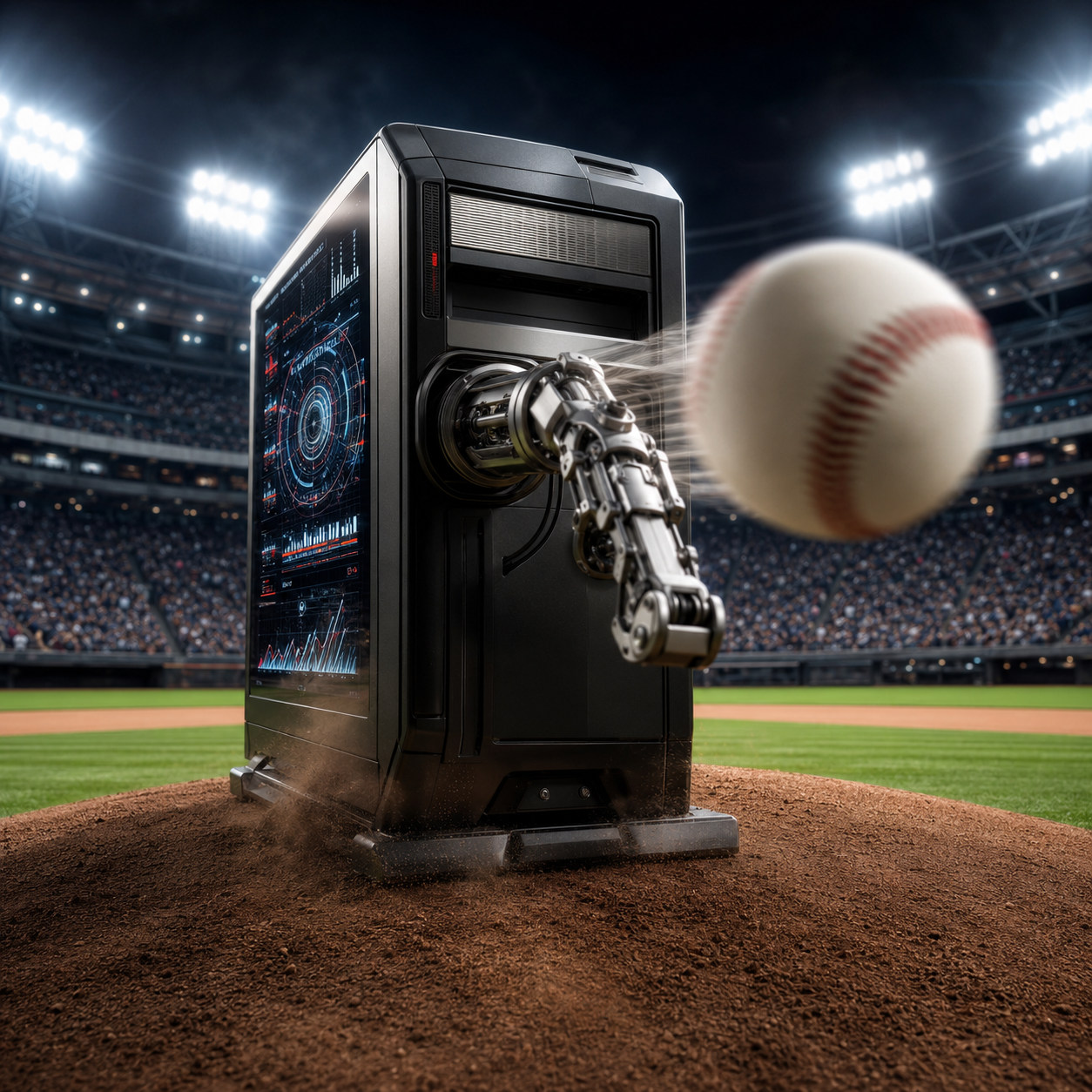

There is a version of this story where Major League Baseball suddenly discovers what horseplayers have been living with for years. That would make for a neat story. It would also be wrong. Baseball did not borrow Computer Assisted Wagering from racing, and front offices are not running CAW models while negotiating trades. What they are doing is built on the same underlying pursuit. Process more information, identify a pricing inefficiency, and act before the other side catches up.
Computer Assisted Wagering, CAW, has become the most contested three letters in horse racing. Every argument about it, in courtrooms, in CHRB letters, in Keeneland press releases, and in my own inbox, comes back to the same root idea. A small number of players have superior data pipelines, algorithmic models, enormous capital, high speed access, and rebates unavailable to the person sitting in the grandstand or betting from home. They can calculate and act at a speed no individual horseplayer can match. Man cannot process as fast as machine. That is not the entire case against CAW, because access, pricing, rebates, disclosure, and the integrity of the pari mutuel market matter just as much. It is, however, the engine underneath it.
Watch what is happening as the MLB trade deadline closes in. The public conversation is exactly where it always is. Pending free agents, bullpen rentals, years of control, which contender is desperate enough to overpay, and which general manager blinks first. That is the surface. Beneath it, front offices are evaluating players through performance data that goes far beyond ERA, OPS, and saves. Spin rate, release point, velocity, movement, command, swing and miss rates, physical indicators, and signs of decline can expose value or danger before the traditional numbers catch up. The old currency, ERA, OPS, and saves, is the equivalent of a morning line. It tells you what the public can already see. The real question is whether the price reflects what is coming next.
That should sound familiar to anyone who has read what I have written about tote pools and the pari mutuel structure. It does not make an MLB analytics department a CAW syndicate. It means both are searching for the same thing every serious player in any market searches for, the difference between price and value. Baseball calls it player evaluation. Wall Street calls it quantitative analysis or algorithmic trading. Sportsbooks use automated models to move live odds as new information arrives. Racing calls its most powerful version Computer Assisted Wagering.
The similarity is real. The structure is not.
An MLB front office using better information to outsmart another MLB front office is one sophisticated business competing against another. Both sides know what game they are playing. Both have analytics departments, scouts, medical information, proprietary models, and the opportunity to walk away. If one team sees deterioration in a relief pitcher’s release point before another does, it may win the trade. It may also be wrong. The player can get hurt, lose command, or simply fail. That is not arbitrage in the risk free sense. It is a calculated opinion about an uncertain asset.
CAW raises a different and more troubling question. The CAW syndicate and the retail horseplayer are customers purchasing the same wagering product, but they are not necessarily purchasing it on the same terms. One may receive rebates, direct high speed access, batch wagering capability, and advantages the other customer cannot obtain at any price. Its money can also change the effective price of the retail bettor’s wager after that bettor has already committed and can no longer respond. The comparison is not team against team. It is customer against customer inside a market designed and controlled by the seller.
That difference cannot be glossed over, because it is where the legitimate CAW grievance lives. The problem is not simply that a computer calculates faster than a person. Better handicappers have always beaten weaker ones. The problem begins when the operator of the market provides one class of customer with tools, economics, access, or timing advantages unavailable to another, and then asks everyone to believe they are participating in the same pool on equal terms.
If superior data and machine speed were not genuine edges, nobody would spend fortunes building them. Baseball teams are not hiring analytics departments because spreadsheets are fashionable. Sportsbooks are not moving prices pitch by pitch for entertainment. CAW teams are not routing enormous batches of wagers into pari mutuel pools because it is fun. They are all trying to identify a number that is wrong before somebody else corrects it.
Same instinct. Different market. Different consequences.
Where do we see it next? That is the real question, and it is not a difficult one if you have been paying attention. It appears anywhere information updates quickly and the difference between knowing now and knowing thirty seconds later has a dollar value attached to it. NFL in game probabilities. NBA player tracking and roster valuations. Prediction markets where automated money can move before the ordinary participant has even processed the news. Financial markets built around speed measured in fractions of a second. The technology changes. The pursuit does not.
Racing did not invent the algorithm, the information advantage, or the machine. What racing did was make the collision visible. The horseplayer could watch a horse load into the gate at 4 to 1, watch it take the lead, and then watch the price change to 5 to 2 when there was nothing left to do about it. Baseball’s valuation changes happen behind closed doors. Wall Street’s happen inside systems most people never see. In racing, the number flashes on the screen in front of everyone.
That may be why the CAW fight has become so emotional. Racing did not merely introduce its customers to algorithmic money. It allowed them to watch the machine change their price after they had made their decision.
We did not name the condition first because we invented it. We named our version because we lived with it in public. That does not make racing the origin. It makes racing the tell.
Related CAW coverage at Past The Wire: