

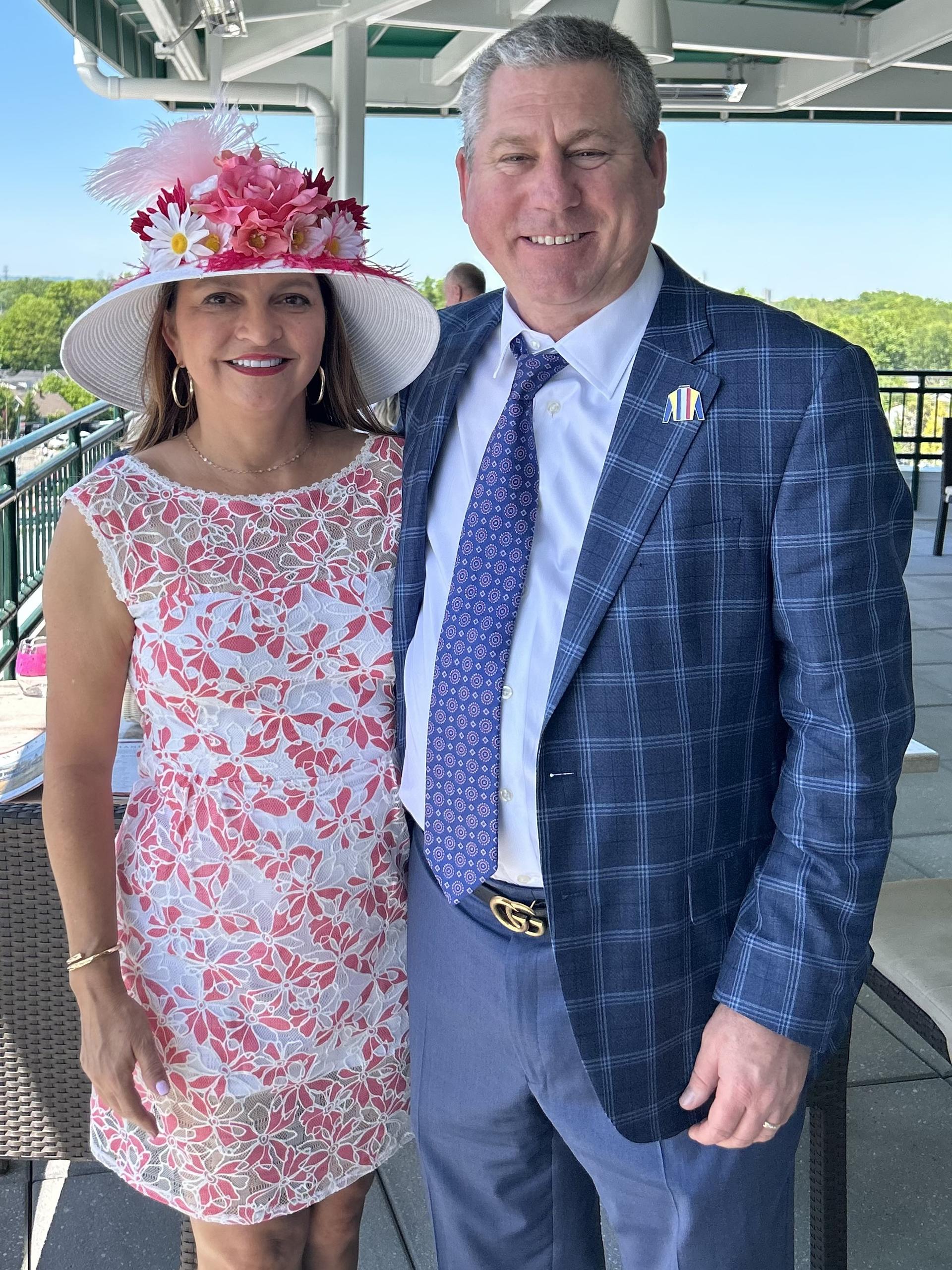

Louis Masry is funding this sport, studying it forensically, and fighting for the people at the bottom of its food chain. The industry’s response has been silence. That is going to change.
Why Horse Racing should pay attention to Louis Masry
So much of what defines a thoroughbred comes down to bloodlines. The old horsemen knew it instinctively, before the genomics, before the analytics, before the databases. They just knew that what a horse carried in its DNA told you something essential about what it would do when the moment demanded it. We don’t talk about it that way as much anymore. Maybe we should. There is a scene in The Pope of Greenwich Village where Pauly, played by Eric Roberts, whose sister Julia would go on to portray Erin Brockovich looks at Charlie and says with the blissful confidence of a man who knows just enough to be dangerous: “It’s all in the genes, Charlie.” He meant it as a shortcut. A dodge. But he wasn’t wrong. Sometimes the most important thing you need to know about a person is who they came from, what was modeled for them when the stakes were real, and whether they were paying attention. Louis Masry was paying attention.
There is a picnic blanket in Louis Masry’s memory that explains everything.
He was a boy. His parents brought him to Santa Anita Park, to Hollywood Park, to Del Mar. They spread a blanket in the infield at Santa Anita, and he watched some of the greatest horses who ever lived run by. He didn’t know then what he knows now about 990 filings and reserve accumulation and data monopolies and the structural rot that has been quietly hollowing out the sport he loves. He just knew the feeling.
That boy is now the co-founder of Westlake Racing Stable, with his wife Dianna, a successful businessman, a husband to Dianne, a father whose sons are now in the sport themselves. He is politically connected in ways the industry has not yet fully reckoned with. He posts on X with the precision of a forensic accountant and the persistence of someone who learned, growing up, that powerful institutions are not untouchable and that the work matters more than the name on the door.
His name is Louis Masry. His father was Ed Masry. If that name sounds familiar, it should: Ed Masry was the attorney portrayed by Albert Finney in Erin Brockovich. He was the man who fought Pacific Gas & Electric on behalf of the residents of Hinkley, California, people with no resources, no platform, and no reasonable expectation of winning but won anyway. He spent his career taking cases nobody else would touch, against opponents with vastly more money, and he built that career on a simple conviction: that influence and titles don’t equal truth, and they don’t make anyone untouchable.
Louis Masry learned that early. He hasn’t forgotten it.
“Once you see it, you can’t unsee it.”
THE MOMENT IT STARTED
The trigger was the Paulick Report published letter from The Jockey Club of January 27th, the one attacking Mike Repole. It struck a nerve, and Masry started digging. He went into the numbers. The filings. The structure.
What he found stopped being opinion very quickly.
“When you look at the IRS Form 990s and start connecting the dots, you begin to see a very different picture than what’s presented publicly,” he told Past The Wire. “The level of capital, how it’s allocated, and the lack of transparency around key decisions raises serious questions. That’s when it stopped being opinion for me and became about facts.”
Since early February, his posts have accumulated over a million views on X. That is not a niche audience. That is a sport’s worth of frustrated people who were waiting for someone to say, out loud and on the record, what they had been saying to each other privately.
“I’m just saying what a lot of people are already thinking,” he said. “The difference is, I’m willing to put my name on it.”
ED MASRY’S SON
To understand Louis Masry, you must understand where he came from.
Ed Masry was not simply a successful lawyer. He was someone who looked at powerful institutions that believed they were beyond accountability and decided, methodically and without apology, to prove them wrong. He helped open free agency in the NFL. He played a nothing short of a major role in Native American gaming compacts in California. He fought Pacific Gas & Electric to a standstill on behalf of people who had nothing but the truth on their side.
That left a mark on Louis.
“He was a remarkable man, and both he and my mother shaped who I am in ways that still guide me,” Masry said. “What I saw growing up wasn’t just a successful lawyer, it was someone willing to take on powerful institutions when they thought they could ignore people without consequence. He didn’t care how big the opposition was or how much money they had. If something was wrong, he addressed it head-on.”
“You learn quickly that influence and titles don’t equal truth, and they don’t make someone untouchable.”
He pauses on the connection between his father’s legacy and his own presence in the racing conversation. “There’s definitely a connection,” he said. “I know when to fight. And more importantly, I know why.”
WHAT HE FOUND IN THE FILINGS
Masry’s critique of racing’s power structure is not rhetorical. It is numerical. It is documented. It lives in publicly available 990 filings that most owners have never read, filed by organizations most owners have never scrutinized.
His core argument is straightforward: the people who fund this sport, owners, breeders, horseplayers are taking on real financial risk every day while the institutions that control the sport’s most critical assets sit on capital that is not being deployed in ways that serve the ecosystem.
“At the same time, you have horses falling through the cracks, aftercare organizations that are underfunded, and racing jurisdictions that are struggling to survive,” he said. “That disconnect is hard to ignore. It raises a fundamental question: what is the purpose of that capital if it’s not being used to stabilize and grow the sport?”
“The ‘rainy day’ isn’t coming — it’s already here.”
On the Breeders’ Cup specifically, he is precise: “The organization has built significant financial reserves, nearly 120 million dollars. At the same time, parts of the industry are struggling, aftercare remains underfunded, and key racing jurisdictions are under pressure. The question isn’t whether the Breeders’ Cup is successful, it clearly is. The question is whether that success is being leveraged in a way that meaningfully supports the broader ecosystem of the sport.”
On The Jockey Club, he goes further: “When one organization touches the registry, the data, the media, and has influence across numerous industry groups, it can limit the flow of independent thinking and competition.” His solution is structural: separate the key functions. Open the data. End what he calls plainly “The Jockey Club monopoly.”
On HISA, he is measured but pointed. “So far their grade is a C minus at best.” The cost trajectory concerns him. The funding structure — initial loans from major industry stakeholders — raises independence questions he believes Congress has not fully examined. “That’s going to change,” he said.
WASHINGTON IS ALREADY LISTENING
This is the part the industry may not have fully processed yet.
Louis Masry is not simply a well-informed owner with a Twitter account and a famous father. Last month, he was actively involved in moving legislation through the United States House of Representatives. It passed the house with broad support, which is rare nowadays. He has had conversations in Washington on horse welfare and related issues. He has found, he says, that policymakers are willing to engage when presented with clear, well-supported information.
“I don’t view that as a first step,” he said of legislative channels. “But it is part of the broader toolkit. My preference is always to see the industry address its challenges internally. But if meaningful issues continue to go unresolved, then it’s appropriate to make sure they’re understood at a policy level as well. That’s not about politics — it’s about accountability.”
He is direct about his intentions regarding HISA and Congressional oversight: “I intend to be more active in making sure the right people fully understand how this system is structured, where the pressure points are, and what questions need to be asked. Because effective oversight depends on being fully informed, and I’m not convinced that’s the case today. If the industry won’t answer these questions internally, they will eventually be asked externally.”
Read that again slowly. This is not a threat. It is a timetable.
IN HIS OWN WORDS
The following are selected exchanges from Past The Wire’s full interview with Louis Masry.
PTW: The industry’s establishment hasn’t engaged with the substance of what you’re raising. Why?
Masry: In any industry, when difficult questions are raised, especially around structure, capital, or accountability, there’s often a tendency to avoid engaging directly. I made it clear early on to The Jockey Club and Breeders’ Cup that I was open to a real conversation. So far, there hasn’t been much follow-up. I don’t take that personally. Sometimes new voices are easy to dismiss at first, but that tends to change as the conversation grows. At the end of the day, the focus shouldn’t be on who is asking the questions, it should be on whether the questions themselves are valid. Which they are.
PTW: If you could mandate three structural changes tomorrow, what are they?
Masry: First, a fully funded, industry-wide commitment to horse welfare from birth through retirement. This must be non-negotiable. Every horse should be accounted for throughout its entire life, not just while it’s racing. Aftercare organizations are doing incredible work, but they shouldn’t be operating under constant financial pressure while the broader industry has access to significant capital.
Second, structural reform around data, governance, and access. Data is the lifeblood of modern sports. In other leagues, it’s shared, licensed, and used to drive innovation, fan engagement, and new revenue streams. Opening data and video access would allow developers, media companies, and entrepreneurs to build new products, fantasy-style games, real-time wagering platforms, analytics tools. That’s how you attract younger audiences and expand the ecosystem. Competition shouldn’t be feared; it should be encouraged. The Jockey Club monopoly must end.
Third, the introduction of a commissioner-style leadership model. Every major sport has centralized leadership responsible for setting direction, ensuring accountability, and representing the entire ecosystem. Racing doesn’t have that. A commissioner model, supported by independent governance and committees, could bring coordination, transparency, and long-term planning to the sport.
PTW: Is there anyone in industry leadership you trust to do the right thing?
Masry: I think Mike Repole stands out. His track record outside of racing speaks for itself. He has meaningful capital at risk in this sport. He’s not commenting from the sidelines. He’s been willing to speak candidly about the challenges facing the industry in a way that’s direct, informed, and focused on moving the sport forward. That combination, success outside the sport, real investment inside it, and a willingness to engage honestly — is rare. I respect that.
PTW: What would you say directly to the leadership of The Jockey Club, Breeders’ Cup, and HISA?
Masry: My message would be direct. The sport needs fresh perspectives at the leadership level. I’ve made it clear that I’m open to a real conversation. That hasn’t happened. The questions being raised around structure, capital, and accountability are grounded in publicly available information, and they deserve clear, public answers. Transparency builds trust. Avoiding conversation erodes it. Because at some point, not engaging doesn’t come across as strategy, it comes across as unwillingness to address legitimate issues. This isn’t about conflict. It’s about progress. But progress requires leadership to step forward. If that doesn’t happen, the pressure will continue to build, internally and externally. And ultimately, the questions will get answered one way or another.
“Status quo doesn’t work in a declining environment. It doesn’t work in quicksand.”
THE MAN BEHIND IT
There is something the 990 analysis and the X posts and the Washington conversations do not fully capture about Louis Masry, and it is this: he is, by every account, genuinely a good man. He is a family man. He is a husband to Dianne. He is an owner who cares about the horses, not just the economics of the horses. He has friends across this sport — owners, breeders, bettors, track workers and he hears their frustrations because they trust him with them.
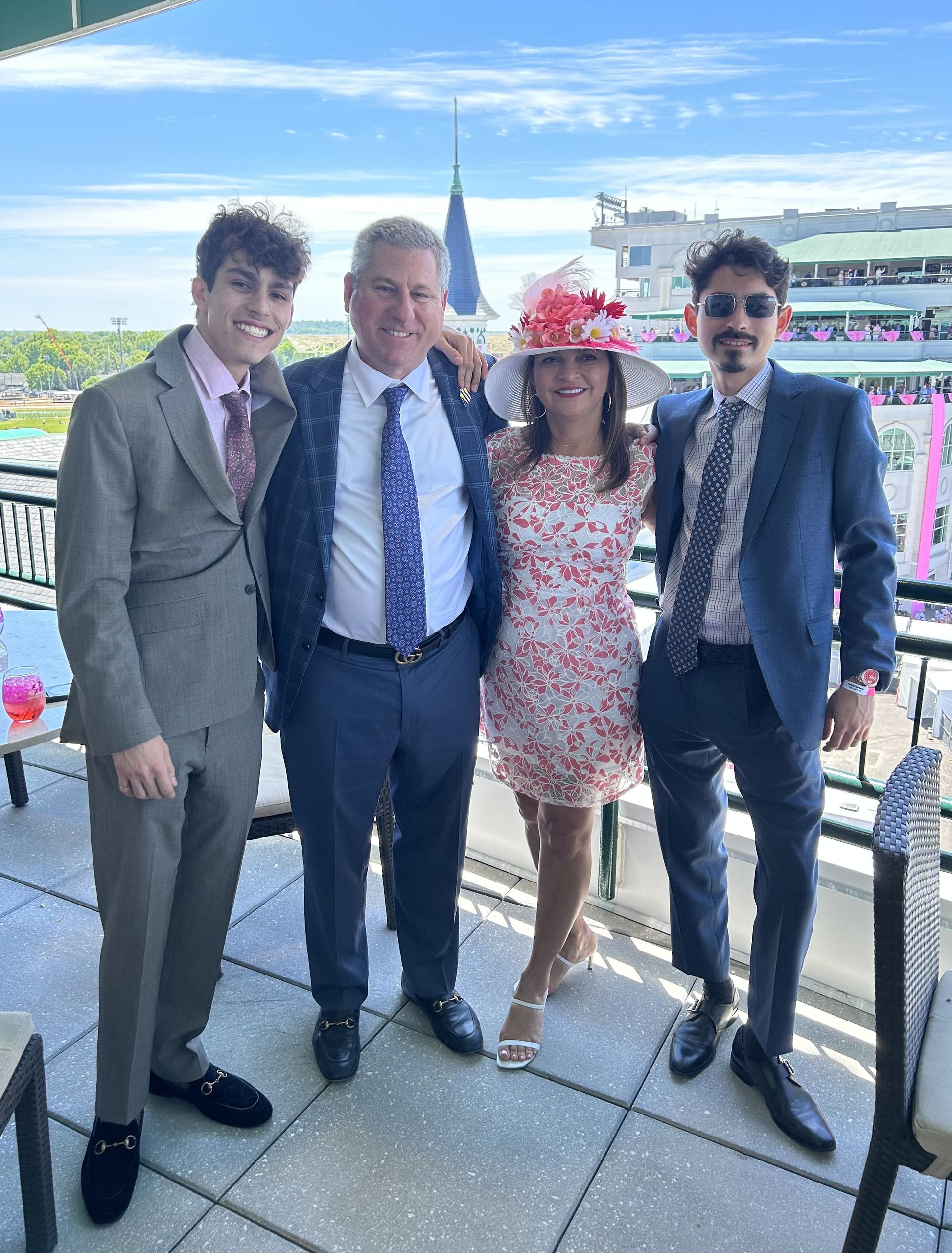
His advocacy has not cost him those relationships. If anything, he says, it has deepened them. “Out of respect for those conversations, I’m not going to get into specifics. But what I can say is that many of them share the same concerns, even if they’re not in a position to say it publicly.”
His sons are now in the sport. He was asked what it means to him to see that.
“Seeing my sons in the sport brings everything full circle, the friendships, the excitement, and the same energy that made me fall in love with racing in the first place.”
He traces it all back to that blanket in the infield at Santa Anita. The picnic. The great horses. His parents beside him.
“Racing has given me so much — friendships, experiences, and a connection to something bigger,” he said. “In everything I’ve done, I’ve always believed in leaving it better than I found it. That’s what this is about.”
WHAT THE INDUSTRY SHOULD UNDERSTAND
Louis Masry is not going away. He said so plainly: “I’m not going to stop.”
He is an owner writing real checks into this sport. He is a breeder with skin in the game on both sides of the economic equation. He is the son of a man who made a career of fighting institutions that assumed they would never be held accountable, and winning. He has legislative access and the willingness to use it. He has a million views on X, people who are paying attention. He has been transparent about his intentions and patient about his methods.
The industry has responded, so far, with silence.
That is a choice. It is also, based on everything Louis Masry has said and demonstrated, an expiring option.
The sport he loves — the one he watched as a boy from a picnic blanket in the infield at Santa Anita, the one his sons are now part of, the one his wife Dianne and he breed horses for — now he sees the sport is in trouble. Not rhetorical trouble. Structural, financial, demographic, existential trouble. And there is a man, well-resourced and well-connected and deeply motivated, who is willing to fight for it.
The question the industry’s leadership must answer is not whether Louis Masry is right. The 990s are public. The numbers are what they are. The question is whether they are going to engage with someone who is fighting for the sport’s survival or continue to treat him like a voice that can simply be waited out.
It cannot.
“Reform Is Coming.” — Louis Masry
“I’m just on a path now to try to make a difference, and to use my voice where I think it can help.”
Editor’s Note: Since this piece was drafted, Past The Wire has been informed that Louis Masry and HISA CEO Lisa Lazarus have had direct communication, including a one-and-a-half hour Zoom call and subsequent follow-up. That conversation is noted and acknowledged here. The broader questions raised in this piece about HISA’s structure, funding, and accountability remain unchanged and are Louis Masry’s own.
Its All in the Genes: