On June 2, a Kentucky hearing officer issued a recommended order that trainer Maria Borell be granted a license by the Kentucky Horse Racing and Gaming Corporation. The ruling was notable not only for what it decided, but for what it documented. The hearing officer found that the KHRG’s grounds for denial were “vague and inconsistent throughout.” It found that the Corporation had violated Borell’s due process rights. It found that the Corporation’s case “lacked substance” and “was not convincing on the issues presented.”
In plain language: the hearing officer found no legitimate reason for what Borell’s own attorney called a vendetta.
To understand why that word lands the way it does, you have to know the timeline. Borell trained Runhappy to victory in the 2015 Breeders’ Cup Sprint. She was fired by owner Jim McIngvale the following morning. In 2016, she was charged with 43 counts of misdemeanor animal cruelty in connection with horses found on a farm leased by her father. She maintained her innocence. In 2023, a Mercer County judge dropped the charges with prejudice and expunged the record. Under the law, those charges never happened.
She applied for a Kentucky license in 2024. No reason given for the delay. She applied again in 2025. Referred to the license review committee, no reason given. When she appeared before that committee in June 2025, she was told the vote would “almost certainly” result in denial. Her attorney withdrew the application to protect her record. She then requested the full commission hear her case. Denied, no reason given. She sued.
It took a lawsuit, a formal administrative hearing on March 31, 2026, and a hearing officer’s recommended order to get a result that the documented record made obvious from the start: there was no legitimate basis to deny her.
Maria Borell has a legally cleaner record than most people currently licensed to compete in this sport. She has been out of racing for nearly a decade. She applied in good faith through every channel available to her and was met with institutional silence, obstruction, and documented due process violations. The hearing officer found in her favor on every material point.
That hearing officer’s process, the formal administrative mechanism, the presentation of evidence, the 50-page recommended order should sound familiar to anyone who followed the Bob Baffert case.
When NYRA moved to suspend Baffert in May 2021 following Medina Spirit’s positive drug test at Churchill Downs, a federal judge blocked it. The court ruled that NYRA had acted unconstitutionally by suspending him without a prior hearing. NYRA subsequently built a formal process from the ground up. What followed was a five-day administrative hearing before a retired New York State Supreme Court Justice, a 50-page recommended report, a two-month review period, rebuttals from both sides, and a final ruling by a three-member panel, a one-year suspension, credited for time served, with no administrative appeal available.
NYRA President and CEO Dave O’Rourke issued a statement upon conclusion of that process. “This was an impartial and deliberative process,” he said, “that has resulted in a lengthy suspension of the sport’s most prominent trainer. However, this is not simply about Bob Baffert or any one individual but about protecting the integrity of the sport here in New York.”
In Kentucky, the process was even more extensive. KHRC stewards issued their ruling in February 2022. Baffert appealed to the full commission, which had already unanimously denied a request to set aside the suspension before the appeal was heard. He challenged it in Franklin County Circuit Court — denied. He challenged it in the Kentucky Court of Appeals — denied. A formal multi-day hearing was convened. The first hearing officer recused himself after a conflict was discovered, and a second was appointed. A six-day hearing produced a 47-page recommended order upholding every penalty. The KHRC issued its final order in the summer of 2023. Baffert dropped the remaining litigation in January 2024, more than two and a half years after Medina Spirit crossed the wire.
The violation at the center of all of it was a medication timing issue. Betamethasone was legal in Kentucky. It was prohibited on race day. That distinction and a pattern of medication issues across multiple horses drove the machinery of accountability for years across multiple jurisdictions.
This is not an argument about whether the process was right or wrong. It is an observation about what the process was: thorough, documented, procedurally exhaustive, and applied to the sport’s most prominent trainer with the full weight of the regulatory apparatus.
In November 2025, a video surfaced on social media appearing to show jockeys Irad and Jose Ortiz inside a cockfighting venue in Puerto Rico, collecting cash from bettors near the fighting pit during an active cockfight. Past The Wire reported it. Subsequent material emerged, including a Facebook post from December 2025 identifying the brothers as participants in a tournament. A USA Today investigation, published in May 2026, documented the matter in detail for a national audience.
Cockfighting is a federal crime under the Animal Welfare Act. Puerto Rico is a U.S. territory. There has been no ambiguity about the federal legal status of the conduct documented in that material.
The Kentucky Horse Racing and Gaming Corporation did investigate. Public records obtained by the Paulick Report revealed that KHRG stewards conducted an inquiry in November 2025. The investigation consisted of background checks which turned up minor traffic violations and Google searches on the legality of cockfighting in Puerto Rico and the United States. The jockeys were interviewed. No action was taken.
KHRG rule 809 KAR 10:008 provides that a licensee may have their license revoked or suspended if they are charged or convicted of a crime involving moral turpitude, that constitutes a felony, involving sports wagering, or of cruelty or mistreatment of animals. The conduct documented in the Ortiz material touches more than one of those categories. The commission that spent years and multiple proceedings pursuing a medication timing violation reviewed this matter through a search engine and closed the file.
No commission in any jurisdiction has initiated formal proceedings. No charges have been filed. No hearing has been convened. No statement of charges has been issued.
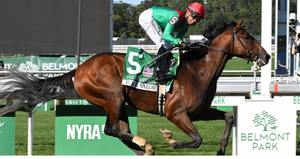
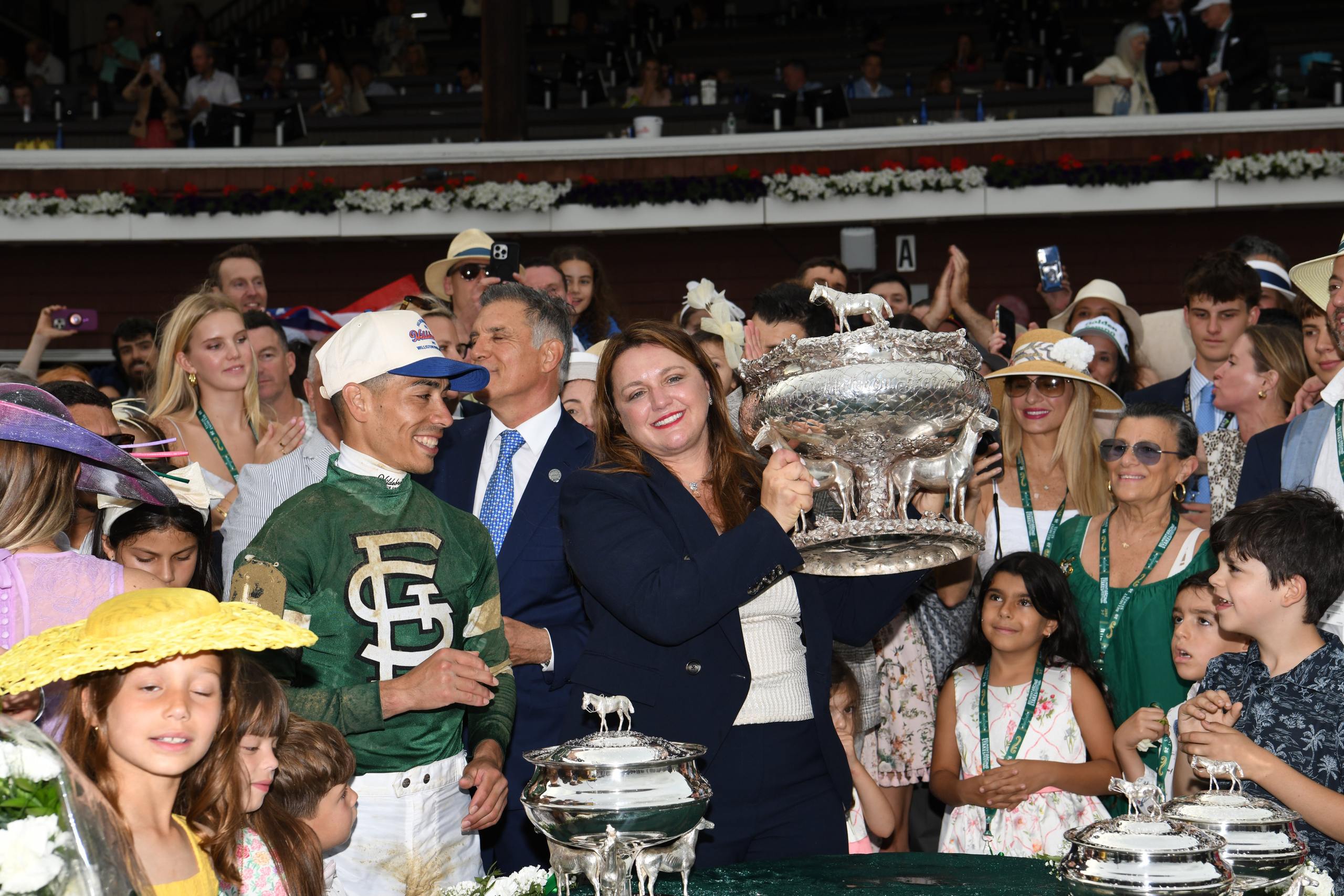
On Saturday, Irad Ortiz Jr. and Jose Ortiz rode Renegade and Golden Tempo in the Belmont Stakes at Saratoga. They finished first and second in the Kentucky Derby the first Saturday in May. They are two of the most accomplished riders in the sport’s history, and nothing in this piece contests that record. But they rode Saturday’s race with the documented evidence of a federal crime sitting unaddressed by every regulatory body that licenses them, including the one that ran a six-day hearing over a legal ointment. Golden Tempo won with Jose Ortiz aboard, making Cherie Devaux the only female trainer in history to win two Triple Crown races. That is a story and we take nothing away from the accomplishment. It is not the only story however. Renegade with Irad Ortiz aboard ran third.
The question this industry must answer is not whether Maria Borell deserves a license. A hearing officer has answered that. It is not whether Bob Baffert was treated fairly or unfairly. That process ran its full course.
The question is what the standard actually is and who it applies to.
O’Rourke said it himself in 2022: this is not about any one individual. It is about protecting the integrity of the sport.
If that is the standard, then the standard has to mean something when the names change.
Do The Right Thing!