

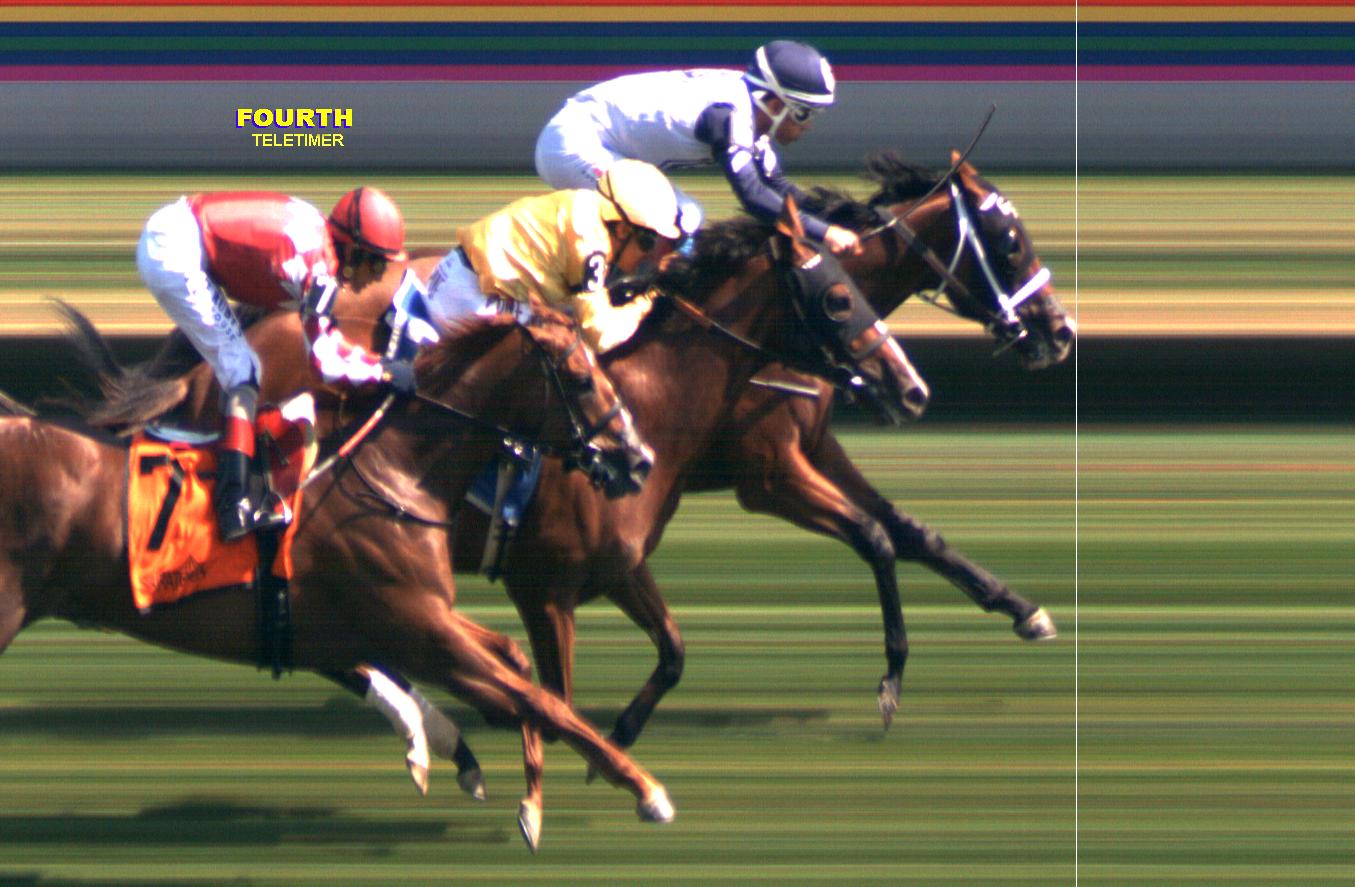

Nobody has been harder on this sport’s governance and accountability than I have. That has been true since Allemuese, a horse wrongly disqualified at Saratoga years ago. I have no interest in protecting NYRA. Anyone who has read Past the Wire for more than a week already knows that. I have even less interest in protecting a narrative once the facts no longer support it.
Trust your gut, but let the record catch up to it before you point a finger.
So let’s do that here. Follow the record, follow the facts, and let everything else become the peripheral noise it actually is.
The facts, in order.
The condition book was out before the meet began. Jockey agents read that book and line up mounts in it, Race 4 on Sunday, a one mile maiden turf race for 2 year olds, was drawn on Wednesday, July 8 at a mile, and changed to a mile and a sixteenth. The overnight, the past performances, and the program were all public before the gates opened Sunday. Ten riders had live mounts in that field after a single scratch. Riders and their agents, as anyone around the backstretch will tell you, are typically on the grounds before the first race, and not five minutes before it.
Every one of those riders and agents had days, not minutes, to see a race they now describe as an established safety concern sitting right there in the book they read every morning.
Here is where the logic breaks down.
The Jockeys’ Guild has stated publicly that the riders followed proper protocol and notified racing officials of their concerns in a timely manner. If that is true in the way it is being presented, if this was a serious, official, and clearly understood safety concern communicated well ahead of Sunday, it is fair to ask a simple question. How does not one rider, not one agent, among ten mounts, say something on Wednesday when the race was drawn, or Thursday, or Saturday, or Sunday morning before the wagering public had already bet into it. That is not a small gap in the story. That is the whole story.
A broken bridle in Friday’s race is a real incident and a legitimate thing for any rider to be shaken by. But a broken bridle has nothing to do with field size, has nothing to do with a horse’s age, and has nothing to do with race distance. If Friday’s incident is being used as the evidence that this was a known and communicated distance concern, that argument does not hold up under its own weight, because the thing that happened Friday and the thing being described as the longstanding concern are not the same thing.
Once a concern was actually raised in a form NYRA understood to be about distance, NYRA changed the distance. That happened fast, and it happened without argument. If this had been raised the same way earlier, whether Wednesday, Thursday, or Saturday, there is no reason on the record to believe NYRA would have handled it any differently then than they did the moment they understood what was actually being asked.
That is not illogical. Waiting until the day the wagering public is already committed, and then describing it as something raised through proper channels well before that, is illogical.
To the Pick 6 players caught in the middle of this, I understand the frustration, and it is fair. But I would rather see a race protected and a bettor able to fight another day than see a favorite forced on a player who may not want it or may already have it, or an all race, or a carryover mishandled because nobody wanted to slow the card down. That inconvenience is real. It is also secondary to the question of who owed clear, timely communication and did not deliver it.
Blame where blame goes, credit where credit goes. NYRA responded the moment the concern was understood in the terms it needed to be understood in. The finger belongs with whoever was responsible for making that concern clear, official, and timely, well before ten riders were sitting on live mounts in a race the wagering public had already bet into. Follow the record. Everything else is noise.
This piece is the third in a series following Sunday’s Race 4 delay at Saratoga. Read the first piece here and the second, on the record now including Andrew Offerman’s account of a communication breakdown, alongside it.