

Six words, “via telephone or other electronic media,” entered the Interstate Horseracing Act on December 21, 2000, by way of a federal appropriations law. The clause around them describes what the sport now calls account wagering: a pari-mutuel bet sent from one state and accepted by a betting system in the same state or another.
That clause was one stop on a long trip. A bet on a horse once needed a body at the track and a walk from the paddock to the windows. Then it moved to storefronts, to signals sent between tracks, to telephone accounts and finally to apps that share a phone with sportsbooks. The trip hasn’t ended. In 2026, Aqueduct, the Queens track that opened in 1894, ran its final card, and FanDuel said its racing channel would fall back on track feeds. Kentucky, for its part, wrote a law ordering tote equipment updated.
Two things rode along on every move. The bet stayed a pool, priced by everyone else holding a ticket, and each new channel needed permission from the states. Those threads also explain the next fights, which are about the price a bettor gets and whether a race watched on a phone can be trusted, not about where the bet is placed.
Aqueduct Was Built For Bettors Who Came In Person
The pool started out as the contested part. New York’s Hart-Agnew Law of 1908 let racing continue only as long as betting stayed private, and a racing ban of nearly three years came later. In 1913 a Nassau County judge ruled that the law barred only the formal pooling of bets, which by Horse Racing Nation’s account built momentum for reopening tracks and, eventually, for pari-mutuel wagering in New York.
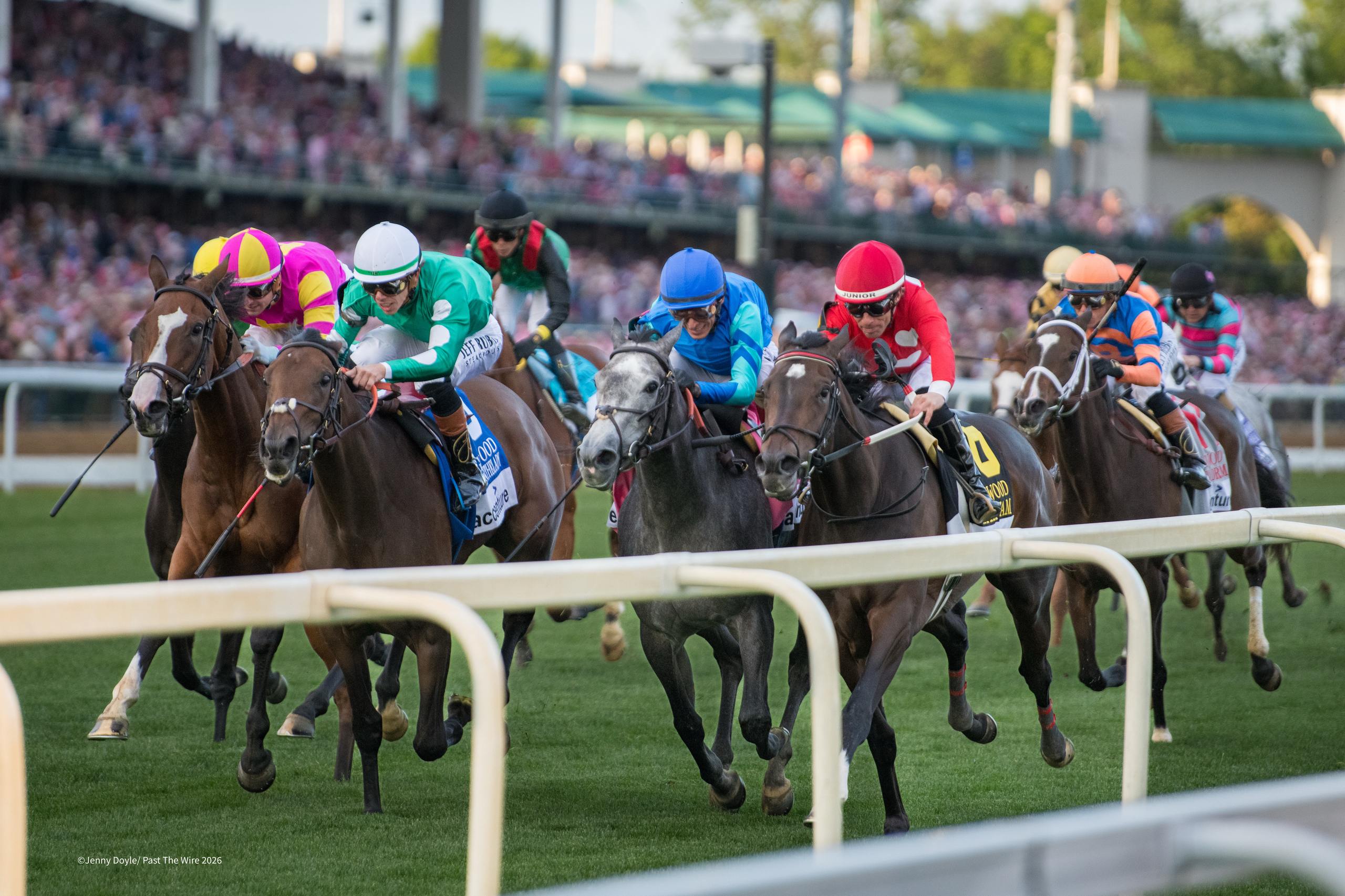
After that, the whole business assumed a customer within sight of the horses, watching the field walk before joining a line at the windows. Aqueduct reopened in 1959 around a $34.5 million grandstand with 34,000 seats, and in 1965 a crowd of 73,375 saw Gun Bow win the Met Mile there, a record for a New York horse race at the time, according to the same history. That crowd was the business model.
New York Moved The Window To Grand Central In 1971
New York City broke the link between the paddock and the window. Its Off-Track Betting operation opened in 1971, when Mayor John Lindsay placed the first wager at the Grand Central Terminal location, and a bettor could now back a horse without going near the track.
The track’s calendar grew. Horse Racing Nation credits the OTB parlors with fueling demand for more racing, which stretched the Aqueduct season past Thanksgiving to the week before Christmas. The storefront needed races to sell, and the track ran more of them.
The city’s OTB shut down in 2010. In-person attendance at Aqueduct then rose by more than 60 percent, the same timeline says, mostly simulcast players, and NYRA ran a free daily bus from some of the old OTB sites. Those customers rode out to a racetrack to bet races run somewhere else, which says the habit had already moved from the paddock to the screen. Aqueduct ran its last live card on June 28, 2026, and kept its simulcast windows open through Labor Day.
Congress Put Three Signatures On Every Interstate Racing Bet In 1978
Betting across state lines raised a harder question: who says yes when a race run in one state is bet in another? The Interstate Horseracing Act of 1978 opens with Congress’s answer. It found that “the States should have the primary responsibility for determining what forms of gambling may legally take place within their borders.”
The act turned that principle into signatures. An off-track betting system may accept an interstate wager only with consent from the host track, the host state’s racing commission and the racing commission of the state taking the bet. Except at some not-for-profit associations, the host track first needs a written agreement with the horsemen’s group, the body representing most of the owners and trainers racing there.
Two more clauses set limits. An off-track office generally needs approval from every currently operating track within 60 miles, which gives nearby live racing a say, and an off-track system can’t take out more on an interstate wager than on comparable pools for races in its own state, unless that state’s law allows it. Both clauses date from the 1978 act itself, and Congress hasn’t amended either one since.
Account Wagering Arrived Inside A Spending Bill
The next screen sat in the living room. TVG went on the air in 1999, a channel built around live racing and the wagering that went with it, and the law caught up the following year.
The six words came with a condition attached. Phone and electronic pari-mutuel bets count as interstate off-track wagers only “where lawful in each State involved,” so the state stayed in charge, even on accounts that feel national.
Congress came back to the subject in 2006 and chose not to settle it. The Unlawful Internet Gambling Enforcement Act says its definition of unlawful internet gambling “shall not include any activity that is allowed under the Interstate Horseracing Act of 1978.” The same section says it “is not intended to resolve any existing disagreements” about how the racing act fits with other federal statutes. Racing kept its carve-out, and the argument stayed open.
One Phone Now Holds The Racing Account And The Sportsbook
Sportsbook apps spread after the Supreme Court’s 2018 ruling in Murphy v. NCAA, which ended the federal prohibition on states authorizing sports betting, and they arrived one state at a time. TVG was already inside a betting company by then: Betfair bought it in 2009, and it became FanDuel TV in 2022 after Betfair became part of Flutter Entertainment, FanDuel’s owner.
The merger reached the wallet as well as the channel. BloodHorse credits FanDuel with being the first sports betting app to offer a shared wallet for fixed-odds bets on games and pari-mutuel bets on horses. About $2.24 billion went through TVG.com and FanDuel Racing in 2025, roughly 19 percent of North American pari-mutuel handle by BloodHorse’s count, and both belong to a company whose core business is sports betting.
That phone holds products that answer to different tests. The racing account carries the condition Congress wrote in 2000, and the 2006 law treats an internet bet as unlawful when it breaks federal or state law where it is initiated, received or otherwise made. Michigan, Pennsylvania and New Jersey regulate online casinos as settled markets, while event contracts are still in court, where federal and state judges disagree and the answer depends on the state for now.
A horseplayer whose phone holds both a racing account and a sportsbook is reading two maps at once, a pairing PlayUSA follows at playusa.com, where state guides explain how gaming works in each state and online horse racing counts as one vertical among several. Those guides start from the bettor’s own state, which is where the 2006 law starts too. Reading those maps is a separate job from reading past performances.
The Fastest Bettors In The Pool Are Machines
Reading the pool has changed too. The phone made betting easier for the horseplayer with an account, and the same digital pipes made it faster for software. Sobhy Sonbol, writing in the Thoroughbred Daily News in 2026, put computer-assisted wagering at about 20 to 30 percent of U.S. handle, a range rather than a count. The total keeps sliding: Equibase’s Thoroughbred figures show $11,028,652,933 wagered on U.S. races in 2025, down 2.10 percent and the sixth decline in seven years.
Elite Turf Club, which serves computer-assisted players, told the California Horse Racing Board in 2024 that its membership hovers between 12 and 20 players, and it has confirmed to the board that each customer is expected to wager at least $20 million a year, according to Past the Wire’s review of the Elite Turf Club documents.
Elite also told the board that AmTote’s system can process up to 2,000 wagers per second from a single client, and that its players get the same tote feed as retail customers.
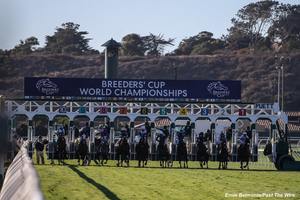
Kentucky took up late betting in its 2026 legislative session. HB 904 became law when the General Assembly overrode the governor’s veto on April 14. It orders tote companies and tracks to update their totalizator equipment by April 1 next year, and it requires tracks to shut off all wagering no later than the moment the starting gate opens. Odds may still update afterward to count bets already placed, so a late move with the field running won’t vanish entirely.
The law also lets tracks offer fixed-odds betting on races under a supplemental license, with a tax of 9.75 percent of adjusted gross revenue on bets placed at the track and 14.25 percent online, in force since July 15. New Jersey got there earlier. Monmouth Park took its first fixed-odds wager in 2022 and billed that season’s opening card as the national debut of a bet that keeps the price the player took.
Integrity Rules And Television Are Still Unsettled
A bettor who never stands at the paddock is trusting two things a couch can’t check: that the horse is sound and clean, and that the race will reach a screen at all. For Thoroughbreds, the first rests on the Horseracing Integrity and Safety Authority, whose racetrack safety rules took effect on July 1, 2022, and whose anti-doping and medication rules followed on May 22, 2023, both approved by the Federal Trade Commission.
That footing is still in court. In June the Fifth Circuit ruled against HISA for a third time, again holding its enforcement provisions unconstitutional, while the Sixth Circuit had upheld the law on remand in 2025. HISA chief executive Lisa Lazarus answered that “HISA remains the law of the land, and our rules and programs are fully in effect,” as Past the Wire reported. Two months later the authority asked the Supreme Court to review the Fifth Circuit’s ruling.
The screen is shrinking. FanDuel told its staff in March that it would sharply cut its racing channel’s coverage in 2026 and leave racing television entirely next year. From December, FanDuel TV will drop in-studio production and run feeds from its track partners, while the TVG and FanDuel Racing wagering platforms keep operating. The account is set to outlive the channel that promoted it for more than a quarter of a century.
So the decision in front of a horseplayer now isn’t whether to bet on a phone. That move is well under way. The decision is which price to accept, a pool that can still shift after the ticket is in or a fixed number where a state has licensed one, and whether the track being played stops taking bets the moment its gate opens. That last answer is worth having before post time, not after the race is official.