



Tom Ryan has a plan. Mike Repole has questions. The Breeders’ Cup has substantial financial resources. Churchill Downs gets some praise. We have a few questions of our own.
Tom Ryan wants to keep more mares in production. Mike Repole wants the Breeders’ Cup to help pay for it. Both have ideas worth considering, and both recognize something that should be obvious to anyone paying attention. The American Thoroughbred breeding industry is shrinking, particularly outside Kentucky, and continuing to do what we’ve been doing is not going to reverse that trend.
That’s where the agreement begins. Where the conversation goes from there is considerably more interesting.
Over the weekend, Ryan, a principal at SF Racing and a member of the Breeders’ Cup Board, published a detailed proposal to strengthen regional breeding. Repole responded publicly with suggestions of his own and a pointed question about the Breeders’ Cup’s approximately $100 million in reported net assets. Ryan answered Repole respectfully, expanded on several of his ideas, and defended the economic realities facing stallion farms.
There was just one thing his response didn’t address. The money. We’ve seen this movie before. In fact, we’ve written several chapters of it ourselves.
Before getting to that, however, Ryan deserves credit for what he actually proposed. When I first saw the exchange, I hadn’t seen his complete original post. Having now examined it, I can say his plan is considerably more substantive than another call for cooperation, another committee, or another industry study destined to collect dust.
He did some homework. We should recognize that when we see it. Ryan began by pointing to the dramatic contraction in North American Thoroughbred breeding over the last twenty years, particularly outside Kentucky. His concern extends beyond the farms themselves. When a breeding operation closes, the economic damage spreads to veterinarians, farriers, feed suppliers, hay growers, transportation companies, and eventually racetracks. The effects don’t stop at the farm gate.
The Jockey Club’s latest figures underscore the problem. Its October 13 report projects a registered North American Thoroughbred foal crop of approximately 16,500 in 2027, compared with its estimate of 17,000 for 2026. These are estimates, and the final figures may change, but the direction is hardly encouraging.
Ryan’s proposal starts with a voluntary regional pilot program in the Mid-Atlantic. Maryland, Pennsylvania, West Virginia, Virginia, and Delaware would cooperate to create additional racing opportunities for state-bred horses. Each state would retain its own breeding program, its own eligibility rules, and its own funding responsibilities. Participating state-breds could compete in designated races throughout the region rather than being confined to opportunities within their home states.
His example of a Maryland-bred filly illustrates the point. If the right race isn’t available in Maryland, why shouldn’t she have access to designated races in neighboring states while retaining her Maryland-bred status and eligibility for appropriate awards?
Why shouldn’t she?
Ryan notes that Maryland already offers certain bonuses for Maryland-breds competing successfully at Colonial Downs and Delaware Park. His proposal would expand the concept through reciprocal agreements.
There is logic to that. More suitable racing opportunities could increase a horse’s economic value, give owners more options, and encourage breeders to keep mares in production. Ryan also proposes performance-based awards, payments when live foals are born, and programs to introduce new owners through partnerships, shared mares, and breed-to-race arrangements.
He identifies measurable objectives, including more mares in production, more new participants, and more regional starts for state-breds. If the pilot succeeds, expand it. If it doesn’t, modify it or end it. That is a refreshing concept in an industry where unsuccessful initiatives sometimes seem to have longer lives than successful racehorses.
Ryan also proposes using existing state breeder funds rather than creating new taxes. That makes the idea more politically appealing, although it raises an important financial question. Can those existing funds support payments for every qualifying live foal, enhanced performance awards, and expanded regional opportunities without reducing other benefits? And who pays the additional administrative and operational costs?
The proposal needs a budget, eligibility rules, agreements among the participating jurisdictions, and a realistic assessment of what each state can afford. Existing money can be used more effectively, but it cannot be spent twice.
There is also a distinction between increasing the number of races a horse is eligible to enter and actually creating more races, more purse money, and more demand. Expanding eligibility may be beneficial, but it does not automatically solve every problem Ryan identifies. Still, this is a serious proposal, and it deserves serious consideration.
Repole agrees that something needs to change, but he approaches the problem from another direction. He questions the confidence breeders can reasonably have when making investments today in horses that won’t reach the racetrack until 2030 or 2031. He proposes two $1.5 million races, one for colts and one for fillies, restricted to horses bred outside Kentucky. He suggests incentives involving proven Kentucky stallions covering relatively small books of mares, including arrangements allowing qualifying breeders to defer stud fees until a resulting foal sells as a yearling or reaches age two.
He also proposes that the Breeders’ Cup commit $2 million annually toward regional breeding initiatives and suggests reducing existing Championship purses by $250,000 per race to help finance new opportunities. These are not unreasonable ideas to explore. But they require the same scrutiny we should apply to Ryan’s proposal.
Fourteen Championship races reduced by $250,000 each would free approximately $3.5 million. Two new $1.5 million races would consume $3 million of that before accounting for other expenses. Is the proposed $2 million annual breeding commitment separate from those purse adjustments, or part of the same funding plan? The exchange doesn’t fully reconcile the figures. At least not as far as I can see. And would two new lucrative races actually encourage enough additional breeding to justify their cost, or primarily reward horses that would have been bred anyway?
Those questions aren’t objections to the concept. They’re the questions that should be answered before anyone starts spending the money. Which brings us to the money Repole asked about in the first place.
Breeders’ Cup Limited’s publicly available Form 990 reports approximately $123.7 million in total assets, $22.7 million in liabilities, and $101.1 million in net assets. The same filing reports approximately $51.5 million in annual revenue and $58 million in expenses, a deficit of roughly $6.5 million for that reporting period.
Let’s be precise. Net assets are not the same as cash sitting in a checking account. Some assets may be invested, restricted, committed, or otherwise unavailable for discretionary spending. An organization responsible for staging a major international championship needs adequate reserves. A year in which expenses exceed revenue also deserves consideration when discussing additional recurring commitments.
Nobody is suggesting the Breeders’ Cup empty its accounts, abandon prudent financial management, or spend money it cannot legally or responsibly deploy. But none of those qualifications answers the question.
What is the reserve for, how much does the organization believe it needs, and what circumstances would justify deploying more of those resources to strengthen the industry it exists to serve?
We asked essentially that question in March.
In Built to Survive: Governance, Reserves and Racing’s Power Structure, Deeper Into the Pool: The Legal Architecture Behind Racing’s $179 Million Question, and The Breeders’ Cup’s $100 Million Question Was Never Really About Grants, we examined the financial resources, governance structures, overlapping leadership, and institutional responsibilities of Breeders’ Cup Limited and The Jockey Club.
We didn’t allege criminal conduct, theft, or unlawful distributions. We examined public documents and asked questions about governance, financial stewardship, transparency, and accountability.
We also invited representatives of both organizations to discuss those issues publicly on Past The Wire TV. That invitation was declined. It remains open.
One of the central questions in that reporting was whether organizations that have accumulated substantial financial resources are using those resources in a manner consistent with their stated missions and the needs of the industry.
The Breeders’ Cup’s stated mission includes promoting the growth of Thoroughbred breeding, racing, and sales through leadership, innovation, and service.
That is not a responsibility Repole invented over the weekend. It is part of the organization’s own stated purpose.
In March, we also questioned the relationship between the organization’s reported financial strength and the needs of smaller racing jurisdictions, aftercare organizations, owners, breeders, and wagering customers. We examined the Breeders’ Cup’s announced $3 million participation in premium hospitality improvements at Keeneland. Investing in facilities and hospitality may be commercially sensible. It may generate substantial returns. But it also demonstrates that allocating capital is an active management decision.
So why shouldn’t the board examine whether some of its resources could help establish and evaluate a regional breeding initiative like the one Ryan has proposed?
Perhaps it already has. Perhaps there are restrictions or financial considerations that make such an investment impractical. Perhaps another approach would be more effective. Fine. Explain it.
Ryan’s response to Repole addressed regional cooperation, revenue sharing, stallion economics, breeders’ awards, and the need to encourage people willing to breed horses to race. He made several legitimate points. But he did not address the organization’s reported net assets, the proposed annual contribution, or whether Breeders’ Cup funding should be part of the solution.
That omission doesn’t make his proposal less worthwhile. Nor does it mean he was speaking on behalf of the entire Breeders’ Cup Board. He wasn’t necessarily authorized to make financial commitments for the organization.
But Repole introduced a financial question that remains unanswered.
And considering our earlier reporting, it is a question that has been waiting considerably longer than this particular exchange. There is another element of Repole’s argument that caught my attention. Churchill Downs.
Repole praised Churchill Downs for what he described as its extraordinary success building the Kentucky Derby, Kentucky Oaks, and Derby week into one of America’s major sporting and entertainment events. He suggested comparing the growth of Derby week with the Breeders’ Cup over the last fifteen years and characterized the difference as embarrassing. I have a problem with that premise.
I don’t believe Churchill Downs Incorporated built the Kentucky Derby into the American institution it is today. I believe it inherited an institution that generations of horses, horsemen, owners, breeders, fans, and tradition had already established.
The Kentucky Derby has been run since 1875. The roses, the Twin Spires, the first Saturday in May, and the dream of winning America’s most famous horse race existed long before today’s corporate management began selling premium hospitality experiences and developing increasingly elaborate entertainment packages.
For generations it has been known as the Most Exciting Two Minutes in Sports. It is still promoted that way. Whether every running lives up to that description is another discussion, but the phrase has survived because the Derby occupies a place in American culture that no other domestic horse race approaches. It has history. It has tradition. It has a permanent place on the calendar. It has virtually no competition from another American horse race for its national recognition. That wasn’t built in a boardroom over the last fifteen years. It evolved over a century and a half.
Churchill deserves credit for investing in facilities, developing premium hospitality, increasing commercial opportunities, and capitalizing on the event’s extraordinary appeal. NBC deserves credit for its presentation and expanded coverage. Noted is that coverage is not geared towards racing’s number one customer, the bettor or dare I say, gambler. The 2026 Kentucky Derby averaged a record 19.6 million viewers across NBC and Peacock, according to NBC Sports. Those are real accomplishments. But monetizing an American institution and creating that institution are two entirely different things. Having to open and pay for a Peacock account when you can watch virtually every other day’s races on platforms you actually want, isn’t exactly user friendly and I’d love to see the free trials that open Oaks Day and close two days later on Sunday.
And if Repole wants to compare the Derby with the Breeders’ Cup, let’s examine what each event actually is. The Derby is a single race with more than 150 years of history and a national identity extending far beyond regular racing fans. The Breeders’ Cup is a comparatively young championship involving multiple races, divisions, surfaces, distances, and international competitors. They are different products with different histories and commercial challenges.
That doesn’t mean the Breeders’ Cup is beyond criticism. Far from it. We’ve spent considerable time questioning its priorities and leadership. But comparing the commercial development of these two properties without accounting for their fundamental differences doesn’t establish that one organization has done a better job serving Thoroughbred racing.
And here’s the question I would rather ask Churchill Downs.
What has the company done with the Kentucky Derby’s extraordinary commercial success to build the sport beyond Derby week?
How many of those millions of television viewers become regular racing customers? How many return to wager the following weekend? How many become owners, breeders, or committed followers of the sport? What measurable benefit does the broader industry receive from the Derby’s enormous commercial reach?
Those are the numbers that interest me. That is the tell in Repole’s premise.
A company can be extraordinarily successful at maximizing the financial value of its marquee event while the industry around that event continues to struggle. Commercial success and stewardship are not automatically the same thing. We’ve examined that distinction repeatedly, including in Point the Flashlight Wherever You Want and, more recently, Which Side of the Ledger?
In the latter, published October 10, we examined Repole’s purchase of one million shares of Churchill Downs Incorporated, approximately 1.43% of the company, and his stated desire to use that investment to help bring positive change to racing. We acknowledged Churchill’s development of the Derby’s commercial reach. We still do. But giving a company credit for improving the business surrounding an established institution does not require us to credit it with creating the institution or assume its financial success has strengthened the entire sport. We also made something clear about Repole’s investment. He purchased shares of Churchill Downs Incorporated. He did not purchase Churchill Downs, acquire control of the company, or obtain a board seat. Management has no obligation to adopt his vision simply because he is now a shareholder.
Repole has called for transparency, accountability, and stronger leadership throughout racing. He has challenged The Jockey Club, HISA, and other established institutions. He has offered substantial personal funding toward independent scrutiny of the sport’s leadership and governance.
We’ve called for transparency and accountability ourselves. But transparency cannot be selective. If Repole believes the Breeders’ Cup should use more of its financial resources to support the industry, why shouldn’t Churchill Downs face a similar question? The two organizations have different legal structures and obligations. Churchill is a publicly traded corporation responsible to its shareholders. Breeders’ Cup Limited is a nonprofit trade organization with a different mission and governance structure. We should not pretend otherwise.
But Repole is not simply making a legal argument. He is making an argument about leadership and responsibility to the sport. Those principles should apply consistently.
We’ve questioned Churchill Downs and TwinSpires about wagering policies, customer treatment, the economics of racing, and the company’s broader business priorities. We’ve examined the impact of computer-assisted wagering and the growing disconnect between the industry’s commercial interests and the ordinary customer. None of those questions disappears because Churchill stages a tremendously successful Kentucky Derby. And none should disappear because Repole now owns a piece of the company. His investment may eventually give him an opportunity to influence meaningful changes. I hope it does. But that remains to be seen. Owning stock and changing corporate policy are not the same thing, just as producing a successful Derby week and growing the sport are not the same thing.
Which brings us back to Ryan, Repole, and the future of breeding. Both men deserve credit for putting ideas into the public discussion. Ryan has developed a proposal with specific mechanisms and measurable objectives. Repole has suggested additional financial incentives and challenged the Breeders’ Cup to consider contributing its own resources.
Their approaches aren’t mutually exclusive. They could complement one another. Ryan wants to use existing regional resources more effectively. Repole wants a national organization with substantial financial resources to help strengthen those regional programs. Why shouldn’t both approaches be examined together? And why shouldn’t any investment come with clearly defined objectives, transparent accounting, independent evaluation, and an obligation to demonstrate results?
There is, however, one more participant in this discussion who seems to receive considerably less attention than the breeders, owners, stallion farms, racetracks, and organizations. The customer. Ryan does discuss demand and proposes attracting new owners through partnerships, shared mares, and mentorship. That’s important, and he deserves credit for recognizing it. But ownership demand and wagering demand are not the same thing. The owner purchases and races the horse. The breeder produces it. The racetrack stages the event. The wagering customer helps finance the entire economic structure through the money flowing into the pools.
We can create regional conferences, increase breeding awards, establish new stakes races, and encourage people to breed more horses. But if racing continues losing customers, shrinking its everyday product, and making the economics less attractive to ordinary participants, what exactly are we building toward?
More horses require more opportunities. More opportunities require viable racetracks and sustainable purses. Sustainable racing requires customers who believe the product is worth their money. You cannot separate those things and expect the industry to prosper.
We have spent years pointing out that racing’s leadership too often treats the wagering customer as an afterthought, despite the customer’s central role in supporting the sport. The issues surrounding CAW, rebates, late odds changes, wagering integrity, and customer confidence are not unrelated distractions. They are part of the economic foundation upon which every proposal for growing breeding ultimately depends.
And we should remember something else. The American Horse Council estimates the broader U.S. racing sector contributes $36.4 billion in total economic impact and supports approximately 491,000 jobs. Those figures encompass more than Thoroughbred racing alone, but they demonstrate how far the consequences of racing’s economic health extend beyond the racetrack. Ryan is right that when farms close, the effects spread through communities. Repole is right that people making long-term breeding investments need confidence in the future. But confidence cannot be manufactured with a press release, another committee, or a new stakes race. It has to be earned through a viable economic model.
There is no shortage of wealthy, successful, intelligent people occupying influential positions in Thoroughbred racing. There is no shortage of committees, organizations, boards, and associations. And there certainly is no shortage of people willing to explain why somebody else needs to do something. What remains in short supply are clear answers, measurable commitments, and accountability when the results don’t materialize. Ryan has offered a framework. Repole has offered ideas and asked about the money. Both have contributed something worthwhile.
Now the Breeders’ Cup should explain its reserve philosophy and whether supporting a program like Ryan’s fits within its mission and financial capacity. Ryan should consider whether his proposal could benefit from a national commitment without compromising the independence of the participating state programs. Repole should reconcile his expectations of the Breeders’ Cup with the standards he intends to apply to Churchill Downs as a shareholder.
And everyone involved should explain how the wagering customer fits into the future they are trying to build.
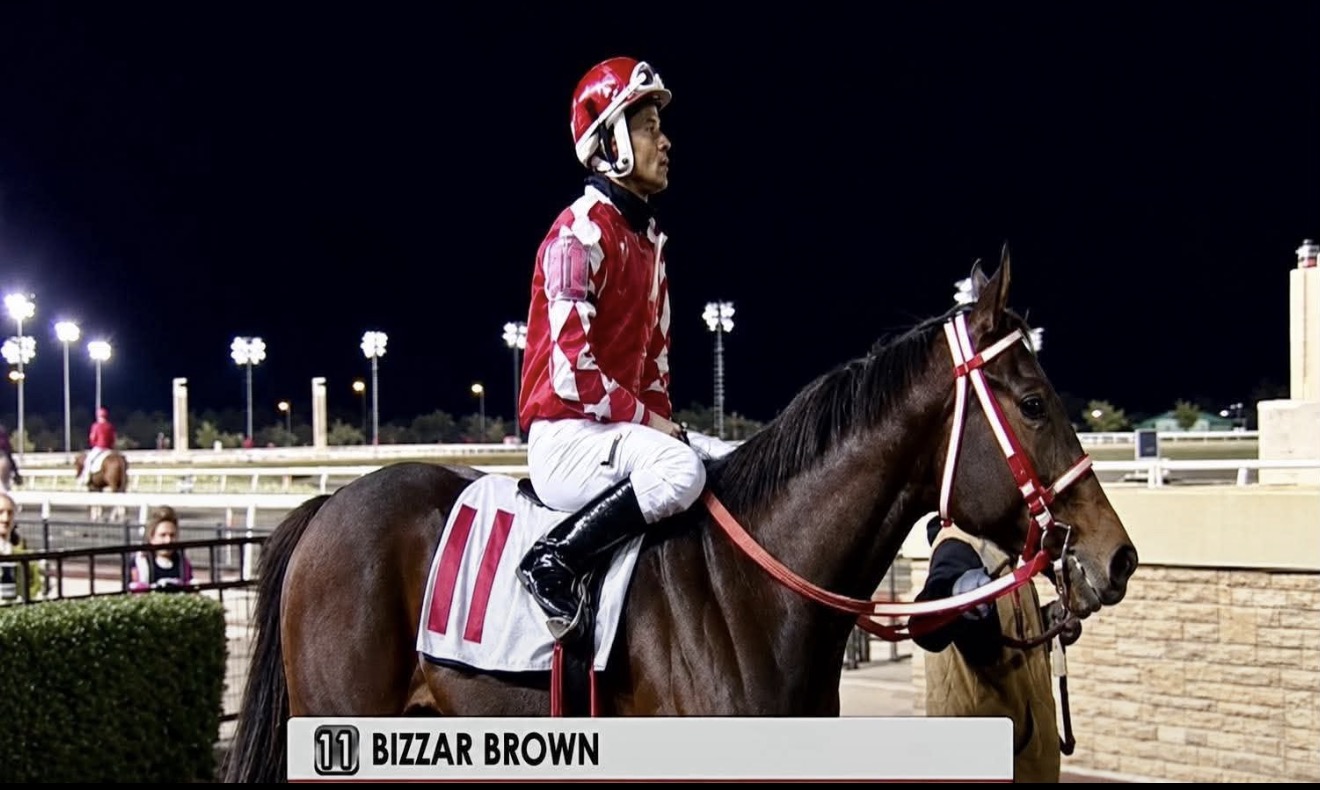
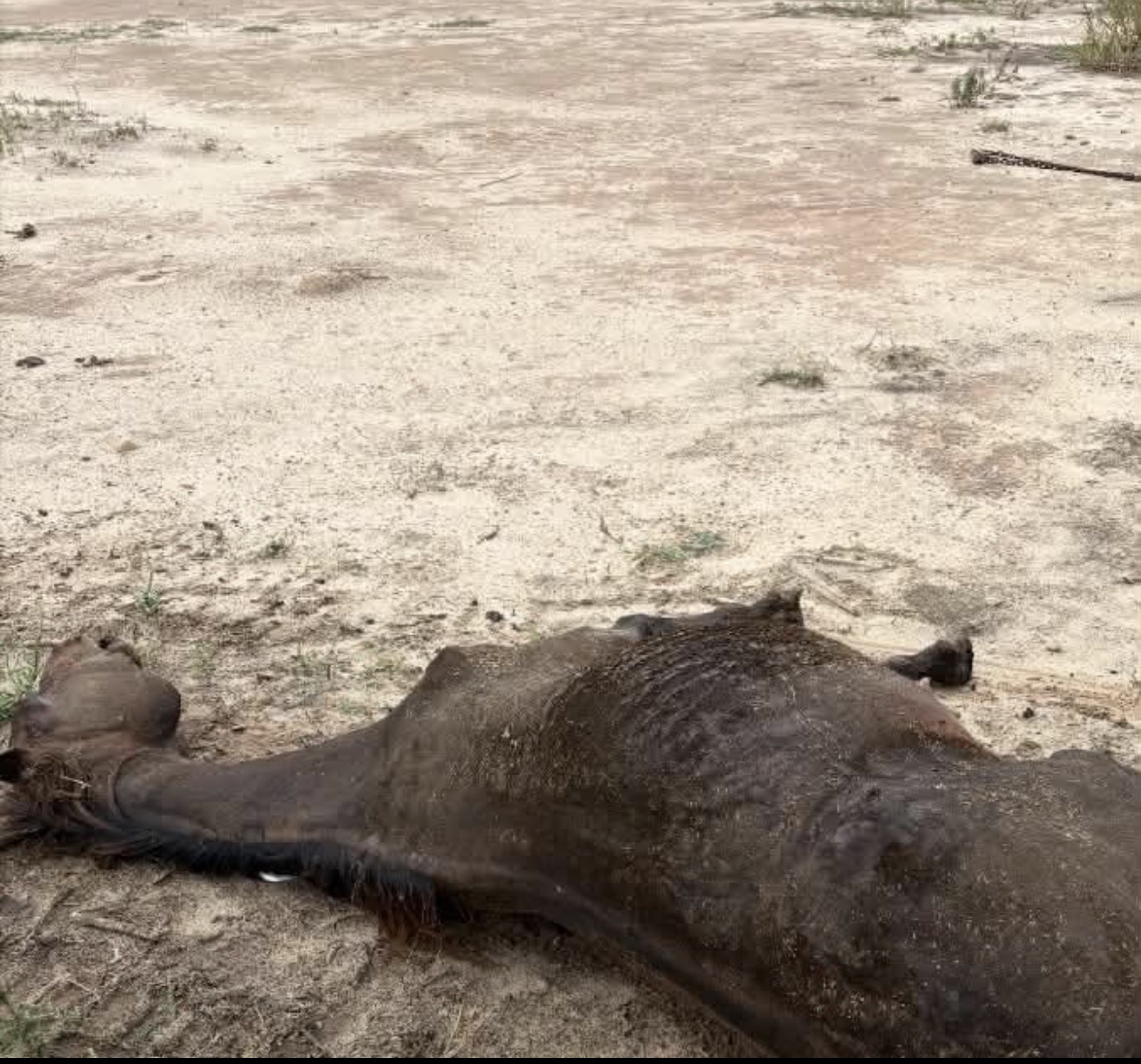
While the industry debates how to produce more Thoroughbreds, R.A.C.E. Fund recently announced the death of Bizzar Brown, a former racehorse and broodmare who died at a feedlot after losing a foal. The photographs are difficult to look at. They should be. Bizzar Brown during her racing career and at the feedlot where R.A.C.E. Fund reported her death. Photographs published by R.A.C.E. Fund, Inc.
Past The Wire has written extensively about Thoroughbred aftercare, the organizations charged with supporting it, the restrictions placed on those seeking funding, and the rescues left struggling while the industry’s wealthier institutions maintain substantial reserves. We’ve asked the questions. We’ve named names. We’ve documented the failures. We aren’t going to repeat all of it here.
But there is something profoundly wrong with an industry discussing how to produce more horses without giving equal consideration to what happens to the horses it has already produced.
Mike Repole wants more foals. Tom Ryan wants more mares in production. Both want a stronger industry. Fair enough. But Bizzar Brown was once somebody’s investment, somebody’s racehorse, and somebody’s broodmare. Eventually, she became somebody else’s problem.
The industry has a plan to produce more horses. Where is the equally serious, equally funded plan for the horses it no longer needs? Before we celebrate increasing the foal crop, perhaps we should decide what responsibility comes with producing it. We have asked these questions before. We will continue asking them. The fact that prominent people are now discussing some of the same issues publicly is encouraging. It doesn’t mean the questions have been answered.
Mike asked about the money. Tom offered a plan for the future. Churchill got credit for the past.
The sport is still waiting for someone to connect all three. Asked, but not answered.



Comments