

Who Got The Photo?
Britain upgraded every racecourse. Churchill Downs already has the same system. The rest of American racing is still asleep — and the people with the resources to fix it are choosing not to.
Earlier this month we wrote about Adam Silver and the NBA’s announcement that it was moving to AI-automated officiating for out-of-bounds and line calls — removing an entire category of human judgment from the game because the technology to handle it objectively already existed. The piece argued that thoroughbred horse racing was sleeping through a revolution that every other major sport was embracing in real time. That stewards reviewing slow-motion replay with no standardized protocol, varying jurisdiction to jurisdiction and racetrack to racetrack, was not a defensible system in 2026.
The British Horseracing Authority just made that argument harder to ignore.
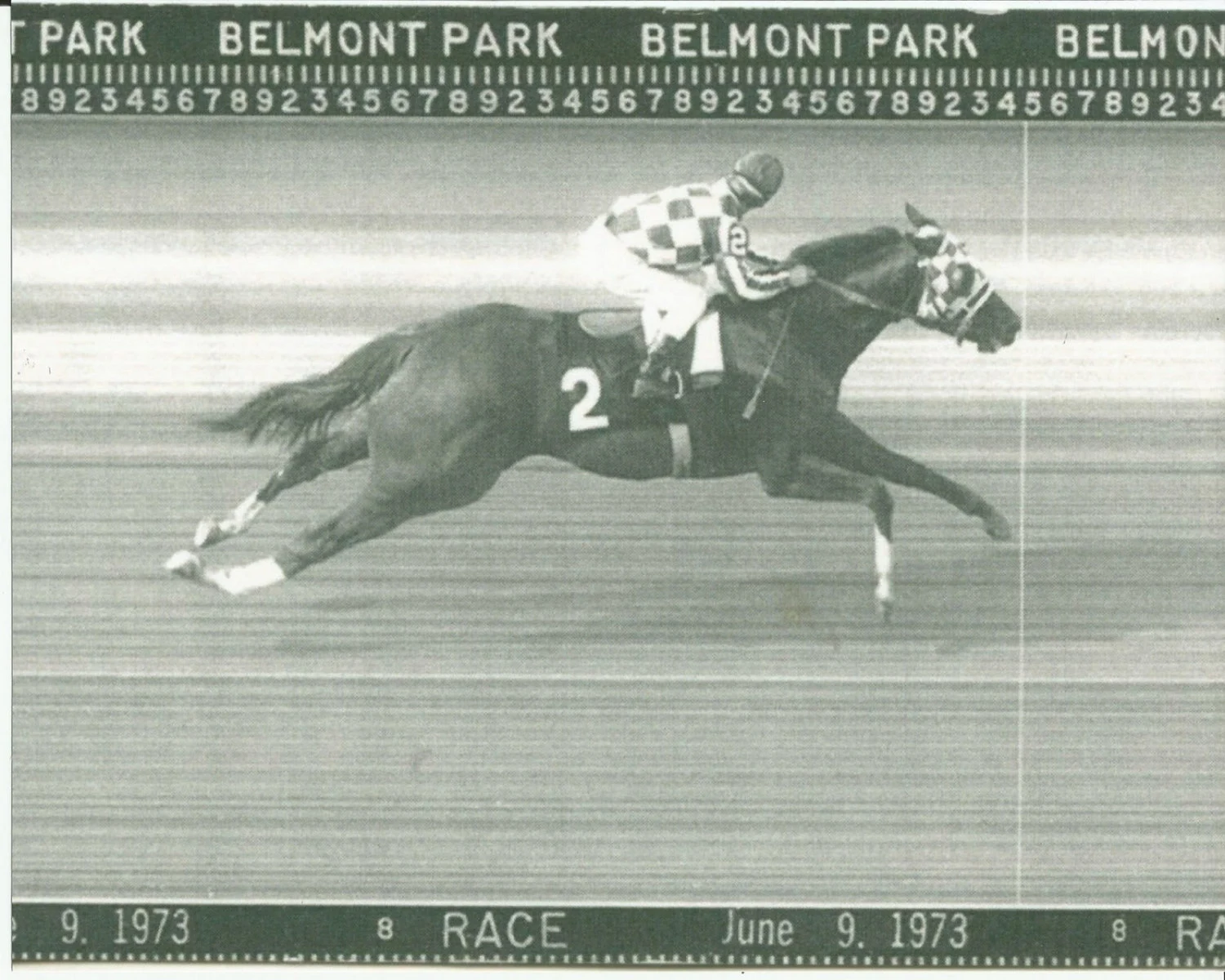
In March, the BHA announced the installation of Lynx photo-finish cameras at every British racecourse. The system captures approximately 6,000 frames per second. It produces images of a quality and resolution that the previous generation of equipment cannot approach. It performs significantly better in low-light conditions. It is now the primary tool for determining race placings at every British track, including the Cheltenham Festival, with existing cameras kept only as backup.
This is not an experimental pilot. This is not a proposal in a governance committee. It is deployed, operational, and running at the highest level of the sport on the other side of the Atlantic.
Churchill Downs already has it. The same Lynx system. Right now. At the track that hosts the Kentucky Derby.
The rest of American racing? Still waiting.
WHAT 6,000 FRAMES PER SECOND ACTUALLY MEANS
To understand why this matters, you have to understand what the technology is doing. A standard broadcast camera captures 30 to 60 frames per second. High-speed cameras used in television sports production typically operate at 240 to 1,000 frames per second for slow-motion replay. The Lynx system runs at approximately 6,000 frames per second at the finish line.
At that frame rate, a nose finish between two horses running at 40 miles per hour produces not a blurred image requiring human interpretation, but a precise, high-resolution record of exactly which animal’s nose crossed the plane first, by exactly how many pixels, at exactly what moment. The margin of error approaches zero. The image is not a judgment call. It is a document.
BHA Judge and Team Principal David Hicks put it plainly: the technology gives judges access to the highest-quality images and supports calling results “to a much greater degree of certainty” especially when horses may be split by a very small number of pixels. The judging process itself doesn’t change, but the instrument judges are working from is now categorically more reliable.
RaceTech CEO John Bozza noted that two years of development work went into this deployment, with custom API integration built specifically for the BHA’s operational environment. This was not an off-the-shelf installation. It was a purpose-built upgrade, tested extensively before it went live.
At 6,000 frames per second, a nose finish is not a judgment call. It is a document.
THE WAGERING INTEGRITY ARGUMENT THEY KEEP MISSING
Here is what the establishment conversation about officiating technology almost always omits: this is not only a fairness argument. It is a handle argument.
Racing’s economic model runs on wagering. Wagering confidence runs on the belief that results are determined objectively and correctly. Every time a photo finish is called incorrectly or even appears to be called incorrectly customers who bet on the race are given a reason to question whether the product they’re buying is trustworthy. In a competitive wagering landscape where bettors have more options than at any point in the sport’s history, that erosion of confidence is not a minor reputational issue. It is a revenue problem.
The BHA announcement explicitly acknowledged this. The improved image quality and public transparency Lynx images published on the BHA website and shared with broadcasters was described in part as a tool to provide clarity to sportsbooks navigating bettor disputes in close finishes. The regulator built transparency into the deployment from day one.
American racing has been fighting the CAW concentration problem, the rebate economics debate, the handle erosion question which we covered in depth during Belmont week with NYRA CEO David O’Rourke — and the answer to every one of those conversations begins with product integrity. A 6,000-frame-per-second objective record of every finish is product integrity made visible. It is something you can show a bettor. It is something a sportsbook can point to when a customer files a dispute.
The industry has been asking why customers don’t trust the product. Part of the answer is standing at every racecourse in Britain right now.
WE SAID THIS WAS COMING. THE NBA CONFIRMED IT. THE BHA DID IT.
In “If the NBA Can See It, So Can Horse Racing,” we traced the technology arc from Hawk-Eye’s deployment at Wimbledon to MLB’s Automated Ball-Strike system to FIFA’s semi-automated offside detection to Silver’s announcement that the NBA was moving to automatic AI officiating for an entire category of calls. The argument was that horse racing was the outlier — the sport still pretending that human judgment reviewing slow-motion replay was a sufficient answer to the precision demands of modern athletics and modern wagering.
The BHA’s Lynx installation is not the full AI officiating vision we described. It is not tracking interference in real time or building three-dimensional models of a race’s final furlong the way Hawk-Eye triangulates ball trajectory in tennis. But it is the foundational step, the same foundational step every other sport took first: get the objective record right at the finish line, make it public, and build from there.
Britain took that step. Churchill Downs took that step. The question is why the rest of American racing has not, and who is responsible for the answer.
$179 MILLION. NO EXCUSES.
This week we also published “The Registry Knows Where They Came From,” a piece about twenty-four Thoroughbred broodmares sitting in a Texas kill pen while the TAA-accredited rescue trying to save them was $7,000 short. That piece documented, from the most recently filed IRS Form 990 documents, that The Jockey Club carries net assets of $78.1 million and Breeders’ Cup Limited carries net assets of $101.1 million, approximately $179 million combined.
The same institutions that cannot find structural solutions to the slaughter pipeline cannot find structural investment in the officiating technology their sport requires. That is not a coincidence. It is a governance posture.
The Lynx system’s two-year development and deployment across all British racecourses was funded by RaceTech, Britain’s racing technology provider, in partnership with the BHA. It was not a charity expense. It was an infrastructure investment made because the governing body decided that the integrity of the product demanded it.
American racing’s two most powerful institutions are sitting on $179 million in combined net assets. They fund a TAA that averages $3.1 million a year in grants across 86 organizations. They announce annual contributions built partly on breeder fee pass-throughs. And they have produced no equivalent investment in the officiating infrastructure that would make the product they profit from more trustworthy to the customers who fund it.
Churchill Downs made the call on its own. That is significant. It means the technology is accessible, the vendor relationship exists, and the American market is not a barrier. What is a barrier is institutional will and the absence of any governance body with both the authority and the incentive to require it across the sport.
THE ARGUMENT THAT JUST RAN OUT OF ROAD
Every time officiating technology has been raised in American racing, the response has followed a familiar pattern. The technology isn’t ready. The cost is prohibitive. The jurisdictional complexity makes standardization impossible. Racing is different from other sports. Wait and see.
The BHA just ended the “technology isn’t ready” argument. It is ready. It is running.
Churchill Downs just ended the “cost is prohibitive” argument. A track made the investment without waiting for a mandate.
The Paco Lopez whip enforcement story we have been covering since Belmont week, a case where annotated imagery and frame-by-frame documentation became the evidentiary core of a stewards dispute is a window into exactly why this matters beyond the finish line. The quality of the visual record determines the quality of the ruling. Stewards can only work with what they’re given. Right now, in most American jurisdictions, what they’re given is inadequate.
The NBA is automating objective calls. Tennis eliminated human line judges at Wimbledon. MLB is rolling out automated ball-strike systems to the majors. FIFA tracks the ball’s contact data in real time at the World Cup. And thoroughbred horse racing a sport that asks its customers to wager billions of dollars annually on the outcome of events decided by fractions of a nose is still reviewing slow-motion replay in a stewards’ room.
Britain upgraded. Churchill Downs has it. The resources exist. The technology works. The vendors are in the market.
The only thing American racing is still waiting on is the people in charge deciding the product is worth protecting.