

The Triple Crown Change, Good, Bad or Ugly
They Finally Changed The Triple Crown, Just Not How We All Expected
Horse racing may have just made one of the most consequential scheduling changes in the modern history of the sport. Most of the initial reaction has centered on an extra week between the Kentucky Derby and the Preakness, the prospect of larger fields, and a new Championship Series intended to keep the leading three year olds competing against one another through the summer. On the surface, it sounds sensible. It may even sound overdue. The deeper you go, however, the more apparent it becomes that this is about far more than moving races around on a calendar.
This potentially changes veterinary strategy, campaign management, field composition, wagering, the value of several historic races, when the best three year olds finally face older horses, and the route to the Breeders Cup Classic. It also raises a much larger question about whether the major powers in racing are finally working together for the betterment of the entire sport or simply working together when their interests happen to align. Most importantly, it may affect the Triple Crown, one of the toughest achievements in all sports and arguably the biggest remaining anchor American horse racing possesses.
The New York Racing Association and Churchill Downs Incorporated announced the creation of a six race Thoroughbred Championship Series beginning in 2027. The proposed schedule consists of the Kentucky Derby on May 1, the Belmont Stakes on June 5, the Matt Winn at Churchill Downs in July, the Jim Dandy at Saratoga in late July or early August, the Travers at Saratoga in late August, and a new championship race at Churchill Downs in September. A unified points system and a $5 million prize pool are intended to encourage the leading three year olds to compete more frequently and remain active throughout the season. The exact dates of several races, the points structure, eligibility rules, nominations process and distribution of the prize money have not yet been released.
Two days after that announcement, Maryland Governor Wes Moore and the Maryland Jockey Club announced that the 2027 Preakness would be run on Sunday, May 23. That places it twenty two days after the Kentucky Derby and only thirteen days before the Belmont Stakes. Maryland said the objective was to give Derby horses additional time so more of them would continue to the Preakness. The Preakness also secured an extended television agreement with NBC through 2032.
The first question is whether Maryland reacted to the Championship Series or delivered a well considered counter that was already in development. There had been previous chatter about changing the Triple Crown schedule, and reports concerning a later Preakness date had circulated months earlier. That means it would be unfair to state that Maryland invented this plan in forty eight hours. It is equally difficult to ignore the timing. Churchill and NYRA unveiled a championship structure containing the Derby and Belmont but excluding the Preakness. Maryland then announced that its race would move eight days from its traditional position, becoming a Sunday event for the first time and leaving only thirteen days before the Belmont.
Maybe Maryland had studied every consequence and was prepared to move regardless of what Churchill and NYRA did. Maybe the new series accelerated a decision already under discussion. Maybe Maryland recognized that the Preakness was about to become the race outside the alliance and believed it had to act immediately to protect its relevance. Those are very different explanations. We do not yet know which one is accurate.
What we do know is that this was not merely a public relations response. Moving the Preakness alters the practical veterinary calendar between all three Triple Crown races.
That part needs to be explained carefully because it is easy to overstate it and just as easy to dismiss it without understanding the rules. Intra articular injections are injections made directly into a joint. They are legitimate veterinary treatments when properly diagnosed, administered, reported and regulated. They are not automatically evidence of wrongdoing. The issue here is not whether these treatments should exist. For me, that is a different discussion. The issue is how HISA withdrawal and stand down periods interact with the new schedule.
Under current HISA rules, an intra articular injection into most joints carries a seven day prohibition on timed workouts and a fourteen day prohibition on racing. A corticosteroid injection into the fetlock, commonly called the ankle, carries a thirty day racing prohibition. Certain products, including polyacrylamide hydrogel, carry substantially longer restrictions. HISA publishes the governing regulations and notes that its rules can continue to evolve with data, experience and stakeholder input, so every future campaign would still be subject to the rules in force at that time.
The plain English version is more important than the technical language. A horse receiving a routine qualifying joint injection in a knee, hock or another covered joint cannot record a timed workout for seven days and cannot race for fourteen days. A horse receiving a corticosteroid injection in a fetlock cannot race for thirty days. That is critical.
Under the traditional Triple Crown schedule, the Preakness came fourteen days after the Derby. Even where a rule theoretically said fourteen days, there was no meaningful margin. The exact timing of treatment, entry procedures, veterinary reporting, training and race time mattered. A trainer could not simply treat a horse after the Derby, wait comfortably, return to timed work and proceed normally to Baltimore. The schedule practically discouraged the option.
Under the new calendar, the Preakness comes twenty two days after the Derby. A horse could exit the Derby, be examined, receive a medically indicated injection in a knee, hock or another joint governed by the fourteen day racing rule, sit through the seven day workout restriction, return to timed training and still have time to race in the Preakness. It could not receive a corticosteroid injection in a fetlock and make the Preakness because the thirty day prohibition would still eliminate that possibility.
That is the first major consequence. To the general public, the added time is described as recovery. To a horseman, veterinarian or racing manager, it is also a treatment window. Both descriptions can be true at the same time. It does not mean treatment will be necessary, improper or even used. It means the calendar now permits options that the traditional schedule largely did not.
The second consequence may be more dramatic. The Preakness will be run only thirteen days before the Belmont. Because the shortest general intra articular racing prohibition is fourteen days, a horse cannot receive one of those joint injections after the Preakness and remain eligible for the Belmont. Not a knee. Not a hock. Certainly not a corticosteroid injection into a fetlock.
The industry has therefore created a workable joint treatment window between the Derby and Preakness while closing the window entirely between the Preakness and Belmont. That is not merely an extra week of rest. It produces different medical and strategic circumstances depending on which route a horse takes.
Consider the Derby horse proceeding to the Preakness. That horse can potentially receive certain fourteen day joint treatments after Louisville and still make Baltimore. Now consider the Derby horse skipping the Preakness and waiting for the Belmont. That horse has thirty five days between races, enough time on paper even for a thirty day fetlock corticosteroid restriction, provided every other medical, regulatory and training requirement is satisfied. Finally, consider the horse running in the Preakness and attempting the Belmont thirteen days later. That horse cannot receive an intra articular injection after Baltimore and make New York.
This creates a legitimate strategic divide. A Derby horse exiting Louisville in need of fetlock maintenance has a clear incentive to skip the Preakness and target the Belmont. A horse needing treatment in a knee or hock may now be able to receive it and still try Baltimore. A Preakness horse needing any qualifying joint treatment afterward is effectively out of the Belmont. The races may still be called a Triple Crown, but the three paths now operate under materially different veterinary conditions.
That may be defensible. It may even be safer than forcing horses back in fourteen days after the Derby. The problem is that almost none of the celebratory discussion has acknowledged it. If the governing bodies studied this interaction and concluded it was acceptable, they should explain that. If they did not study it, then racing has once again changed something fundamental without tracing the consequences all the way through.
The next issue is whether the new schedule and Championship Series will actually create larger fields. The answer is probably yes in some places, but not necessarily across the entire series.
The modern Thoroughbred does not race with anything resembling the frequency of previous generations. The Jockey Club reports that the average runner made 10.91 starts in 1950, 10.22 in 1970, 7.10 in 2000 and fewer than six starts in recent years. That average includes claiming horses and other runners who compete more frequently than elite three year olds managed around Grade 1 races and future stallion value.
That creates an immediate contradiction. The new championship contains six races from May through September. A legitimate Derby horse generally arrives in Louisville after two or three prep races. Add the Derby, any attempt at the Preakness, the Belmont, one or more summer races, the Travers, the September championship race and possibly the Breeders Cup Classic. A horse trying to participate meaningfully in everything could be asked to make nine or ten starts, most at the highest level, in a year when the average North American runner makes fewer than six.
That is not how the leading three year olds are currently managed. No points system changes the physical horse or the culture surrounding it. Trainers will continue to select races, skip others and build campaigns around specific objectives. The series may encourage participation, but it cannot compel soundness, recovery, form or appetite. It may not create more elite horses. It may simply spread the same limited group across more designated events.
The Preakness should benefit from the longer interval after the Derby. Derby participation in the Preakness has deteriorated badly, with only thirteen of ninety five Derby starters over the previous five years returning in Baltimore and none doing so in 2025. The additional time may persuade trainers who would never return in fourteen days to consider twenty two.
The veterinary window, easier shipping schedule and additional recovery time should all help. I would expect the Preakness to draw more Derby horses than it has recently and to move more consistently toward fields of eight to eleven instead of the smaller fields we have become accustomed to seeing.
There is, however, an important counterweight. The Preakness is not part of the Championship Series. The Belmont is, and it comes only thirteen days later. A trainer with a horse unlikely to run twice in thirteen days may have to choose between the second leg of the Triple Crown and a points race carrying championship implications. Unless that horse won the Derby and is chasing history, the financial structure could actually push some leading horses away from Baltimore and toward New York.
That means the new Preakness date may improve Derby participation without producing the full field increase Maryland expects. Derby winners and horses exiting the Derby particularly well may come. Others may skip directly to the Belmont because the Belmont carries points, offers five weeks after Louisville and leaves every veterinary option available that the Preakness route does not.
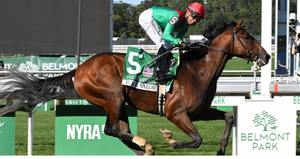
The Belmont is probably the clearest beneficiary. It has five weeks from the Derby, a prominent place in the Championship Series, the return to a rebuilt Belmont Park and the prestige of the final Triple Crown race. It can attract Derby horses bypassing Maryland, Preakness horses able to return in thirteen days, fresh horses entering the Triple Crown trail late and horses whose connections want championship points. It should regularly have the opportunity to draw fields in the ten to fourteen range, depending on the final eligibility and points system.
There is a catch even there. A Belmont field may become larger while containing fewer horses that actually competed in all three classics. The race could gain starters but lose part of its historical identity as the final test of horses surviving the Derby and Preakness. Bigger does not automatically mean more meaningful.
The Matt Winn and Jim Dandy present another problem. Both are intended as summer races in the Championship Series, with the Matt Winn scheduled for July and the Jim Dandy in late July or early August. Modern trainers are unlikely to run a leading three year old in both and then return in the Travers later in August. Some will choose the Matt Winn. Some will choose the Jim Dandy. Others will use the Haskell. A few may train straight to the Travers.
Instead of consolidating the division, the series may split it three ways in July. One prep may receive a championship leader. Another may receive the Derby or Belmont winner. The Haskell may attract a fresh late developer or a horse whose connections prefer nine furlongs. The total number of prominent horses running in July could increase while the quality of each individual field remains diluted.
The Travers will remain strong because the Travers already occupies a position no manufactured points system needs to create. It is the midsummer championship for three year olds and one of the races that can define a season. Championship points and bonus money may make it even more difficult to skip, but they will not necessarily make the field much larger. The likely result is a high quality field of eight to eleven horses arriving through different routes, not an enormous field containing every leading horse from the spring.
The Haskell is one of the races most directly compromised. It normally sits in mid July, precisely where the new Matt Winn and the approach to the Jim Dandy will compete for the same horses. The Haskell remains a Grade 1, a million dollar race and a major stallion making opportunity. It has history, visibility and an attractive nine furlong distance. What it does not have is Championship Series points.
That exclusion is significant. An owner leading or chasing a $5 million championship has a direct financial reason to select the Matt Winn or Jim Dandy instead. Monmouth may still attract a star, particularly one whose connections dislike the series schedule or believe the Haskell is the best fit. What becomes harder is drawing multiple divisional leaders together.
The Haskell may gradually become the alternative rather than the center of the division. It can remain important and produce outstanding races, but the new structure financially classifies it as outside the preferred road. Racing cannot claim to be building a unified championship while ignoring what that does to one of the premier three year old races in the country.
The Pennsylvania Derby may face an even greater threat. The new championship race at Churchill Downs will be held in September, but its exact date has not been announced. The Pennsylvania Derby traditionally occupies the second half of that month. Depending on where Churchill places its finale, the races may be one, two or three weeks apart, or even land in direct conflict.
By current training standards, any of those configurations are difficult. A leading three year old is unlikely to run in the Travers, the Churchill championship race and the Pennsylvania Derby within a compressed span. If the Churchill race carries final points and determines distribution of a $5 million pool, it becomes the economically rational destination. Parx is left with horses outside championship contention, horses who missed the Travers, late developers, horses better suited to nine furlongs and connections choosing tradition over the series.
That may still create a good betting race. It may even produce a larger field of second tier horses. It is not the same as the Pennsylvania Derby attracting the best of the division for one final major race against their own age.
Then we reach the older horses, where the long term ramifications may be even more significant. One of the most important passages in any three year old season comes when the best sophomores leave the protection of their own division and face mature horses. That confrontation tells us whether the spring stars have progressed, whether the older division is legitimate and whether a three year old deserves to be favored in the Breeders Cup Classic.
The Jockey Club Gold Cup and the Awesome Again, or whatever title the principal California Classic prep carries, have historically offered that opportunity. The new September championship race gives leading three year olds a lucrative alternative against their own age. It offers points, bonus implications and the possibility of securing the divisional title without facing older horses.
Most owners and trainers will follow that incentive. Why leave a protected three year old championship path to face seasoned older horses unless the purse, timing or Breeders Cup preparation clearly demands it? The result could be fewer leading sophomores in the Jockey Club Gold Cup and California’s principal fall dirt route.
That is especially striking in New York. NYRA is helping create a series that may divert the best three year olds away from one of its own historic races, the Jockey Club Gold Cup, while the new Belmont Park prepares to host the 2027 Breeders Cup on October 29 and 30.
Perhaps NYRA believes the Belmont, Jim Dandy, Travers and the return of the Breeders Cup provide more than enough value to justify that risk. Perhaps the Jockey Club Gold Cup is expected to become a purer older horse race. That is a defensible business calculation. It may also weaken one of the best measuring sticks leading into the Classic.
This brings us to whether the Breeders’ Cup Classic becomes a battle of attrition for the three year olds. I do not believe many horses will attempt every race in the series. The more likely outcome is selective participation. The leading trainers will identify the races they need, avoid the ones they do not and try to arrive at Belmont Park with something left.
Even a selective campaign can be demanding. A three year old might make two Derby preps, run in the Derby, choose the Preakness or Belmont, use the Haskell, Matt Winn or Jim Dandy, run in the Travers, contest the September championship and then face older horses in the Classic. That is eight starts, with most concentrated between March and October and nearly all against graded competition.
The September finale could leave five or six weeks before the Breeders Cup, depending on its final date. That interval alone is workable. The cumulative campaign is the concern. The Derby trail, a Triple Crown race or two, a summer prep, the Travers and a championship finale can take a physical toll even when every individual spacing decision appears reasonable.
The freshest three year old in the Classic may not be the horse who participated most faithfully in the Championship Series. It may be the horse whose trainer skipped the correct races. That creates tension between winning the series and winning the Breeders Cup Classic. The championship may reward activity. The Classic may reward preservation.
A trainer could face an awkward decision after the Travers. Pursue the September points and bonus money, or train directly to the Classic. Try to win a newly created championship, or protect the horse for the established world championship. Try to maximize the current season, or protect stallion value and the possibility of racing at four.
Those goals will not always align. The new series is being sold as continuity, but it may make strategic absence more important than ever.
There is also a wagering consequence. Handicappers rely on races against older horses to compare generations. Without a meaningful bridge, the Breeders Cup Classic becomes the first true test for many of the best sophomores. Bettors must evaluate three year old speed figures, pace dynamics and form without knowing how those horses translate against mature competition.
That uncertainty can create opportunity, but it can also create a less coherent championship picture. The sport may arrive at its biggest dirt race still debating whether the three year old crop is actually good or merely successful against itself.
All of this leads to the business and governance question. Does this announcement show that racing’s major organizations are finally capable of working together, or does it show that they cooperate only when aligned self interest makes cooperation profitable?
Churchill Downs and NYRA deserve credit for attempting something ambitious. They are committing money, television exposure and their premier races to a season long concept. Racing has complained for years that its stars disappear after the Triple Crown and that the sport lacks a coherent narrative. They are trying to address that.
The problem is that cooperation is not measured only by the partners standing at the podium. It is also measured by the institutions left outside the room.
The Preakness was excluded. The Haskell was excluded. The Pennsylvania Derby was excluded. The major California races were excluded. Oaklawn and other tracks that help develop the same horses were excluded. The series concentrates the Derby, Belmont, Matt Winn, Jim Dandy, Travers and finale at properties controlled by Churchill and NYRA.
That may be excellent strategy for Churchill and NYRA. It is not automatically excellent strategy for horse racing.
The stated goal is to encourage the leading three year olds to meet more frequently. The practical structure encourages them to race more frequently at Churchill and NYRA tracks. There is a difference. One is an industry solution. The other is a business alliance with industry benefits.
That does not make it wrong. Churchill Downs and NYRA have every right to promote their assets and create value for their organizations. What should not happen is for aligned self interest to be marketed as universal cooperation without acknowledging who may bear the cost.
The Haskell and Pennsylvania Derby are not minor races standing in the way of progress. The Jockey Club Gold Cup is not calendar clutter. California’s leading Classic prep is not irrelevant because it sits outside an agreement between two eastern organizations. These races form part of the national racing ecosystem. Weakening them can damage handle, attendance, regional fan engagement, stallion making opportunities and the connections between divisions.
A true national championship might have begun with all major stakeholders at the table. It might have incorporated the Preakness, Haskell, Pennsylvania Derby, a California race and a meaningful older horse test. It might have created flexible pathways rather than one preferred corridor between Churchill and New York.
Instead, we have a six race series owned by two organizations and a Preakness schedule change announced by a third party immediately afterward. That looks less like the industry moving together and more like separate powers moving their own pieces around the same board.
Maryland’s move deserves the same scrutiny. Giving Derby horses more time before the Preakness may be logical. Moving the race to Sunday on Memorial Day weekend may create a broader event and improve television possibilities. Extending NBC through 2032 provides stability. Those are all legitimate considerations.
The thirteen day turn into the Belmont is still difficult to reconcile. If the overriding purpose was to preserve and strengthen the Triple Crown, why create an interval that modern trainers may dislike even more than the old fourteen day Derby to Preakness turnaround? If the answer is that Maryland can control only its own date, that reinforces the absence of genuine coordination.
A well considered Triple Crown restructuring would have involved all three races moving together. The intervals would have been studied as a complete system. Veterinary rules, travel, training, television, wagering, tradition and the broader stakes calendar would have been addressed collectively.
Instead, Churchill and NYRA announced a championship without the Preakness. Maryland moved the Preakness without the Belmont moving. The Triple Crown now has twenty two days between its first two legs and thirteen between its final two. That does not look like a unified solution. It looks like three institutions protecting their positions.
NYRA may be the biggest miscalculator because it owns the final and most dramatic stage of the Triple Crown. Only thirteen horses have swept all three races. That scarcity is exactly what makes the achievement so powerful.
The Belmont is not merely a great race. When a horse arrives with the Derby and Preakness already won, it becomes one of the largest sporting events in the country. The audience does not need an explanation of points, qualifying criteria or bonus distributions. The question is immediate and universal. Can this horse win the Triple Crown?
That question reaches people who do not follow racing. It reaches casual sports fans, mainstream media, morning television, national newspapers and people who may place one horse racing wager all year. It creates a level of attention the sport cannot manufacture through a standings table.
One year with a horse attempting the Triple Crown may be worth more to racing than ten years of the new Championship Series. That is an opinion, but it is not an unreasonable one. A Triple Crown attempt creates an all or nothing event built on more than a century of history. A points series must first teach people that it exists, then persuade them that the standings matter, then maintain sponsorship, television commitments, funding and agreement between corporate partners.
The over under on the Championship Series surviving in its original form may be three years. That is not because the concept has no merit. It is because racing has a long history of announcing initiatives with great enthusiasm before funding, leadership, television strategy or institutional priorities change.
The Triple Crown has survived wars, economic crises, medication eras, ownership changes, television changes, track renovations and every generation of executives who believed they could improve it. The Championship Series has not survived its first disagreement because it has not yet run its first race.
That difference matters.
NYRA’s language surrounding the series says it is building on tradition and carrying excitement through the season. Churchill says it will extend the Derby’s excitement across five months and create a season long storyline. Those are understandable goals. The danger is believing the sport can create a new storyline without affecting the old one.
The Triple Crown is not only a schedule. It is a narrative structure. The Derby introduces the horse. The Preakness raises the possibility. The Belmont decides immortality. Every stage has a clear purpose, and every sports fan understands it. JS
The Championship Series introduces a second structure. The Derby and Belmont award points. The Preakness does not. Summer races become part of a standings system. A new September race may decide a prize pool. The three year olds may remain within their division until the Breeders Cup. The public is being asked to follow two championships involving many of the same horses, one based on history and one based on accounting.
That may work for committed racing fans. I am not convinced it expands the sport.
The Triple Crown’s greatest commercial advantage is simplicity. Three races. One horse. One chance at immortality. Its greatest emotional advantage is uncertainty. Most years it fails. That failure is not a weakness. It is what gives the next attempt value.
Every Derby winner begins the possibility. Every Derby winner losing the Preakness preserves the scarcity. Every horse arriving at the Belmont with two victories creates an event greater than the sum of the three races. The entire country understands what is at stake before the gates open.
A points championship does not produce the same tension. A horse can lose a race and retain the lead. Another can skip a race and remain eligible. The standings can be recalculated. The bonus can be distributed. That may be commercially useful. It is not immortality.
Racing has spent decades searching for a marketing idea capable of attracting the general public while already owning one of the greatest marketing properties in American sports. It should be extremely careful about compromising that property while trying to solve its very real participation problem.
There is nothing sacred about fourteen days between the Derby and Preakness. Traditions can evolve. Horse welfare, modern training and changing business realities deserve consideration. The industry should not preserve an interval merely because it is old.
The burden, however, should be on those making the change to show that they have protected the greater asset. Did they model how many Derby horses would realistically return in twenty two days? Did they study how many would choose the Belmont instead because it carries series points? Did they consider HISA’s injection timelines? Did they project the effect on the Haskell and Pennsylvania Derby? Did they consult California? Did they assess the Jockey Club Gold Cup? Did they model how the September finale affects the Breeders Cup Classic? Did Churchill, NYRA and Maryland ever sit together and study the entire national calendar?
Those answers matter because the potential consequences are long term. Once owners and trainers adapt their campaigns, once television windows shift, once races lose recurring access to divisional leaders and once fans stop expecting the best horses to meet in certain places, restoring that value is not easy.
The Championship Series could succeed. It could create strong television programming, meaningful bonuses, recognizable standings and new rivalries. It could encourage a few horses to race more often. It could produce an excellent Travers and an exciting September finale.
It could also last three years, weaken several established races, reduce early meetings between three year olds and older horses, complicate the Triple Crown, and then disappear when the funding or partnership changes.
That is the asymmetry of this gamble. The upside is a new property. The downside is damage to properties that already possess history, identity and public recognition.
The sport has every right to innovate. It has an obligation to understand what it may be trading away.
Perhaps this entire plan will work. Perhaps the Preakness will regularly draw Derby winners again. Perhaps the Belmont will become stronger, the summer series will create stars and the Churchill finale will lead naturally into the Breeders Cup. I hope that happens because racing needs wins.
Hope is not analysis.
The present structure looks like an effort by Churchill Downs and NYRA to connect their best races, followed by an effort by Maryland to protect the Preakness from becoming collateral damage. It looks like cooperation among aligned interests rather than cooperation across the sport. It asks horses who average fewer starts than ever to support a longer championship calendar. It opens one veterinary window while closing another. It pressures the Haskell and Pennsylvania Derby. It may keep the best sophomores away from older horses until the Breeders Cup. It risks turning the Classic into a test not only of greatness, but of which three year old has survived the campaign with the most horse remaining.
Most importantly, it introduces uncertainty around the one achievement in American racing that still needs no introduction. One Derby winner reaching the Belmont with the Triple Crown alive can do more for this sport than a decade of points standings. It can make horse racing the biggest story in America. It can bring casual fans to the track, drive handle, fill television hours and remind everyone why these animals and these races once occupied a central place in the national imagination. You do not replace that with a bonus pool. You do not improve it by accident.You do not risk it without being absolutely certain you understand every consequence.
The Triple Crown is not perfect. It was never supposed to be easy, convenient or designed around the modern desire to avoid difficult decisions. It is rare because it demands something exceptional from an exceptional horse. That is why only thirteen have done it. That is why people still care. That is why one legitimate attempt can be worth more than ten years of a Championship Series whose permanence has yet to be tested.
Racing may believe it has changed the calendar. In reality, it may have changed veterinary strategy, campaign strategy, divisional structure, the value of historic races and the story the sport tells about itself.
The question is not whether the industry can create a new championship. The question is whether it is wise enough not to compromise the one it already has.
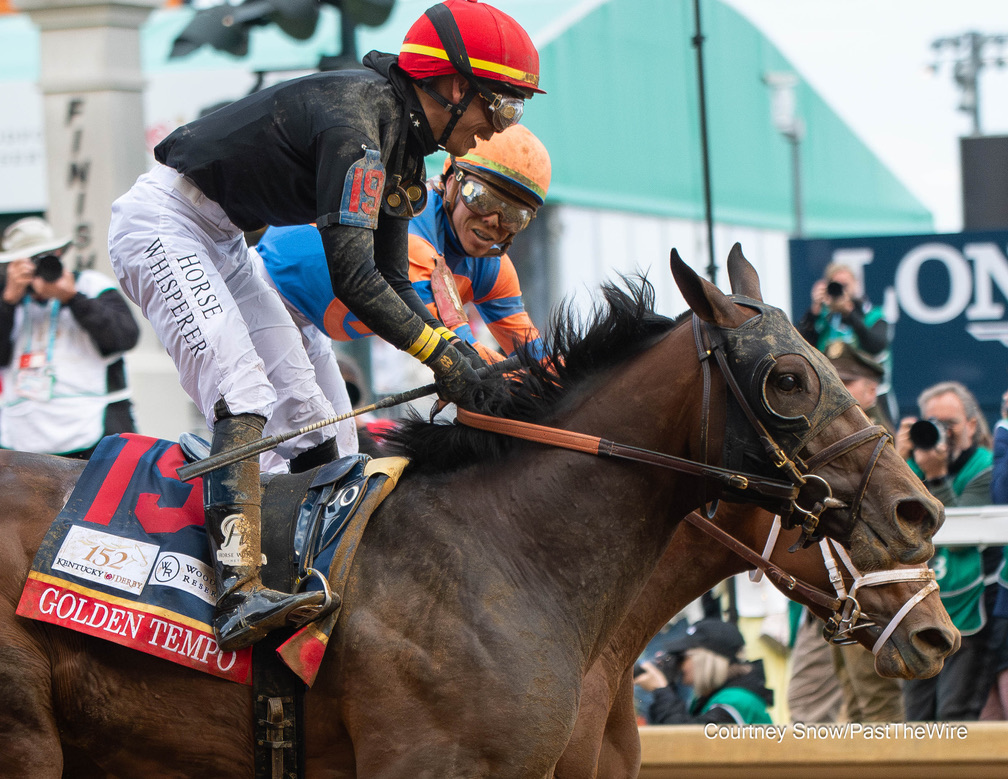
A free $100 Win bet in The Kentucky Derby on the horse of your choice, 2027, to the first person to put the correct reason I chose this race as my signature close: (Hint, you have to be familiar with and understand my signature closes, and probably watch the race)