
 Brought to you by AmWager
Formula 1, Not Horse Racing, Is the Real Sport of Kings
We may cling to tradition, but the world has already crowned its champion
For centuries horse racing has worn the mantle of the Sport of Kings. Royal boxes, big hats, bloodlines, barns, billionaires — the whole romantic picture. And for a long time, it fit. The Derby, the Arc, the Breeders’ Cup… these events were the playgrounds of wealth, status, and generational influence.
But times change. Wealth evolves. Influence shifts. And the world doesn’t stand still just because racing refuses to move its feet.
If we’re being honest — and here at Past the Wire we don’t do anything but — the modern world’s true Sport of Kings is Formula 1.
Not even close. Not even competitive.
The money is bigger, the audience is bigger, the global footprint is bigger, the celebrities are bigger, and the glamour is as polished as a Ferrari garage floor. And unlike horse racing, Formula 1 isn’t dragging around the anchor of an aftercare crisis it created and still can’t resolve.
Let’s break it down — side-by-side, stable vs. team, Derby vs. Monaco, Churchill Downs vs. the global stage.
I. The New Royal Stables: F1 Teams vs. Racing Barns
In horse racing, they’ll have you believe the “power barns” are the equivalent of royalty — Godolphin, Juddmonte, Coolmore, Phipps, Hronis, Repole, etc. They carry history, they breed icons, they dominate stakes nominations.
But in Formula 1, the teams are the stables — and the scale is incomparable:
- Ferrari. Mercedes-AMG. Red Bull Racing. McLaren. Aston Martin. Audi. Newcomer Cadillac
These aren’t barns. They’re global empires. - Their budgets routinely exceed $140–$200 million per season, and that’s with a mandated cost cap.
- Their “bloodlines” are engineering pedigrees — the brightest aerodynamicists, physicists, mechanics, strategists, simulators, analysts.
Racing’s best barns have 100–150 staff.
F1 teams have 1,000+ employees working around the world. - Their “horses” are multimillion-dollar machines evolved through science, wind tunnels, simulators, and space-grade engineering.
And unlike horses?
They never break down and get shipped off somewhere we’d rather not talk about. It pains me to say it but the slowest Formula 1 car is treated far better than our slowest horses in many cases. That is beyond sad.
Drivers know and accept and choose the risks. Horses, well they can’t talk.
II. Owners, Billionaires, and Power Brokers
Racing has great owners, but the global glamour bar tilted decades ago.
Famous Racing Owners vs. F1 Power Figures
Horse Racing Owners (USA & Europe):
- Sheikh Mohammed Al Maktoum (Godolphin)
- John Magnier & Coolmore partners
- Juddmonte / Prince Khalid legacy
- Peter Brant
- Mike Repole
- Various American mega-owners (multi-millionaires, sometimes billionaires)
Excellent names. Powerful people. Even a few really nice guys, especially for billionaires. No question.
But Formula 1’s ownership picture?
Different league entirely.
Formula 1 Ownership Class:
- Liberty Media (worth over $60B)
- The Red Bull empire (global beverage and sports conglomerate)
- Mercedes / Daimler AG
- Ferrari (a public company and global luxury symbol)
- Lawrence Stroll (Aston Martin billionaire industrialist)
- INEOS / Sir Jim Ratcliffe (multi-billion-dollar petrochemical titan)
Formula 1 doesn’t attract wealthy enthusiasts.
It attracts the titans who run industries.
For sheer economic power, racing barns simply can’t match it.
III. Follow the Money — F1’s Revenue Dwarfs Horse Racing
**Formula 1 Revenue (2024):
$3.65 BILLION
From:
- Global broadcasting
- Streaming
- Sponsorship
- Race hosting fees
- Hospitality (Paddock Club is a luxury on par with Monaco yachts)
Horse Racing’s Big Days:
- Kentucky Derby handle: ~$210 million
- Breeders’ Cup weekend handle: ~$175–190 million
- Track revenues: tickets, concessions, sponsorship, on-track bets
- Very little true global media money
The Derby is massive — in the context of American racing.
The Breeders’ Cup is elite — in the context of the equine world.
Formula 1 is massive and elite everywhere — from Abu Dhabi to Miami, Melbourne to Monaco, São Paulo to Silverstone.
F1 isn’t a sporting event. It’s a continental economic engine. I have been to many Kentucky Derbies, Breeders’ Cup and various major races just about everywhere. I have been to the Monaco Grand Prix, Miami and others. It doesn’t compare.
IV. Viewership: Derby Day vs. A Season-Long Global Empire
Kentucky Derby (2025):
~17.7 million average U.S. viewers.
That’s huge by American standards.
But F1 isn’t chasing U.S. viewership alone:
Formula 1 Global Fanbase:
~827 million worldwide
6.5+ million live attendees annually
F1 races are global stops on a world tour of wealth:
- Singapore
- Monaco
- Las Vegas
- Abu Dhabi
- Saudi Arabia
- Japan
- Australia
- Great Britain
- Italy
- The United States (three times!)
Horse racing — outside the Derby, the Royal Ascot festival, or Melbourne Cup — is largely regional.
F1? Borderless. Timeless. International. Seasonal. Cinematic.
It is consumed, reposted, clipped, streamed, memed, and rewatched all over the world.
Horse racing gets one big American weekend, one big British week, one big Australian day.
Formula 1 gets 24 global weekends. Even the US coveted Super Bowl is just one Sunday.
V. Celebrities, Culture, and Unmatched Glamour
The Derby still draws celebrities — actors, musicians, athletes, influencers.
Breeders’ Cup too, but nowhere near the old days.
But look at F1 today:
- Beyoncé
- Tom Cruise
- Rihanna
- Brad Pitt
- Leonardo DiCaprio
- The Royal Family
- Tech billionaires
- Fashion moguls
- Every model on earth
- John Stettin (In my club I’ll splash the pot anytime I please)
- Every influencer trying to look like they belong in the paddock
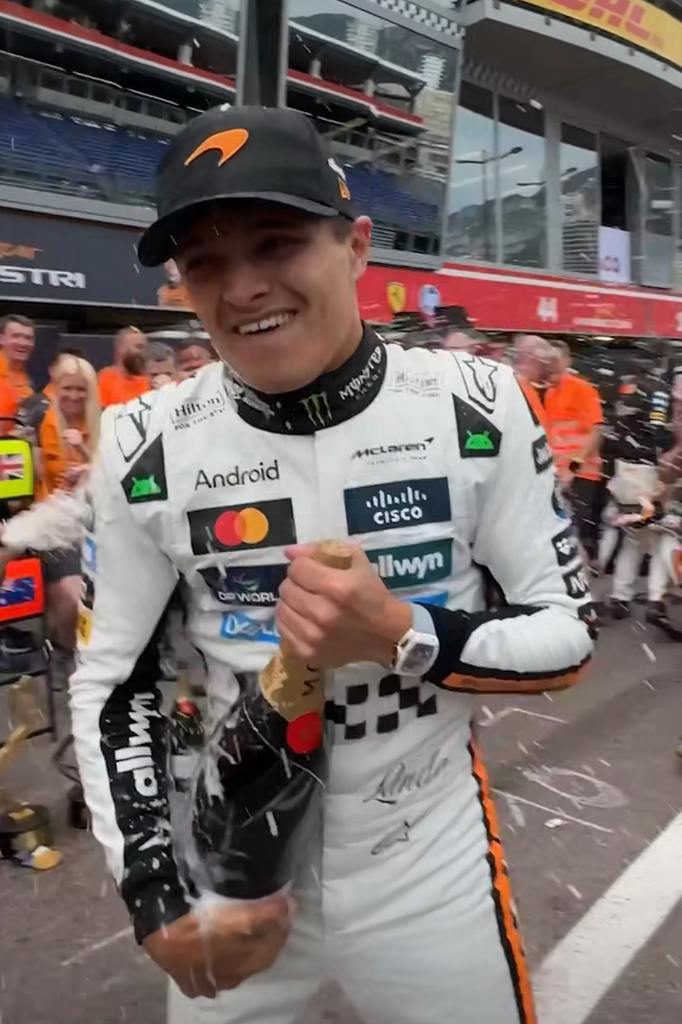
And unlike horse racing celebrities who may show up for the hats and mint juleps, celebrities at F1 show up because it is the center of global luxury culture.
The Paddock Club is the new royal box.
The garage walk-throughs are the new saddling paddock.
The grid walk is the new red carpet.
This is glamour in motion, not glamour in memory.
VI. The Ethical Weight: F1 Doesn’t Carry Racing’s Aftercare Burden
This is where the gap becomes a canyon.
Formula 1 cars do not require retirement plans.
They are not euthanized.
They are not “re-homed.”
They don’t get injured and become political talking points.
They don’t wind up in kill pens.
Horse racing, for all its beauty and greatness, carries the moral responsibility of living athletes. And racing has not solved aftercare — not even close.
The world sees it.
Animal-rights activists weaponize it.
Mainstream media picks it up whenever tragedy strikes.
F1 never has to defend the welfare of a Ferrari.
That alone shifts global perception — fairly or unfairly — toward F1 as the cleaner, more modern, more socially acceptable “elite” sport.
VII. The Global Worldview: Yesterday’s Kings vs. Today’s Titans
Horse racing is still loved — by those who grew up in it, those who bet it, and those who understand its nuance, complexity and soul.
But globally?
The gravitational pull has shifted.
F1 is:
- Younger
- More diverse
- More international
- More media-savvy
- Far more engaged with modern audiences
- More Tech-savvy
Racing is:
- Traditional
- Regional
- Fragmented
- Weighted down by regulation battles, medication fights, CAW controversy, and the aftercare crisis
- Technology challenged, I’m being kind here
The Derby will always matter.
The Breeders’ Cup will always matter.
But they no longer define global prestige.
The world’s attention has already crowned a new king.
VIII. The Verdict — Long Live the New Sport of Kings
When you stack it all side by side:
| Metric | Horse Racing | Formula 1 |
|---|---|---|
| Money | Hundreds of millions | Billions |
| Global Reach | High on marquee days | Year-round global juggernaut |
| Celebrity Power | Sporadic | Constant and elite |
| Owners | Wealthy horsemen, execs, CEO’s | Industrial titans, global brands |
| Stables vs. Teams | 100–150 staff | 1,000+ per team |
| Ethical Shadow | Heavy aftercare burden | None |
| Modern Relevance | Fading with young audiences | Surging worldwide |
The conclusion is unavoidable:
If the Sport of Kings means wealth, fame, glamour, global power, global audience, and modern cultural impact… it belongs to Formula 1, not horse racing.
Horse racing remains noble. Beautiful. Historical.
But Formula 1 is the throne room of modern royalty — where billionaires play chess with carbon fiber rockets and the whole world watches.