

If You Want to Cry, Pick Something Legit)
Ten horses entered in a Grade 1 for three-year olds in late December is no small feat in the game today.
There was a time—not all that long ago—when I was against a trainer running multiple horses in the same race. If they did, I believed they should be coupled. I don’t feel that way anymore.
The sport has evolved. The game has changed. The fans have changed. More importantly, the bettors have changed. If we want this sport to survive, let alone thrive, then we have to evolve with it.
We’ve been here before. Secretariat and Riva Ridge ran coupled in the inaugural Marlboro Cup, a race that I’d argue eventually morphed into what we now know as the Breeders’ Cup Classic. The old 1 and 1A days. The 2 and 2B days. That wasn’t some dark age—it was racing.
Fast forward to today.
Three of the most compelling, throwdown, must-watch races of the year were the Breeders’ Cup Mile, the Laffit Pincay Jr., and the Malibu. All three were run in California—yes, the Breeders’ Cup is a traveling show—but those races stood out by any fair measure.
And yet, before the Malibu, social media lit up with complaints. Hand-wringing. Pearl-clutching. The outrage? Bob Baffert trained five of the ten horses entered.
Nonsense.
When you run an operation at the highest level—one that emphasizes the Kentucky Derby, three-year-old development, and stallion potential, which just so happens to be exactly what people investing millions on the breeding and ownership side of this sport care about—this is what happens. When you’re as good as Bob B, by the time the last major three-year-old race of the year rolls around, numbers follow success.
So let me ask the whiners a few honest questions.
Did it take away from the race?
Was it not competitive and or exciting?
Was it not fast?
Did we not see a breakout performance?
Cornucopian, the potential star of the show, scratched after flipping in the paddock. Barnes, the likely favorite, scratched. Both trained by Baffert. And what did we still get?
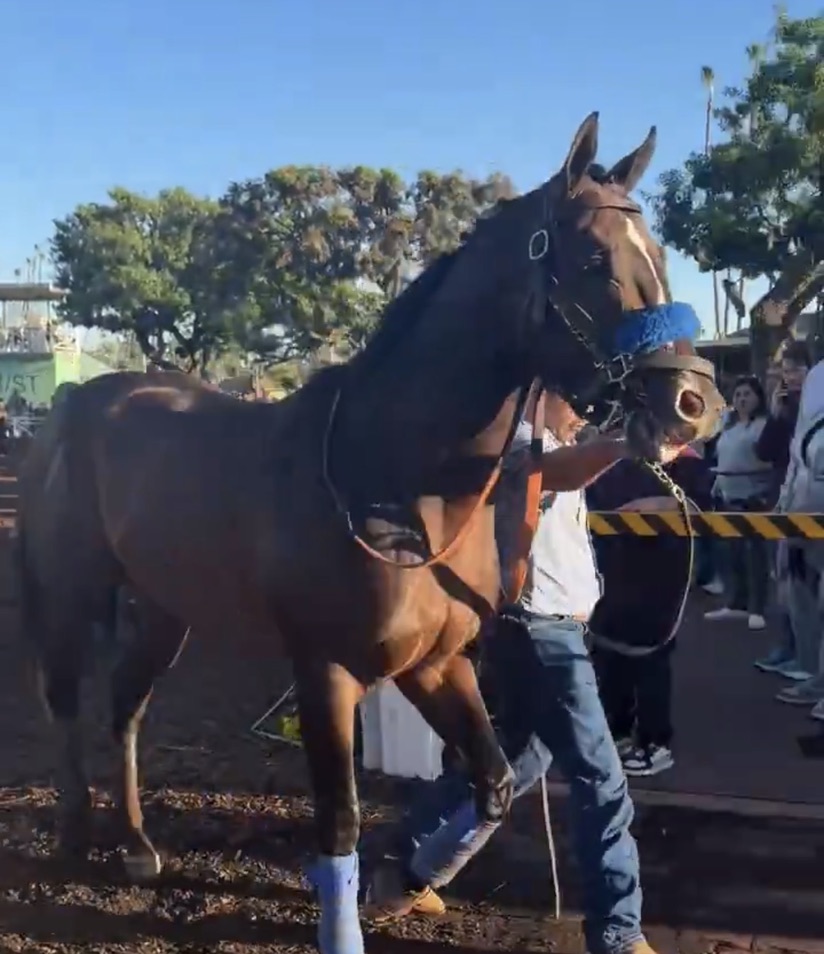
A horse race and a half.
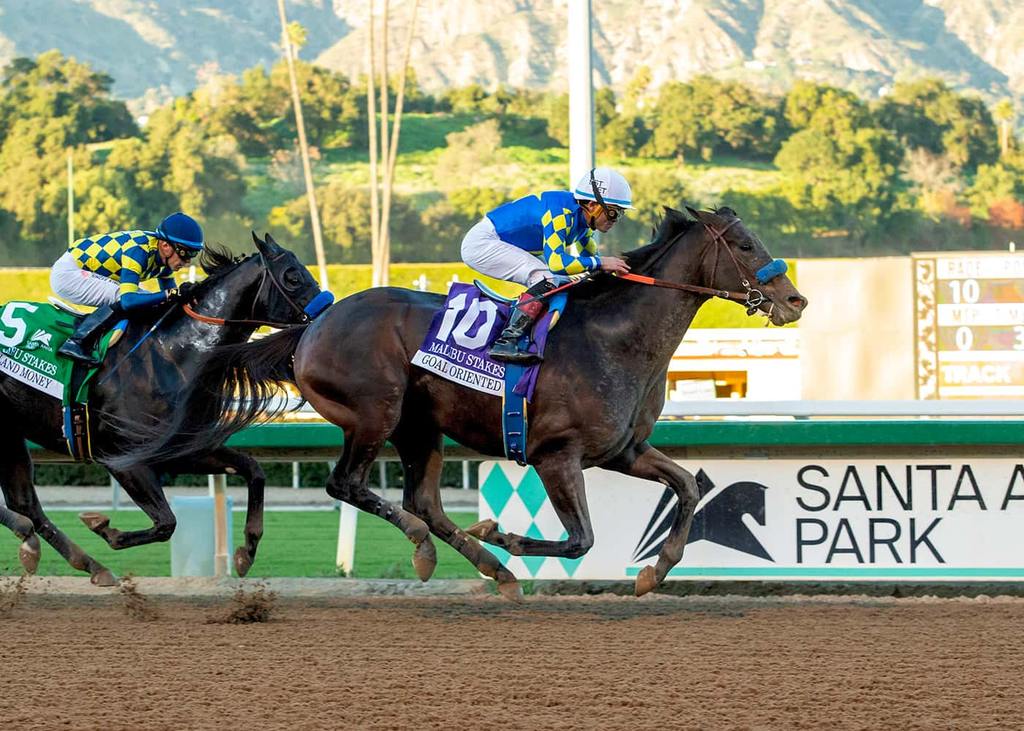
Goal Oriented won the Malibu from well off the pace, circling the field and powering home like a real racehorse. Afterward, Tom Ryan talked about mapping out a thoughtful plan for Goal Oriented’s four-year-old season—putting racing first, even with obvious stallion appeal down the road.
What exactly is wrong with that?
Go back to the Breeders’ Cup Mile. We saw Nysos and Citizen Bull run the races of their lives, with Nysos digging as deep as a horse can dig to get the job done. Both trained by Baffert.
Earlier on the Malibu card, we saw Nysos do it again—this time fighting every inch of the stretch against Nevada Beach, a three-year-old taking on older horses. The only three-year-old to win a major stake against older this year. Both trained by Baffert.
Can racing realistically ask for more than that?
Some will say Bob is bad for the game. A problem. I couldn’t disagree more. I’d argue these types of horses and races are good for the game. California racing was electric and alive on Malibu Day.
Another all time great, Chad Brown, catches the same grief whenever he runs multiple horses in a turf stake. Chad didn’t wake up one day and trip over a powerhouse stable. He built it. Earned it. His resume—on dirt or turf—is Hall of Fame quality, and frankly, among the best to ever do it. Still going strong.
Two, three, four horses in a turf race? The same crowd whines.
I’ll be honest—I’m embarrassed to say I used to be one of them. I’m glad I learned better.
Now here’s where racing gets funny, as it so often does.
Selective outrage.
Bob gets flack. Chad gets flack. Todd Pletcher? Not so much.
On two occasions, Todd Pletcher ran five horses—yes, five—in the Kentucky Derby.
Those horses were:
- 2007: Circular Quay, Any Given Saturday, Sam P., Scat Daddy, Cowtown Cat
- 2013: Revolutionary, Charming Kitten, Overanalyze, Palace Malice, Verrazano
On three other occasions, he ran four horses in the Derby.
Nobody complained.
Yes, I get it—it’s the Derby. But shouldn’t that be the benchmark? If it’s acceptable there, why isn’t it acceptable anywhere else? If it’s not notable for Todd, why should it be notable for anyone?
And by the way—Todd didn’t win either of those five-starter Derbies.
Multiple entries don’t put you in the winner’s circle.
Fast horses do.
Yes, I understand the “give the little guy a chance” argument. I’m all for that. But chances in this game should be earned.
I’ve owned racehorses. None of this caliber, but that part doesn’t matter. At any level, there was never a time anyone was going to tell me who should or should not train my horses. That’s exactly why I don’t do partnerships. I make my own calls with my trainer.
I’m not here to participate. I’m here to compete—or I’ll watch, wager, and cheer for my friends.
Why would anyone whose head does more than separate their ears allow a dysfunctional body to dictate who can or cannot train horses they’ve invested millions in?
No thank you. A easy pass for me.
That doesn’t bring people into the game. It drives them away.
If you’re a student of racing and think Bob Baffert or Chad Brown are bad for the sport, you’re ill-informed.
If you picked that up from the whiners, you’re misinformed.
And there’s nothing productive about being wrong that loudly.