
Have you ever gotten involved in something and wanted to get out, but you keep feeling brought back in? A few weeks ago I wrote an article after seeing an annoying West Point Thoroughbreds Pop-Up ad on The Paulick Report. I wouldn’t have written the article had I not seen it and I only saw it by happenstance. Fast forward and I saw a clip of a Rail Talk podcast, and here I am yet again. I didn’t watch the entire episode, I’d sooner watch artificial turf grow. I wouldn’t have written this had I not seen that.
The release of the 2026 Industry Impact Report by The Jockey Club was supposed to be a masterclass in transparency. Instead, for those of us paying attention to the plumbing of this industry, it’s a masterclass in “Watch the hands, not the mouth.”
While the report highlights over $112 million reinvested into the sport since 2010, the “consolidated statement of income” opens a Pandora’s box of questions regarding where the line is drawn between industry service and personal enrichment.
The Conflict of “Content”
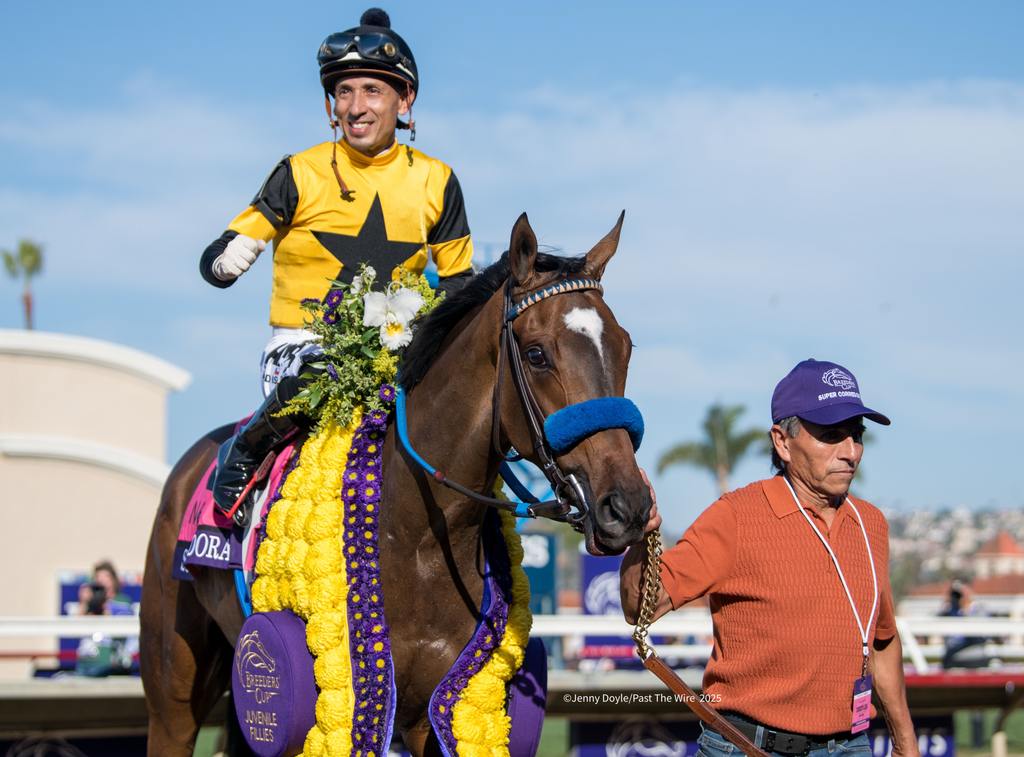
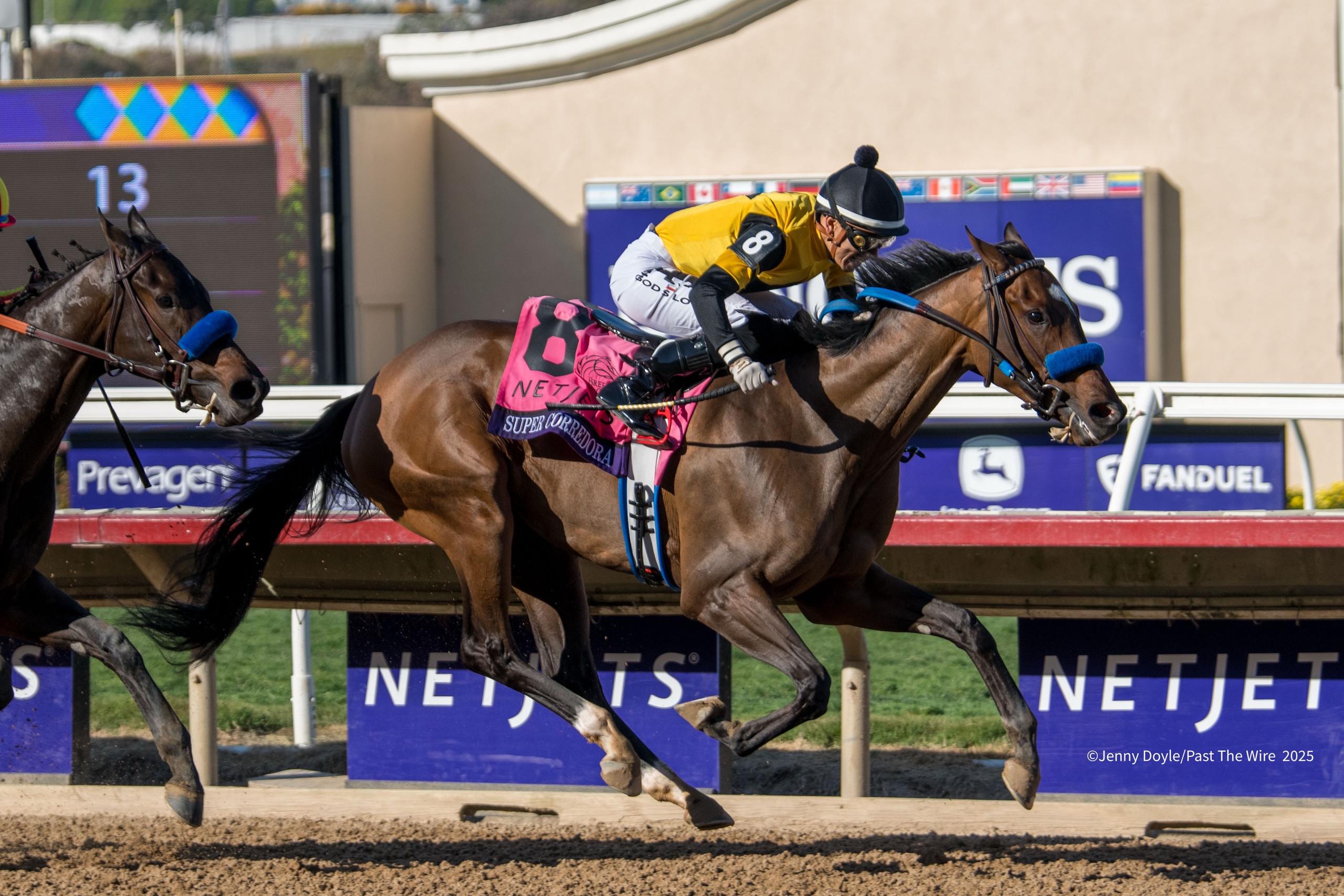
Let’s look at the curious case of Super Corredora. The filly is a champion, no doubt. But the optics are, shall we say, “stinky.”
- The Player: Terry Finley, a Jockey Club Steward and principal of West Point Thoroughbreds.
- The Platform: America’s Best Racing (ABR), a promotional arm funded and mentioned specifically in the Jockey Club’s impact report.
- The Action: ABR published feature content promoting the filly. That content was then syndicated to Blood-Horse, a publication 51% owned by the Jockey Club. Interestingly as well is this perfectly timed article on the West Point filly which came out on January 1st, 2026, The Eclipse Awards were January 22nd, 2026.
In any other industry, a board member using a company-owned media conglomerate to pump their own “product” (in this case a horse that directly increases her valuation) would be a textbook conflict of interest. Is the Jockey Club a registry, or is it a marketing agency for its own Stewards? - The Racetrack Riddle: “Can’t” or “Won’t”? The narrative coming out of the Rail Talk podcast—hosted by Jockey Club member Jon Green and a West Point representative—is that the Jockey Club is “not allowed” to buy a racetrack. This is fascinating, given that James Gagliano (President/COO) has reportedly indicated the organization is sitting on a massive war chest, waiting for a “rainy day” to save the sport. If the “can’t buy” rule is absolute, one has to wonder what they were doing commissioning a feasibility study for Hialeah Park. If you can’t own a track, why study its reconstruction? Is the plan to “loan” those millions? If so, to whom? This becomes even more pointed when you consider that Westlake Stable and others have highlighted the Jockey Club’s role in “forgiving” millions in loans to HISA. If the Jockey Club is in the business of forgiving massive debts for some entities while claiming their hands are tied on others, the “rainy day” starts to look like a targeted drizzle.
- A Half-Joking Theory: Perhaps we’ve simply missed a nuance in the conversation. Maybe there is a secret, double-bottomed drawer in the Jockey Club’s ledger where “Non-Profit Stewardship” and “Commercial Asset Management” live in perfect, unconflicted harmony. Or perhaps—just maybe—the “podcast clowns” and the leadership are reading from two different scripts.
One script says: “We are a humble registry with no power to intervene.” The other says: “We have the money, the media, and the feasibility studies to decide who wins and who stays in business.” I don’t know the answer but I do know exactly what Jim Gagliano told me during our recent conversation. - The Question for the Industry: Is it ethical for an organization that controls the registry, the data (Equibase), and the primary media outlets to also be governed by individuals whose private stables benefit from that very infrastructure? We aren’t naming names—oh wait, we just did. But the question remains: is this leadership, or is it just a very expensive “rainy day” fund for a select few?
What do you think? Should the Jockey Club be barred from media ownership and influence, or is this just the “new normal” for a leaderless sport?
They pull me back in: