

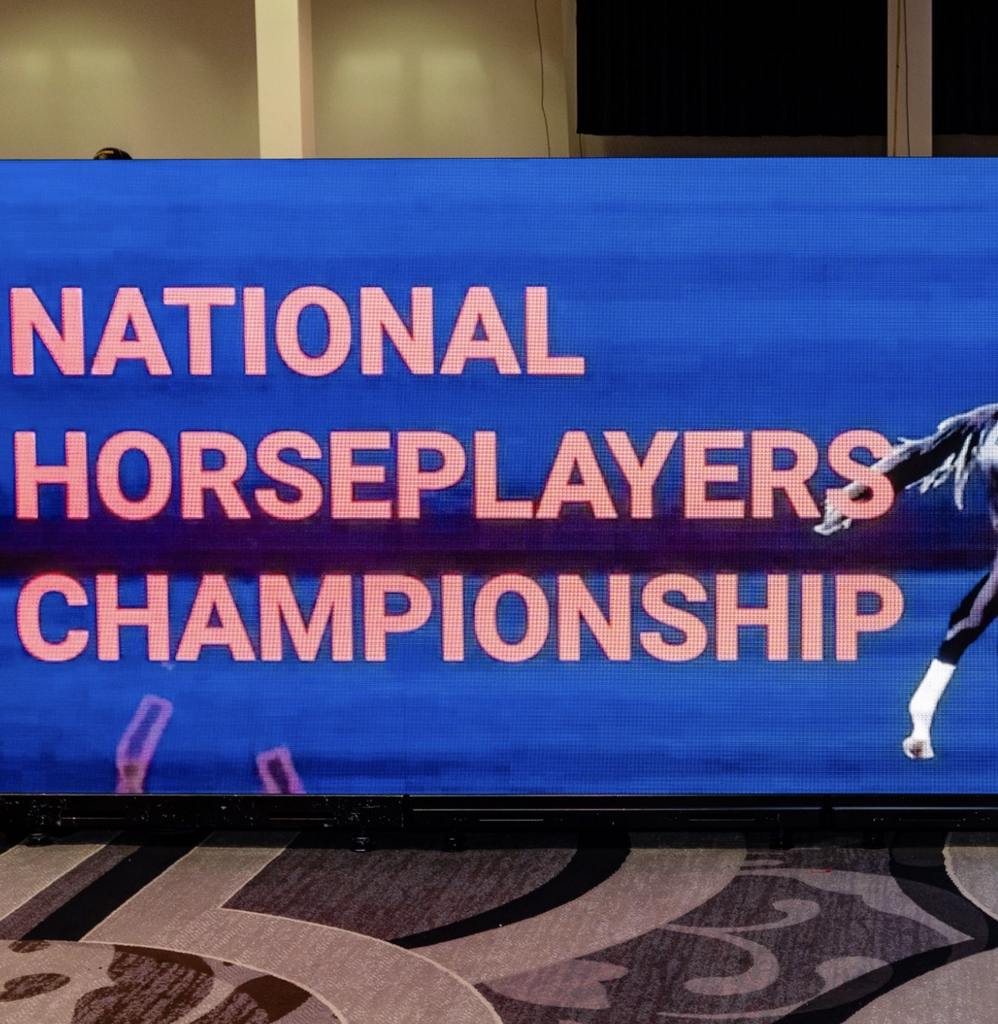
NHC should be NHT
I’ve been betting horses for a long time. Long enough to know the difference between a contest and the craft of professional horseplaying. Which brings me to the National Horseplayers Championship, the NHC, currently underway in Las Vegas.
Every year it’s billed as the pinnacle of handicapping — the event that crowns the “best horseplayer in the world.” The tournament attracts hundreds of qualifiers and offers a headline prize pool north of four million dollars with roughly $800,000 to the winner. On the surface it sounds like the Super Bowl of handicapping. But when you actually look at the structure, the format, and the math, something becomes clear pretty quickly.
The NHC isn’t a championship. It’s a tournament. And there’s a difference.
The Economics Don’t Favor the Players
Players don’t simply buy their way into the NHC. They qualify through dozens of feeder tournaments throughout the year. Those qualifiers come with entry fees, travel costs, and an NHC Tour membership requirement. Players often spend thousands chasing a seat in Las Vegas before they ever make a single mythical wager in the finals. Meanwhile, the ecosystem surrounding the tournament — tracks, contest operators, sponsors, and organizers — collects entry fees and promotional value along the way.
That’s racing in a nutshell. Everyone seems to get paid except the bettor.
When you run the math on the entire qualification system versus the final prize pool, it’s difficult to argue that the economics heavily favor the players. The spectacle is good for the industry. It creates buzz and headlines. But let’s not pretend the structure is built primarily for the bettor’s benefit.
Monopoly Money Handicapping
My bigger issue isn’t even the economics. It’s the format.
The NHC is played using mythical $2 win and place wagers across a slate of mandatory races and optional races from tracks across the country. There’s no real bankroll. No real wagering risk. No ability to structure wagers. No money management. Those are not minor details.
Those are core components of professional horseplaying. Anyone who has made a living at this game understands that handicapping alone is not enough. Picking horses is just part of the job.
The real skill lies in:
- finding value
- structuring wagers
- managing bankroll
- and most importantly knowing when not to bet
The NHC removes almost all of that. Instead, players fire mythical $2 win/place wagers at races from tracks they may not play every day, often under time constraints that make deep handicapping nearly impossible. That’s not the craft of professional betting. That’s contest play.
The Bomb-Hunting Finale
By the time the tournament reaches its final races, something else happens that illustrates the problem. Players aren’t necessarily betting the horse they believe is most likely to win. They’re calculating which horse has odds high enough to vault them up the leaderboard. In other words, the strategy becomes mathematical tournament positioning rather than handicapping.
Find a price.
Take a swing.
Hope lightning strikes.
If it does, suddenly you’re the best handicapper in the room. Except that’s not really what happened. You won a tournament. There’s nothing wrong with that. It’s fun. It’s exciting. It’s dramatic. But it’s not the same thing as demonstrating long-term professional horseplaying skill.
The Eclipse Award Problem
To make matters even stranger, the NHC winner receives an Eclipse Award as Horseplayer of the Year. That’s where the line between promotion and reality gets blurry. The Eclipse Awards are “supposed” to represent excellence in racing. When you attach one to a mythical bankroll tournament that removes several core elements of professional wagering, you dilute what that recognition means.
It starts to resemble what the modern Eclipse Awards themselves have become in many ways — something I’ve written about before — where prestige sometimes drifts away from substance.
A Tournament That Resembles Real Betting
If you want a contest that actually mirrors the realities of horseplaying, look at the Breeders’ Cup Betting Challenge (BCBC). That tournament requires real money wagering.
Players must:
- manage bankroll
- structure bets
- assume real financial risk
Is it perfect? No. No tournament is. But it resembles the real craft of horseplaying far more closely than mythical bankroll contests. Because professional horseplaying isn’t just picking winners. It’s about survival. It’s about discipline. It’s about understanding value. It’s about managing money when the inevitable losing streaks arrive. Those things take years to learn and decades to master. A three-day mythical bankroll contest with mandatory races across unfamiliar circuits simply doesn’t measure that.
Call It What It Is
I’m not against tournaments. If the industry wants a fun promotional event that gets horseplayers together and generates excitement around handicapping, that’s great. More engagement is good for racing. But let’s be honest about what the NHC is. It’s not a true championship of professional horseplaying. It’s a handicapping tournament. If anything, it should probably be called the National Handicapping Tournament — the NHT.
Still fun.
Still exciting.
Just a lot closer to the truth. Because in horse racing, a game built on numbers, probabilities, and cold reality, the truth still matters.
And if you think winning a mythical bankroll contest proves you’re the best horseplayer in the world, I sincerely hope you bring that same confidence to the real betting pools.
As Clint Eastwood’s character Dirty Harry once said:
“A man’s got to know his limitations.”
And in horse racing, knowing yours — and respecting the game — is what separates tournament players from the ones who actually make a living at it.
Truth: