

It was a little insulting
My whole life my brother John John has told me “timing is everything” as usual, he’s right
In this world, there is an old saying: “Watch the hands, not the mouth.” Over the past several months, as I have leaned into the friction between Mike Repole and The Jockey Club, my phone has started to ring. The voices on the other end are familiar, powerful, and—on the surface—complimentary.
I’ve had constructive conversations with Jim Gagliano, President of The Jockey Club, regarding my critiques of Equibase’s data silos amongst other things. I’ve spoken with Terry Finley, a Jockey Club Steward and the principal of West Point Thoroughbreds, who was subtle but clear in his desire to see “positive” coverage of the establishment. I even extended a 18-month “grace period” to the new JC Stewards in my writing, believing that fairness is the prerequisite for credibility.
But recent events have revealed that while the industry’s “shot-callers” are happy to talk about transparency, their marketing and media machines are still operating behind a veil of curated narratives. Coincidentally, I addressed this very thing in my previous column on TAA accreditation. Ah, timing is everything.
The “Aspirational” Rejection
Recently, a member of my team reached out to West Point Thoroughbreds regarding an advertising partnership. The response from their marketing department was a masterclass in corporate deflection. They “passed” on Past the Wire, claiming their “limited spend” was strictly narrowed toward “lifestyle” and “entry-level” personas—not the “sharp, serious industry professionals and bettors” who comprise my audience.
On its face, that is a legitimate business strategy. You don’t sell a starter partnership to a room full of sharks. But that logic fell apart 24 hours later when I opened the Paulick Report.
The Pop-Up Irony
While reading a recent Paulick Report feature—one that predictably bashed Mike Repole’s proposal for a four-hour televised debate with the Jockey Club—a large, unmissable pop-up ad blocked my screen.
The advertiser? West Point Thoroughbreds.
If West Point’s strategy is truly to avoid “sharp, serious industry professionals” in favor of “entry-level lifestyle” seekers, why are they spending their “limited” budget on a platform with an audience demographic nearly identical to Past the Wire?
The answer isn’t about demographics; it’s about the narrative.
The Echo Chamber
Ray Paulick has long maintained that the Jockey Club doesn’t pay him a dime. That may be true in a direct accounting sense, but as any veteran of this game knows, influence is rarely a straight line. When Jockey Club Stewards and their entities provide the advertising oxygen for a platform, that platform naturally begins to reflect the interests of its benefactors.
The Paulick Report article in question is a textbook example. It dismissed Repole’s debate proposal as a “marathon” and a “showman’s” stunt, while simultaneously downplaying his litigation threats. They compared Repole’s legal stance to standard industry friction, conveniently ignoring the far more relevant parallel: Michael Jordan’s high-stakes litigation against NASCAR—a battle for the very soul and economic structure of a sport.
By mocking the idea of a debate, the “establishment media” is essentially saying that the status quo is too busy to explain itself to the people who fund it.
A Seat at the Table vs. A Hand on the Scale
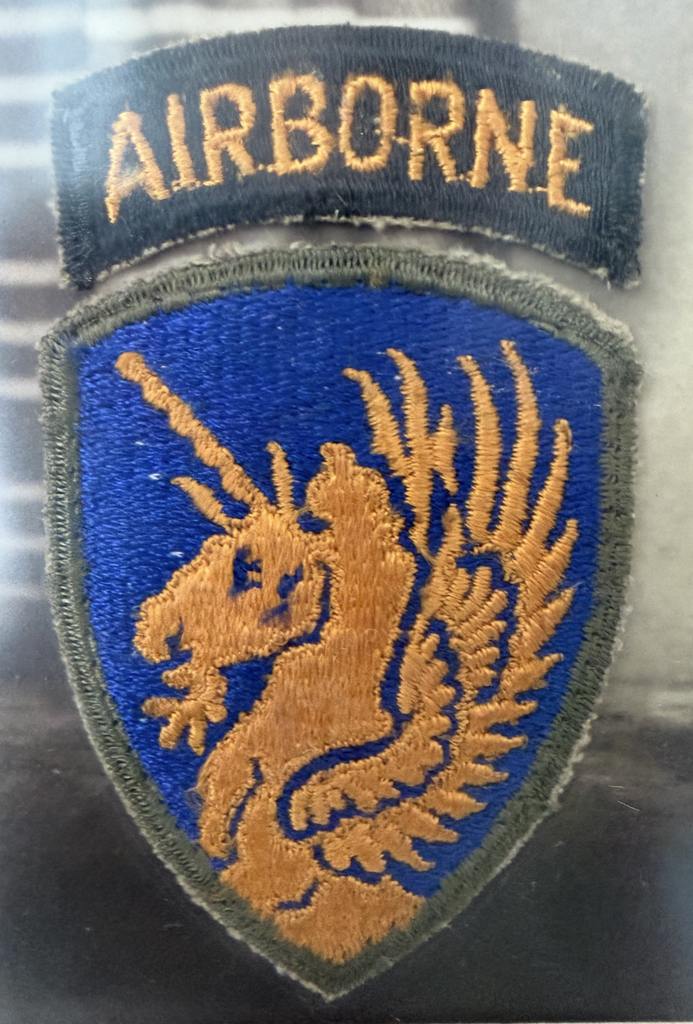
I grew up in this game. My wife went to West Point, and my father-in-law served this country with distinction, as a Colonel in the Air Force. My father fought in World War 2 as a Paratrooper in the Army and saw more than his share of combat. I mention this because the “West Point” name carries a weight of integrity—an “Officers’ Code” of being straight and transparent.
When Jim Gagliano and Terry Finley reach out to me, I take it as a sign that Past the Wire has become too influential to ignore. But if the goal is to “play” the media by offering compliments in private while funneling dollars only to platforms that carry the establishment water, then we have a problem.
I cannot be played. I won’t be played. I see the dots, and I am more than happy to connect them for my readers.
The Bottom Line
Mike Repole’s call for a four-hour debate isn’t about “showmanship”—it’s about the fact that the Jockey Club and its subsidiaries (like Equibase) have operated in a vacuum for too long. If the Jockey Club’s vision for the sport is superior, they should have no fear of defending it in a long-form, transparent forum.
Instead of hiding behind pop-up ads on “friendly” sites and sending polite rejections to independent ones, it’s time for the industry leadership to come straight.
I’m not looking for an ad buy. I’m looking for the truth. And as long as the establishment media continues to act as a PR arm for the Jockey Club, Past the Wire will be here to provide the counter-perspective that the “sharp, serious professionals” of this industry deserve.
Definitely: