
The world of horse racing, like any industry, thrives on its public image. But unlike many, racing often finds itself grappling with a unique challenge: managing a narrative that is increasingly scrutinized by both advocates and a general public concerned with equine welfare and ethical practices. When serious issues arise, the industry’s response, and critically, the response of its dedicated media, becomes a tell-tale sign of where its true priorities lie. There are rare exceptions, if you get yourself on the wrong side of certain entities or individuals, you can be dragged across the coals.
Consider the recent article published by The Paulick Report, “A Room With a View,” a piece that gently muses on the ambiance of a press box, a quiet corner of the racing world.
It’s a harmless, even charming, vignette. Yet, its publication stands in stark contrast to the near-total radio silence from the same outlet—and indeed, much of the racing establishment media—on issues of far greater consequence to the sport’s integrity and public perception.
This selective focus isn’t accidental; it’s a window into the careful curation of the industry’s narrative. When a story emerges that challenges the very foundations of racing’s ethical claims – for example, widely publicized evidence of deeply disturbing practices that clearly violate public trust – the response from certain media quarters is often not robust investigation, but rather a strategic void.
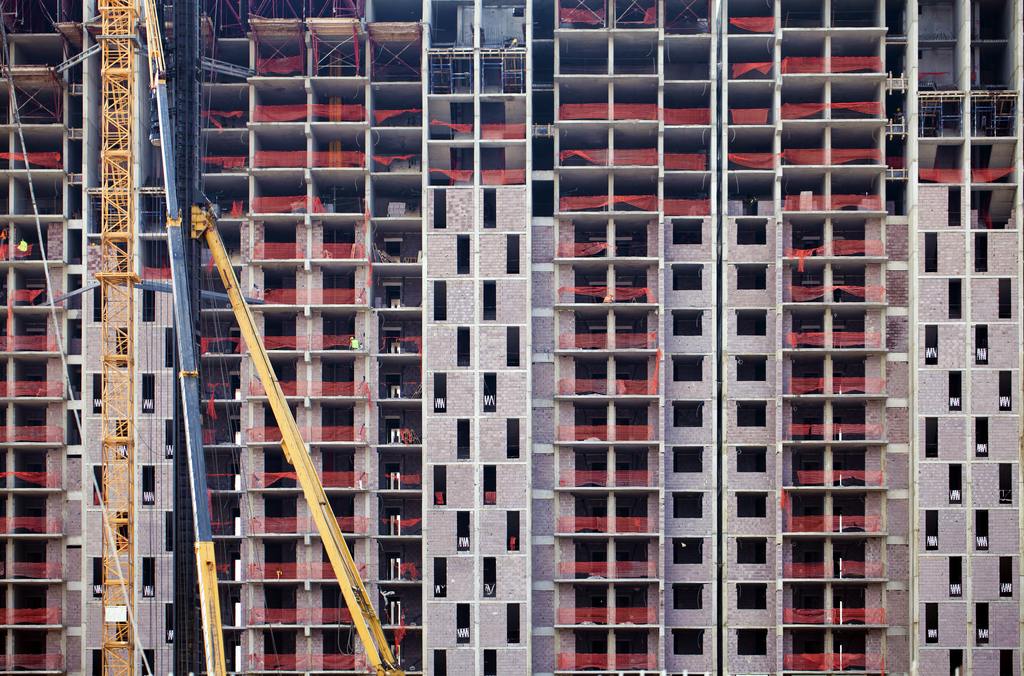
The narrative is simply starved of oxygen. It ignores what that condo view might turn out to be as a result of decoupling. The most cynical aspect of this reporting is the economic reality it ignores. As of February 2026, the South Florida condo market is hitting a wall. In Broward County, condo inventory has surged to an 11.5-month supply, and median prices have plummeted by 8.1% year-over-year. In a market this oversaturated, developers are desperate for “momentum” to move stagnant inventory. By painting this purchase as a glowing success story, The Paulick Report is providing artificial price support for a project owned by an industry insider. It is, quite literally, an attempt to manufacture “heat” in a cooling market where buyers now hold all the leverage. You can purchase a condo overlooking the Atlantic Ocean about a mile away, likely for less money, and that view isn’t likely to change.
Oasis Hallandale is not just any condo project. It is a massive mixed-use development led by Giuseppe Iadisernia. To the casual reader, he’s a developer; to the industry, he is a horse owner and trainer with deep roots at Gulfstream Park.
By an industry “authority” validating this project, the developer receives millions of dollars in targeted marketing to the exact demographic he needs. It isn’t just news; it’s a brochure masquerading as a headline.
This dynamic illustrates a key aspect of “access journalism” within a specialized industry. For publications heavily reliant on advertising revenue from industry stakeholders, and for journalists whose careers are built on maintaining relationships with powerful entities like the Jockey Club, there is an inherent conflict. The need to report fearlessly on inconvenient truths often clashes with the imperative to maintain “access” to sources, advertising dollars, and the goodwill of the very institutions being covered.
The result is a subtle but potent form of censorship: not through outright suppression, but through omission and misdirection. By elevating feel-good stories or minor industry developments, and simultaneously downplaying or ignoring critical controversies, the industry’s gatekeepers effectively shape public perception. The message sent is clear: some stories are deemed “fit” for widespread consumption, while others are quietly allowed to disappear into the digital ether.
The Equibase Connection
The “human interest” angle—the Castellano family—is where the web of influence tightens. Javier Castellano is married to Abby Meyocks, daughter of Terry Meyocks, the President and CEO of the Jockeys’ Guild.
While the Guild and the Jockey Club are distinct entities, they meet at one of the most powerful tables in the sport: Equibase. Terry Meyocks served on the Equibase Management Committee, a joint venture between The Jockey Club and the TRA. When a publication—which counts Jockey Club-connected entities among its advertisers—chooses to run a celebratory feature on the Meyocks/Castellano family, it is currying favor with the literal board of directors that oversees the industry’s data.
This strategy, while seemingly effective in the short term, carries a significant cost. For those genuinely committed to racing’s long-term health, the selective lens of its media creates a dangerous echo chamber. It fosters an environment where inconvenient truths are swept under the rug, preventing the kind of open dialogue and accountability necessary for genuine reform.
Ultimately, the silence on critical issues speaks volumes. It reveals not just what is being reported, but what is deliberately not being reported, and why. For those seeking an unvarnished view of horse racing, it underscores the vital importance of independent voices willing to cut through the curated narrative and demand true accountability, regardless of the discomfort it might cause those with a vested interest in maintaining the status quo.
Follow the Money
- Development Entity: Hallandale Oasis 2019 LLC
- Lead Developer: Giuseppe Iadisernia (Registered Equibase Owner/Northwest Stud)
- Institutional Backing: $112M Construction Loan (S3 Capital Partners), $85M Loan (Franklin BSP Realty Trust).
- Market Context: Broward County condo inventory is at a 10-year high (11.5 months), creating a desperate need for “influencer” buyers to stabilize the project’s image.
It’s An Unhealthy Relationship: Definitely
Footnotes: [1] Terence J. Meyocks was appointed by the Thoroughbred Racing Associations of North America (TRA) to serve on the Management Committee of Equibase Company LLC, the industry’s official database. This committee is a joint venture between the TRA and The Jockey Club.