
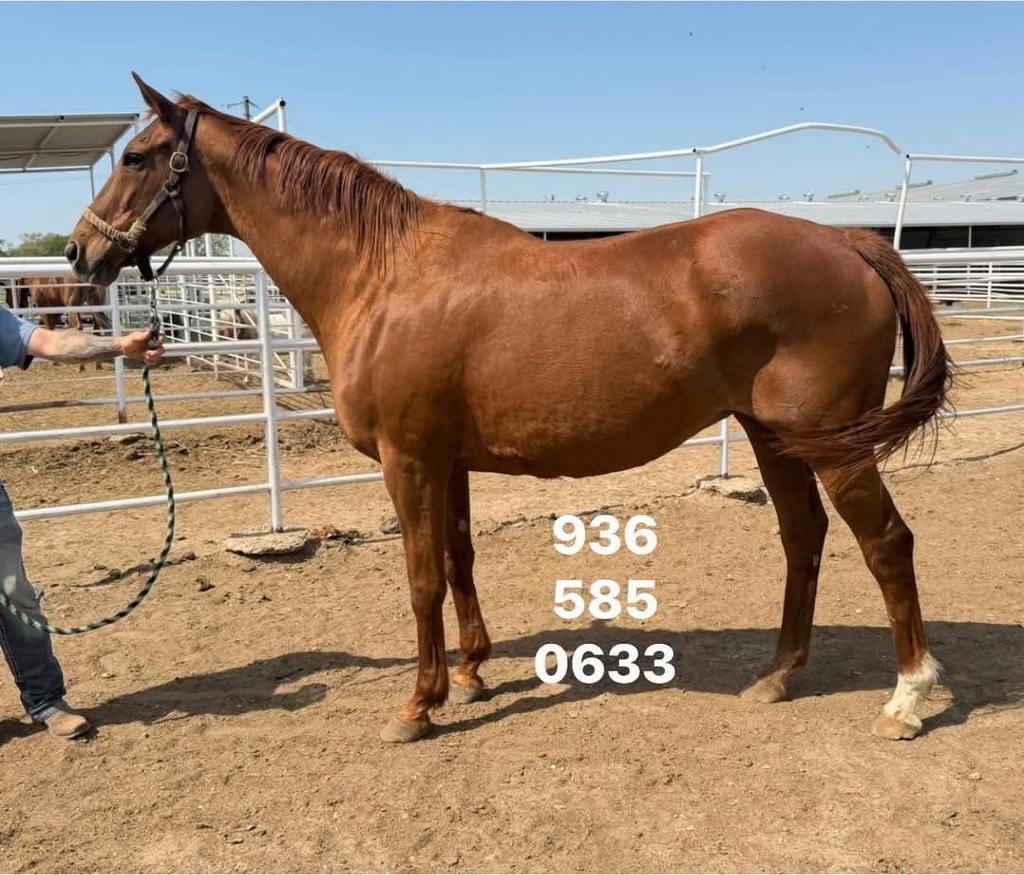
Photo: Margaret Ransom, The Bridge Sanctuary X feed
“Racing a Thoroughbred is a privilege granted by the animal, not a right conferred by ownership. Dominion over a living creature carries a debt that doesn’t expire when the entries close or the foals stop coming. You don’t get to profit from their speed, their heart, and their willingness — and then hand them to a kill pen like a car you traded in. That’s not ownership. That’s exploitation with a racing form.— Jon Stettin, Past The Wire
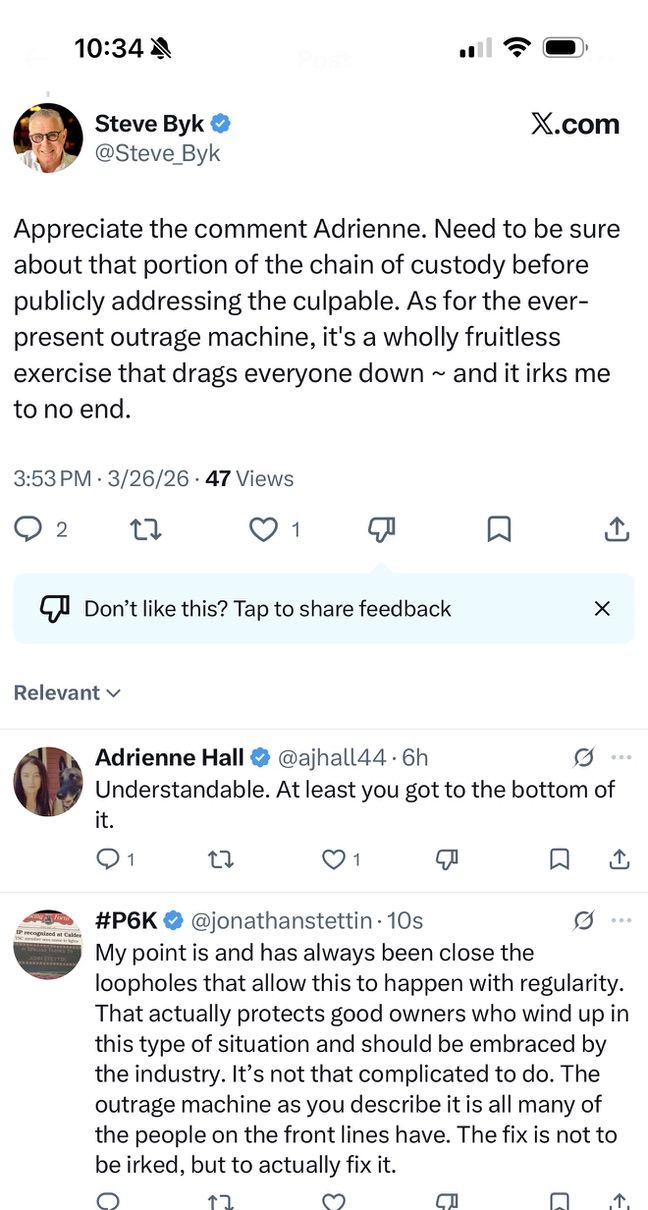
Steve Byk is right about one thing: the “outrage machine” produces heat without solutions. I agree with that. My outrage comes with solutions attached. It always has. So let me set aside Ginger Brew’s ownership chain — that’s not what the Ginger Brew story is actually about — and answer the question Byk implicitly asked and the industry keeps pretending nobody has answered.
How do you stop this? How do you close the pipeline?
The authority already exists. The Jockey Club has it. They simply choose not to use it.
Here is how we would stop this slaughter pipeline if we had the reins — specifically, precisely, and using The Jockey Club’s own Rule Book as the instrument.
STEP ONE: MANDATORY TRANSFER OF OWNERSHIP REPORTING
Rule 18 of The Jockey Club’s Principal Rules and Requirements governs the “Sold as Retired from Racing” process. Currently, it is entirely voluntary. An owner can stamp a certificate, return it, and that horse can be sold, resold, shipped to a kill pen, and exported to a Mexican slaughterhouse — and The Jockey Club will never know. There is no mandatory tracking mechanism. There is no follow-up obligation. There is no trail.
Fix it: Make Transfer of Ownership reporting mandatory for every change of hands after a horse leaves racing. Every sale. Every private transfer. Every donation. The registry already has the infrastructure — they track every foal born into this system. They can track every horse that leaves it. The technology is not the obstacle. The will is.
No Thoroughbred should be able to disappear from the American Stud Book while it is still alive. Full stop.
STEP TWO: THE INTEGRITY LEVY
Rules 4, 6, and 11 of the Principal Rules establish fee structures for genetic typing, naming applications, and late registration. The Jockey Club profits — materially — from every horse born into this system. It collects fees at registration. It collects fees on Stallion Reports under Rule 14. It generates revenue from the commercial enterprises built on top of the registry.
There is no mandatory national levy anywhere in the Rule Book dedicated to the lifelong welfare of the horses that revenue is built on.
Fix it: Implement a mandatory Integrity Levy — a welfare assessment on all Stallion Reports and Foal Registrations. Restrict those funds to the Thoroughbred Aftercare Alliance and emergency kill pen operations. This is not a radical idea. It is what any responsible industry does when it profits from a living animal’s existence. You register the horse. You fund its safety net.
While they’re at it: abolish the censorship requirements embedded in TAA accreditation grant language. You cannot fund aftercare awareness while simultaneously silencing the people doing aftercare work and demanding they not speak publicly about what they see. We have documented that contradiction in detail. It is not opinion. It is policy.
STEP THREE: DESTINATION-BASED REGISTRATION BANS
Rule 1(C) grants The Jockey Club broad authority over registry participation. Rule 19 governs disciplinary action. The Jockey Club has the authority to deny or suspend registry privileges. It uses that authority selectively — and almost never for welfare failures downstream of the track.
The Puerto Rico situation made the gap explicit. Horses died at Camarero. The cause was documented — contaminated medications, systemic management failure. The Puerto Rico Gaming Commission, rather than being sanctioned, began actively subsidizing more horse shipments to the island. Gulfstream Park took a hard line and refused to participate in shipping horses there. The Jockey Club went silent.
Why? Because under Rule 10, Puerto Rico is classified as a domestic jurisdiction. No Certificate of Exportation is required. Horses can be shipped into a documented welfare crisis without triggering a single Rule Book protection. The “safe harbor” classification became a pipeline.
Fix it: Destination-Based Registration Bans. When a jurisdiction has a documented welfare crisis — deaths, systemic medication failures, active investigation — The Jockey Club issues a Welfare Alert. Any owner who ships a horse to that jurisdiction loses registry privileges. Not a warning. Not a letter. Loss of privileges. Make it bite.
The same framework applies to the Guyana pipeline. Horses are being moved through intermediary destinations, the paper trail breaks, and they end up in slaughter. The registry has the authority to flag and suspend participants in those transactions under Rule 19. They need the will to use it, and they need Emergency Suspension authority that doesn’t require waiting for a final court determination — which under current Rule 19(A)4 language, is the standard. By the time a court determines anything, dozens more horses have been shipped.
Amend Rule 19: Emergency Suspension when systemic welfare failure is documented. Not after. During.
STEP FOUR: HARSH PENALTIES WITH REAL TEETH
Right now, the worst thing that happens to an owner who runs a horse into a kill pen or ships it to slaughter is reputational damage — and only then if someone finds out and the outrage machine Byk dislikes gets loud enough to matter. There is no Rule Book penalty for abandoning a horse you bred and raced and profited from.
Fix it: Any owner, breeder, or trainer whose registered Thoroughbred is confirmed in a kill pen, at a slaughter-bound auction, or exported to a slaughter facility faces immediate suspension of registry privileges for all horses in their name. That means no foal registrations. No stallion reports. No new horses named. No participation in the American Stud Book. Hit them where it hurts — in the business.
Second offense: permanent ban. Make it mean something.
The idea that the people who profit from these horses from birth to retirement face zero mandatory accountability for what happens to them afterward is not tradition. It is negligence that the Rule Book has been written to protect.
The Outrage Machine Steve Byk Is Tired Of
Here is the thing about that “outrage machine.” The people running it — the rescue workers, the aftercare advocates, some journalists, the people pulling horses out of kill pens with their own money at 2 a.m. — are not outraged because they enjoy it. They are outraged because the authority to fix this exists, the resources to fund it exist, and the people holding both have chosen, repeatedly and deliberately, to do neither.
The Jockey Club sits at the center of this sport’s governance architecture. Its Rule Book governs every Thoroughbred born in North America. Its affiliated entities — Equibase, The Jockey Club Information Services, TRAKUS — generate commercial revenue built entirely on the product those horses represent.
Byk called the outrage machine “wholly fruitless.” The solutions I just laid out are not fruitless. They are specific, they are grounded in the existing Rule Book, they require no new legislation, they require no new technology, and they require no new funding mechanism beyond a levy structure the registry already operates.
What they require is a decision. And that decision belongs to The Jockey Club’s board. If the answer is that fixing this isn’t their job — then say so. Define the role. Announce it clearly. And then get out of the way while the industry organizes around an institution that will actually do it.
Until then, the outrage machine keeps running. Because the pipeline keeps running. And the horses keep disappearing.
Related: An Open Letter to The Board of Stewards: Closing the Integrity Gaps in the American Stud Book
The Puerto Rico Pipeline: Racing’s Exported Crisis
If you had one shot, Fix It: