The Kinahan Cartel, Kieren Fallon, and the Most Dangerous Edge in Racing
I have always said it, and I will say it again right here: knowing a short-priced horse that won’t win is just as valuable as knowing a nice-priced horse that will. Maybe more so. The market is your canvas. If you know with conviction that the chalk is going to come up empty, and you operate in a market structured to let you act on that conviction, you don’t need to know the winner. You just need to be right about who isn’t going to win. That’s an edge. A real one. And it’s one I’ve been arguing we should be able to use legally in the United States since at least 2014.
Over a decade ago, I wrote a piece right here at Past The Wire — ‘Bring on Exchange Wagering, Please’ — laying out exactly why Betfair-style exchange wagering would be a revelation for sharp American players. The ability to lay a horse. To become, in the parlance of the British market, a mini-bookmaker. To offer someone else odds on a horse to lose, collect their money when you’re right, and operate with a strategic sophistication that our pari-mutuel structure simply doesn’t allow. A decade-plus later, I’m still waiting. Still advocating.
The irony of course is that in Britain, where exchange wagering has been live since 2000, that exact edge — laying a horse you know won’t win — sat at the dark heart of one of the most extraordinary corruption scandals in the history of the Sport of Kings. And threading right through the center of it, connecting an Irish drug cartel worth an estimated billion euros to the racetracks of England and the silk of one of the most decorated jockeys who ever sat on a horse, was a name that keeps resurfacing: Kinahan.
The Six-Time Champion Who Rode for Queens and Cartels
Let’s start with Kieren Fallon, because without understanding who he was, you can’t appreciate how audacious this whole story actually is.
Fallon was a six-time British Champion Jockey. Six times. He rode for Henry Cecil. He rode for Sir Michael Stoute. He won the Epsom Derby three times, the Oaks four times, the 1,000 Guineas four times, the 2,000 Guineas five times. He won two Prix de l’Arc de Triomphe. And he rode for the Royal Family — the Queen’s horse Daring Aim actually became a piece of evidence in his trial, its suspicious performance dissected before a jury at the Old Bailey. To say he was at the apex of his sport is to undersell it. When Coolmore — that is, the Ballydoyle operation run by Aidan O’Brien for John Magnier, arguably the most powerful stable on Earth — came calling in 2005 and made him their first jockey, it was confirmation that this man sat at the very summit of British and Irish flat racing.
Aidan O’Brien, a man not prone to hyperbole, said of Fallon: ‘When Kieran gets on a horse, he’s in a different land — it’s a land that the rest of us do not understand.’ That kind of praise, from that source, tells you everything. In 2007, with his criminal trial at the Old Bailey scheduled to begin the very next morning, Fallon climbed aboard Dylan Thomas at Longchamp and won the Arc. On the day before he was to face justice, he produced perhaps the finest ride of his career. If that doesn’t tell you something about the character of the man — brilliant, combustible, and utterly singular — nothing will.
But the smoke around Fallon had been building for years. In 2002, he appeared on a BBC Panorama documentary about corruption in racing and denied ever stopping horses. In 2003, his ride on Ballinger Ridge at Lingfield — where he was well ahead before appearing to ease dramatically and getting caught on the line — prompted a 21-day ban and started a chain reaction of scrutiny that would lead to the most explosive race-fixing trial in the history of British criminal law.
The Bet-to-Lose Syndicate and ‘D’
The scheme that unraveled, and eventually reached the Old Bailey in October 2007, had a deceptively simple architecture. A professional gambler identified in court proceedings as ‘John Smith’ — widely believed to be Yorkshire businessman Miles Rodgers — was using Betfair, the online exchange that had transformed British wagering since its 2000 launch, to lay horses to lose. Meaning: he offered odds to other punters that specific horses would not win. If the horse lost, he collected. If it won, he paid out.
Here’s where it gets elegant in a criminal kind of way. Betfair’s anonymity meant you could lay any horse at any price without being identified. You could open multiple accounts and spread liability. And if you happened to know in advance that a given horse was going to run below its ability — because the rider had agreed to do so — you could offer better-than-market odds with near-zero risk. You were not picking winners. You were guaranteeing losers. The distinction matters enormously to anyone who has ever stared at a racing form and felt the agony of knowing a favorite has no business winning that day but had no way to profit from it.
Betfair’s security team flagged the accounts operating this scheme — 14 of them, all controlled or influenced by the same entity — because the liability they were accepting on specific horses was suspiciously large and the odds they were offering were suspiciously generous. Ninety-seven horses were eventually reported to the Jockey Club. The court case focused on twenty-seven of them. Fallon had ridden in seventeen of the suspect races — and here is the detail that almost derailed the prosecution entirely — he had won six of them. A strike rate 50% higher than his career average. Which either meant he was a terrible race-fixer, or he wasn’t fixing at all.
The prosecution’s answer was that Fallon was being cautious. That he knew he was under scrutiny and was occasionally winning races he was supposed to lose as cover. The defense’s answer was considerably simpler: there was no conspiracy.
And then, buried deep in the trial testimony, emerged a name that would grow much larger in the years ahead.
‘D’ — A Little Fella You Know When You’ve Been Spoken To
The jury at the Old Bailey heard intercepted phone calls. In one of them, Miles Rodgers referred to a formidable character he called simply ‘D.’ He described this person as someone he’d met among many ‘menacing’ individuals in the course of his business — and said they all paled beside ‘D.’ He added: ‘He’s only a little fella, but you know when you’ve been spoken to.’
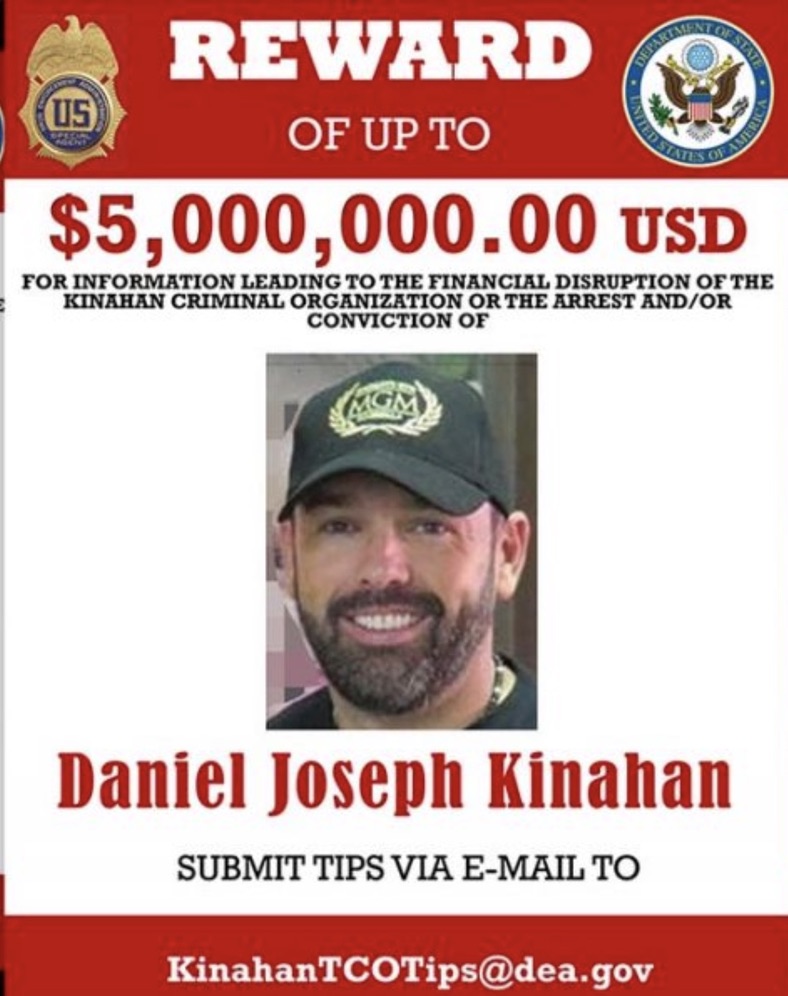
‘D’ was Daniel Kinahan. A former Dublin furniture shop owner. The son of Christy Kinahan, a man who would come to be known as ‘The Dapper Don’ — alleged to be the founder of what would become one of the most powerful drug trafficking organizations in Europe. At the time of the trial, Kinahan was Spain-based and not named in the indictment. He was not charged with anything. He was a name on a phone call, a character reference in someone else’s drama.
But the court heard something remarkable. Rodgers and the syndicate had apparently grown frustrated with Fallon winning races he was supposed to lose — which was costing them money on the Betfair lay side. Court records show at 1 a.m. one evening, Daniel Kinahan, along with Rodgers, Philip Sherkle, and Shaun Lynch, drove out to confront Fallon at his family home. They turned back only when they realized they were under police surveillance. They checked out of their hotel at 2 a.m.
Think about what that image represents. The world’s number one-ranked jockey, riding for the Queen and for Coolmore, asleep in his home in the early hours of the morning while a man who would later be named by the U.S. Treasury Department as the operational head of a billion-euro transnational criminal organization is in a car outside his house, losing patience.
Nobody is at the right price. That’s the line I use when something shocks me. And this story keeps delivering on it.
The Collapse
The trial lasted two months. On December 7th, 2007, Justice John Forbes looked at the prosecution’s case and decided there was no case to answer. He directed the jury to acquit Fallon and all five co-defendants. The prosecution’s race-riding expert was not qualified to offer opinions on UK racing conditions. The statistical evidence was challenged. And crucially, Fallon’s win rate in the very races he was alleged to have been fixing was, as his QC John Kelsey-Fry put it, evidence of ‘a man not stopping horses — a man winning them.’
‘I am of course relieved and delighted, but also outraged,’ Fallon said outside the court. ‘There was never any evidence against me.’
And legally, he was right. The case collapsed. All acquitted. No case to answer.
Here’s where I have to be honest about the part of me that loves a good caper, because it’s central to how I came to this story. When the bad guy gets away with it, there’s a corner of my brain that tips its hat. The Milkman — Brian Wright, the Irish-born drug trafficker I wrote about here at PTW — he built a corrupt racing operation for years before finally going down. He was charming, audacious, and for a long time, untouchable. The Gay Future coup. Arnold Rothstein taking Saratoga for a ride, which I’ve written about too. The Trodmore Hunt, where a man invented an entire race meeting that never happened and collected from London bookmakers on it. I love all of it.
And if — and this is a significant if, one that a British court of law has already addressed — if the Kinahan syndicate actually ran a bet-to-lose scheme using the world’s best jockey as their instrument, and then walked out of the Old Bailey with a directed acquittal? From a pure caper standpoint, that’s remarkable. That’s operating at a level that makes The Sting look like an amateur production.
But as someone who has spent over a decade arguing that exchange wagering and prediction markets belong in American racing — that the ability to lay a horse is a legitimate and sophisticated form of wagering that deserves legal infrastructure — this story is also a necessary counterweight. With the freedom to lay comes the risk that those who know more than the market will exploit the asymmetry. Brian Wright did it with inside information from jockeys. The alleged Kinahan operation, if the prosecution’s theory was correct, would have done it with coercion. The Joker and the Milkman, as I’ve written, represent the industrialized end of what starts as a simple edge.
The Kinahan Cartel: From Betfair to Burj Al Arab
Let’s update the scorecard, because this story has a very active second, third, and fourth act.
Daniel Kinahan — who was simply ‘D’ in those intercepted calls in 2007 — has since been named by the High Court of Ireland as a senior figure in organized crime on a global scale. The Kinahan Organised Crime Group, founded by his father Christy in the 1990s, is estimated to have accumulated wealth of over one billion euros through drug trafficking, firearms smuggling, and money laundering. Europol has described them as part of a European ‘super cartel’ that controls roughly a third of the cocaine entering Europe.
In 2016, a rival gang attempted to assassinate Daniel Kinahan at a boxing weigh-in at Dublin’s Regency Hotel. He escaped. His associate David Byrne was shot dead. The resulting feud with the Hutch gang has claimed 18 lives. The Kinahans fled Spain — where they had been operating — for Dubai. And there they have sat ever since, in what amounts to a gilded cage in the desert, reportedly too afraid to leave the UAE for fear of losing their liberty in any jurisdiction that might actually act on an extradition request.
In April 2022, the U.S. Department of the Treasury’s Office of Foreign Assets Control sanctioned Daniel Kinahan, his father Christy, and brother Christopher Jr., along with four key associates. A $5 million reward was offered for information leading to their arrest. American financial sanctions meant that Daniel’s parallel career as a boxing promoter — he had been an advisor to Tyson Fury and a co-founder of MTK Global, one of the sport’s major management companies — effectively evaporated overnight.
Then, in October 2024, his right-hand man — Sean McGovern, described by the U.S. Treasury as Daniel Kinahan’s ‘advisor and closest confidant’ — was arrested in Dubai. In May 2025, McGovern became the first person ever extradited from the UAE to Ireland, flown back on an Irish military aircraft to face charges of directing a criminal organization. In March 2026, McGovern pleaded guilty to two serious offences linked to the Kinahan-Hutch feud. He faces the prospect of up to twenty years or more in prison.
Gardaí believe the McGovern extradition — a diplomatic and legal achievement years in the making — now ramps pressure directly onto Daniel Kinahan himself. Files on the Kinahan leadership, including Daniel, have been submitted to Ireland’s Director of Public Prosecutions. An extradition treaty between Ireland and the UAE was ratified in 2025. Bellingcat has reported locating both Daniel and Christy Kinahan Sr. in Dubai as recently as June 2025, attending a mixed martial arts event. They remain free. At least for now.
Some intelligence sources believe the Kinahans have plans to flee Dubai for Russia if the legal noose tightens further. They have cultivated Russian mafia connections and are said to have well-established relocation plans. Russia, notably, has no extradition treaty with Ireland or the EU.
Meanwhile, Kieren Fallon — who walked out of the Old Bailey in December 2007 a free man, acquitted of all charges — rode on. He won the 2000 Guineas again in 2014. He struggled with cocaine dependency and served multiple suspensions for failed drug tests in France. He retired from racing, eventually, a man of 2,253 career winners, three Epsom Derby victories, and a biography that reads like it was written by someone trying to pack two careers into one life. One of the greatest flat jockeys who ever lived. And one whose name, however unfairly, sits forever in the same sentence as the words ‘race fixing’ and ‘Kinahan.’
The Exchange Wagering Question
I’ve been arguing for exchange wagering in the United States since 2014, and I’ll keep arguing for it. That 2014 PTW piece laid out the math: there have been enough high-profile favorites I’ve been strongly against over the years that laying them at exchange prices would have produced substantial returns. Game on Dude in a Breeders’ Cup Classic. Certain Kentucky Derby chalk. California Chrome in The Belmont. The cases pile up.
And I stand by the core thesis: knowing a short-priced horse that won’t win is as valuable as knowing a nice-priced horse that will. Maybe more so. The Kinahan case is not an argument against exchange wagering. It’s an argument for proper regulation of it — for the kind of market surveillance that Betfair itself pioneered, flagging those 97 suspicious horses and referring them to authorities. The exchange, in this story, was not the villain. It was the mechanism that exposed the scheme.
What the Kinahan story does illustrate is what I’ve written about in the context of CAW players and the structural advantages that insiders can exploit in any wagering market. Brian Wright corrupted jockeys for inside information and doped horses to ensure outcomes. The alleged Kinahan operation, if it existed as charged, would have been a sophisticated version of what I’ve always said is the ultimate edge: not needing to know the winner. Just needing to know who can’t win, and having a market that lets you act on it.
The difference between that and what I advocate is, of course, the means. I want a regulated, open exchange where any sharp bettor can lay a horse they’ve handicapped poorly at proper market odds. What the Old Bailey prosecution alleged was coercion of the world’s best jockey by people who considered murder a business tool. Different category entirely.
But the principle at the heart of it — that knowing a loser is as good as knowing a winner — is one I’ve believed my whole betting life. It’s just that some people pursue that edge in ways the rest of us can’t endorse, even when the caper part of our brain is reluctantly impressed.
The Closing
Every great caper story needs an ending, and this one doesn’t quite have one yet. Kieren Fallon is acquitted and retired. Daniel Kinahan is in Dubai, sanctioned, wanted, photographed at MMA events while the world’s law enforcement agencies circle. His right-hand man is in an Irish prison. The noose is drawing tighter. Whether it ever closes around Daniel Kinahan himself remains the open question.
The Sport of Kings has always attracted people who operate outside its rules. The Milkman. Arnold Rothstein at Saratoga. The Gay Future coup. The Breeders’ Cup computer hack. Every era produces its version of the same story: smart, ruthless people who look at the wagering market and see not a game but an algorithm to be exploited.
The Kinahan cartel took that template and applied it with the resources of a billion-dollar criminal enterprise. They allegedly reached into the sport at its highest level — the champion jockey, the Queen’s horse, the Coolmore silks — and tried to turn it into a money machine. And in the strictly legal sense, per the verdict of a British court, they didn’t get away with it because there wasn’t enough evidence that it happened the way the prosecution claimed.
But if it did? If it happened the way ‘D’ and the late-night drive to Fallon’s house suggests it might have? Then as a gambling man who has spent his life looking for the kind of edge that doesn’t require knowing the winner — just knowing the loser — I’ll confess to a grudging, entirely morally complicated, respect for the audacity.
Nobody is ever at the right price. Not the Milkman. Not Arnold Rothstein. Not Kieren Fallon. And not ‘D,’ who sat ringside at a Dubai MMA card last summer while Interpol red notices and U.S. Treasury sanctions bear his name.
The bill, as it always does, is on its way.
Further Reading at PastTheWire.com
Brian Wright: The Milkman Who Always Delivered — A Human CAW Model
The Joker and the Milkman: The Rise of Industrialized Theft in the Sport of Kings
The Brain’s Greatest Score: How the Man Who Fixed the World Series Took Saratoga for a Ride
Bring on Exchange Wagering — Please (2014)
And just like that: