
Raising minimum wagers won’t stop computer-assisted wagering players — and the people running Keeneland know exactly why.
Don’t Miss It! The best Kentucky Derby Seminar in the game! Details Here
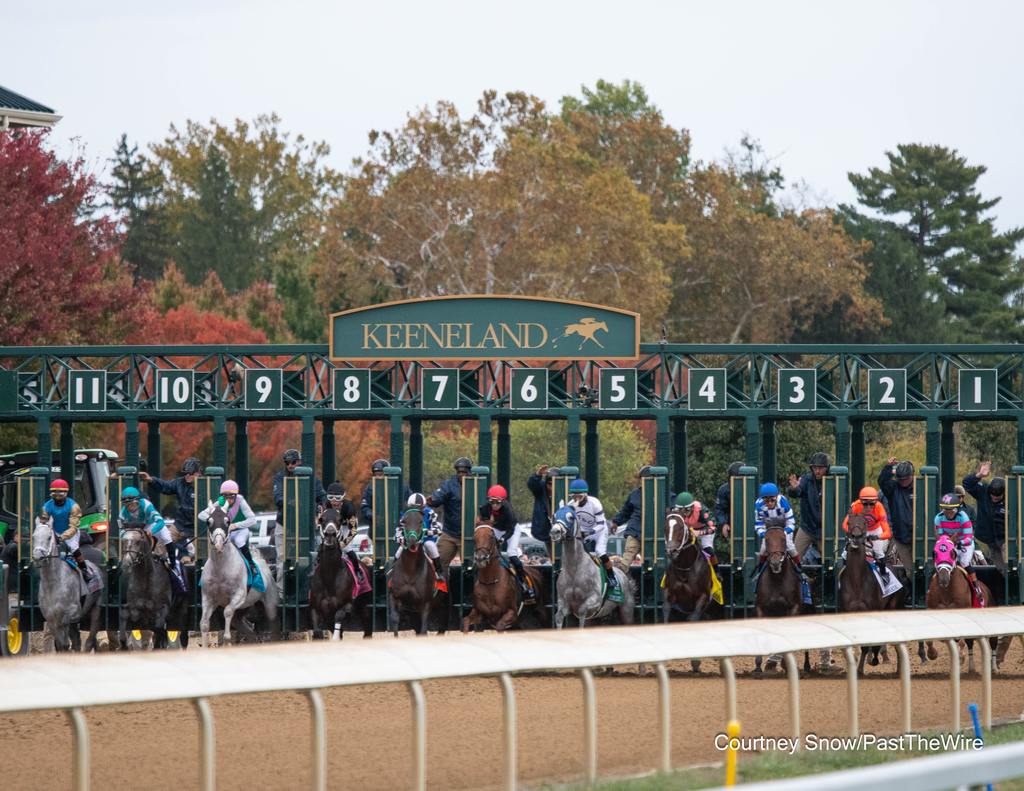
It’s opening day of the Spring Meet at Keeneland, and with it comes a wagering change being framed as reform. Keeneland has raised the minimum superfecta wager from 10 cents to 50 cents and the Pick 3 from 50 cents to $1. They’ve also introduced a new late Pick 3 with a reduced takeout of approximately 15%. Jim Goodman, Keeneland’s Director of Wagering Development, indicated these moves are intended to curb the impact of computer-assisted wagering (CAW) players and improve payouts for everyday bettors.
On the surface, it sounds reasonable.
It isn’t—at least not in the way it’s being presented.
LET’S START WITH WHAT THEY GOT RIGHT
Something does need to be done about CAW dominance. That part is not up for debate. And lowering takeout—like Keeneland did with the new Pick 3—is one of the few levers that actually addresses part of the issue. Reduced takeout compresses the rebate-driven margin that high-volume players rely on. That’s real. That matters. Give them credit for that piece. But the rest? That’s where this drifts from reform into optics.
A NOTE FROM SOMEONE WHO’S BEEN THERE
Before we go further, let’s be clear about something.
I am in favor of higher minimum wagers. Always have been.
As a former professional gambler who made a very good living in this game—without rebates—I can tell you firsthand: higher minimums separate the sharp from the sloppy. They force decisions. They force conviction. They prevent players from buying races and hiding behind coverage. Back when minimums were higher, you didn’t spray and pray. You had to be right—or at least right enough. And if you were, you got paid.I didn’t just beat the game—I made a sweet-as-cherry living doing it. Nobody beat me back then at this game. Nobody.
So yes, Keeneland—thank you for raising minimums.
Just don’t sell it as something it isn’t.
Because you’re not fooling anyone who’s actually played this game at a high level.
WHAT CAW ACTUALLY IS (AND IS NOT)
Computer-assisted wagering players are not casual bettors playing dime supers for fun.
They are:
- High-volume, algorithm-driven operations
- Backed by substantial bankrolls
- Executing wagers at scale across pools
- Receiving rebates unavailable to the general public
Organizations like the Thoroughbred Idea Foundation and researchers including Marshall Gramm have documented how this ecosystem works. The key is the rebate model. In many cases, CAW players receive double-digit rebates depending on volume and agreements. That means they can operate at or near break-even on wagering results and still generate profit through rebate accumulation. They are not primarily chasing payouts. They are optimizing expected value under a fundamentally different economic structure than the retail player.
WHERE KEENELAND’S LOGIC BREAKS DOWN
The idea that raising minimums will materially disrupt CAW behavior does not hold up under scrutiny.
CAW players:
- Do not rely on indiscriminate low-denomination spreading
- Structure bets based on model-driven probabilities
- Play combinations they identify as mispriced
Raising the minimum from 10 cents to 50 cents:
- Does increase cost per combination
- But for well-capitalized CAW operations, which is likely all of them, the impact is minimal relative to bankroll and volume
It may slightly reduce combination density at the margins. It does not change the fundamental advantage.
WHO THIS ACTUALLY IMPACTS
This is where the real effect shows up.
Higher minimums primarily impact:
- The mid-level serious retail bettor
- The player building structured tickets with intent and discipline
Not:
- The casual bettor (who shouldn’t be in these pools anyway)
- Not CAW teams operating at scale
And here’s the nuance most people miss: Low minimums allowed skilled players to express opinions efficiently across combinations.
Higher minimums force sharper decisions—which, philosophically, I support—but they also:
- Increase cost of coverage
- Reduce flexibility
- Raise the barrier to entry for serious but not elite bankroll players
So yes—this move has merit in principle. But it does not do what it’s being advertised to do.
THE PART NO ONE WANTS TO SAY OUT LOUD
If you actually want to address CAW’s structural advantage, you have to look at timing. Late-cycle wagering—bets entering the pools in the final seconds before post—is widely viewed by industry analysts and horseplayers as a key driver of:
- Odds volatility
- Price inefficiency for retail players
The New York Racing Association has implemented timing-related restrictions in certain pools.
NYRA has reported that:
- Pool stability improved in those areas
- Retail participation did not decline in a meaningful way
At the same time, industry analysis has suggested that CAW activity tends to shift into pools where such restrictions are not applied. That tells you everything you need to know. Restrictions work where they exist. The activity migrates where they don’t.
THE STRUCTURE BEHIND THE DECISION
Keeneland does not operate in isolation.
Its leadership and governance intersect with major industry bodies, including:
- The Jockey Club
- Breeders’ Cup
This is not an allegation of wrongdoing.
It is an observation about structure.
The same interconnected leadership class that has, to date, avoided broad implementation of timing-based CAW restrictions is now presenting a minimum increase as reform. You can draw your own conclusions from that.
COULD KEENELAND DO MORE?
Keeneland is not just another track.
It’s boutique. It’s premium. It’s in demand. If any track in North America is positioned to test more aggressive reforms—without catastrophic handle risk—it’s Keeneland.
Instead, we got a measured adjustment that:
- Has some merit
- Looks like action
- But leaves the core issue largely intact
THE BOTTOM LINE
Let’s call this exactly what it is.
- Raising minimums? I support it. Always have.
- Lowering takeout? Smart move. Real impact.
But framing this as a meaningful check on CAW dominance? That doesn’t hold up.
The advantage remains:
- Structural
- Mathematical
- And largely untouched by this change
So yes—thank you, Keeneland. Just not for the reasons you think. Because when you’ve been there, done that, and made a living in this game the hard way—
you can tell the difference between reform… and a well-dressed workaround.
“Never give a sucker an even break.”
— W. C. Fields