

Things change. Sometimes faster than anyone wants to admit
There was a time when the heavyweight championship of the world stopped the rotation of the earth. Families crowded around consoles or sat shoulder-to-shoulder next to transistor radios, hanging on every crackling word as Jack Dempsey or Joe Louis went to work. Decades later, it was Howard Cosell, that unmistakable voice, delivering the immortal autopsy of a legend: “Down goes Frazier! Down goes Frazier!” In those days, boxing wasn’t a niche; it was the atmosphere. Everyone knew who the champion was, and everyone cared.
Today? Boxing is a fragmented sideshow, a carcass picked over by promoters. It’s a dizzying “alphabet soup” of belts where the best rarely fight the best, and the title has been diluted into a pay-per-view gimmick for social media influencers. Fans didn’t abandon boxing overnight; boxing liquidated its credibility for a quick buck, and the fans simply stopped showing up to the bankruptcy hearings.
Sound familiar?
The Illusion of Permanence
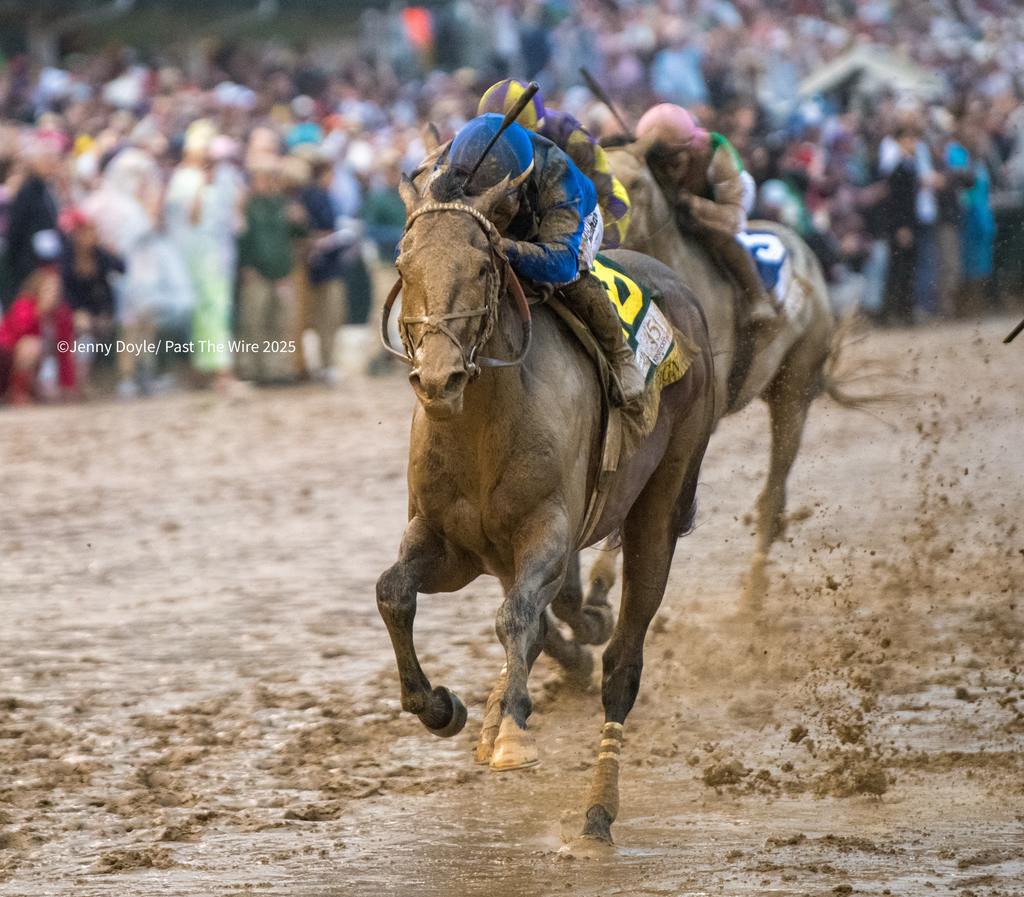
Right now, the Kentucky Derby still rules. It is the “Run for the Roses,” the race that transcends the Daily Racing Form and briefly pulls the casual fan into our world. It calls itself “the most exciting two minutes in sports,” and for many, it still is. But history is littered with “untouchable” institutions that mistook their heritage for a shield.
The Indianapolis 500 once billed itself as “The Greatest Spectacle in Racing.” That wasn’t marketing fluff—it was a reality. In the 1960s and 70s, IndyCar drivers were household names on par with NFL quarterbacks. Today, the race barely registers with the broader sports public, overshadowed by NASCAR and completely dwarfed on the global stage by Formula 1. It didn’t disappear. It just slipped. Slowly. Quietly. Until one day, it no longer moved the needle of the American sporting consciousness.
The Erosion of Trust
So what happened? The same thing that always happens. When a sport loses competitive integrity, clarity, and trust, the fans eventually walk away. Horse racing is flirting with that line right now.
The sport is currently plagued by a “death by a thousand cuts” reality:
- CAWs (Computer Assisted Wagering): High-volume bettors using algorithms to “crush” the pools at the final second, leaving the average fan with decimated odds and the feeling that the game is rigged against them.
- The HISA Paradox: The Horseracing Integrity and Safety Authority was supposed to be the cavalry—the federal intervention to clean up the “wild west.” Instead, it has stumbled out of the gate, mired in litigation and inconsistent enforcement that undermines confidence before it can stabilize.
- Inconsistent Officiating: Steward rulings that feel arbitrary at best and indefensible at worst. When a Derby winner like Medina Spirit is disqualified months after the fact, the “Most Exciting Two Minutes” starts to feel like a legal deposition.
The Extraction Economy
Then there is Churchill Downs—an organization that increasingly feels like it only cares about its two big days, its shareholders, and maximizing revenue at all costs. From a corporate perspective, you can argue that’s rational. From the perspective of a sport that depends on fans and long-term trust, it’s reckless.
We are watching the geographic footprint of the sport shrink in real-time. Look at Arlington Park—once the crown jewel of Illinois racing, now a shuttered lot sacrificed for a stadium deal. Look at the closures of Hollywood Park or Calder. When you close a track, you don’t just lose a building; you lose the next generation of fans.
The message from the top is becoming: show up, pay up, and don’t ask questions. Whether it’s normalized price gouging or the forced use of branded past performances on-track that strip bettors of choice, the focus has shifted from cultivation to extraction.
The Warning
Nobody sitting by a radio listening to Dempsey or Louis ever imagined heavyweight boxing would become what it is today. Nobody watching Ali, Frazier, or Tyson thought the championship would one day lose its central meaning. And yet, here we are.
That’s the danger of believing “it can’t happen here.”
The Kentucky Derby is powerful. The Derby is iconic. The Derby is still king of United States racing. But permanence is an illusion in sports. If integrity erodes, if fans feel exploited instead of valued, and if the experience becomes about extraction rather than passion, then even giants can fall. It doesn’t happen with a single headline. It happens gradually, until one day the cultural grip is gone.
I hope we never hear the words, “Down goes the Derby.” But hope isn’t a strategy. Integrity is.