
The recent retirement of Goal Oriented—a colt who finally realized his potential with a brilliant victory in the Grade 1 Malibu—serves as a stark reminder of the modern era’s mantra. Despite owner Tom Ryan’s initial hopes for a four-year-old campaign, the call of Spendthrift Farm was too loud to ignore. In today’s climate, the question always lingers: did something go amiss, or was he simply worth more as a “sire prospect” than a stable star?
This transition from a “breed-to-race” sport to a “race-to-breed” business wasn’t accidental. It was the result of a seismic shift in economics, chemistry, and law.
The Tax Reform Act of 1986: The Day the “Sport of Kings” Died
In the 1970s and 80s, powerhouse stables like Rokeby, Ogden Phipps, Buckland Farm, and Greentree weren’t looking for a return on investment; they were looking for a trophy. Racing was a “game of egos” funded by old money and supported by favorable tax laws that allowed wealthy owners to offset other income with racing losses.
The Tax Reform Act of 1986 changed everything. By tightening “passive loss” rules, the IRS effectively forced racing to become a self-sustaining business.
- The Result: “Old Money” stables began to evaporate.
- The Shift: Between 1985 and 1990, the average price at the Keeneland July Selected Yearling Sale plummeted as the tax-shelter buyers exited the market.
The Vanishing Workhorse: By the Numbers
The “Glory Days” featured iron horses like Kelso, who was indeed Horse of the Year for a record five consecutive years (1960–1964), making 63 career starts. Today, such longevity is a myth.
| Era | Avg. Starts Per Year | Notable Iron Horse | Career Starts |
| 1960s | 11.3 | Kelso | 63 |
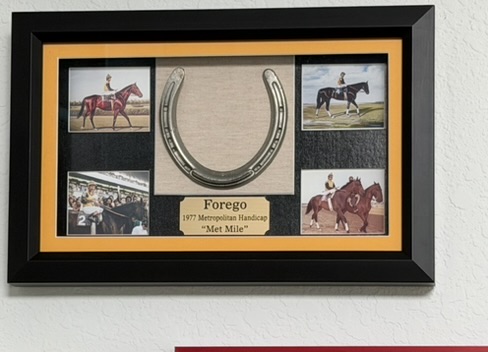
| 1980s | 9.2 | Forego | 57 |
| 2020s | 6.1 | Flightline | 6 |
The decline in starts is inextricably linked to the rise of Lasix (Furosemide). Once reserved for “second-stringers” and chronic bleeders, it became a crutch for the entire industry. Because Lasix causes significant dehydration, horses now require 30 to 60 days between races to recover, whereas the legends of the 70s often ran every two weeks.
Rivalries vs. Marketing
We often reach for the word “rivalry” to sell tickets. We called Journalism and Sovereignty a rivalry, yet Journalism never beat his foe in two tries. Two. Compare that to the true gladiatorial bouts of the past:
- Affirmed vs. Alydar: Met 10 times. Affirmed won 7, Alydar won 3.
- Sunday Silence vs. Easy Goer: Met 4 times in a single year (1989), producing some of the greatest finishes in history.
Today, a horse like Flightline is hailed as the “greatest ever” after only six career starts. While his talent was celestial, the “best ever” title used to require soundness and the willingness to show up season after season.
The Allure of the Breeding Shed
The economics are now lopsided. A Grade 1 win like the Malibu can instantly value a colt at $10 million to $20 million in potential stud fees.
- The Orb Factor: Kentucky Derby winner Orb is a prime example. After his 2013 win, he never found the winner’s circle again. Owners face a harrowing choice: keep racing and risk an injury that voids a multi-million dollar breeding contract, or retire healthy and “cash out.”
- Partnerships: The rise of multi-owner syndicates means decisions are made by committee and focused on the bottom line, rather than the singular pride of a “homebred” stable.
Conclusion
The sport has traded the “Sport of Kings” for the “Business of Breeding.” While the auction rings at Keeneland and Saratoga still hum with activity, the soul of the game—the iron horse who returns year after year to defend his turf—is becoming a relic of a bygone era. Transparency regarding retirements like Goal Oriented remains a pipe dream, because in a business this big, the “why” is almost always written in green.