

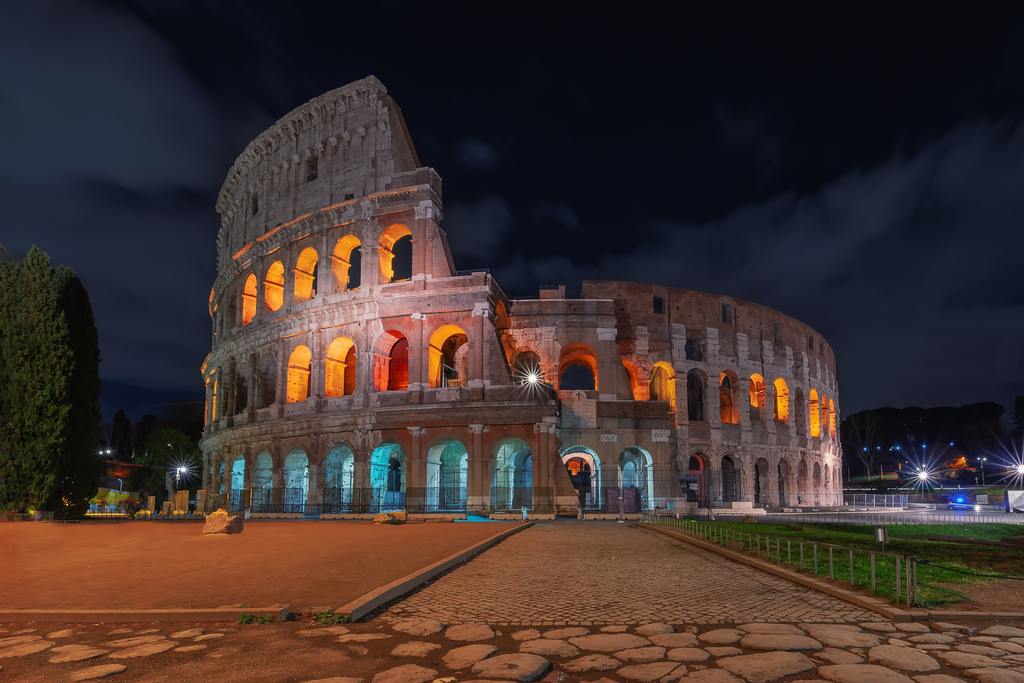
The Jockey Club can’t find time to answer Mike Repole’s attorneys, can’t find time to sit in our chairs — but found time to approve Marcus Aurelius for a horse while denying the same name to a regular owner who asked first.
I have a simple question for The Jockey Club. One question. Not about reserves. Not about governance. Not about the Rule Book reforms we have been documenting in this space for weeks. Just this:
| Isn’t the naming registry computerized? Shouldn’t it be — with the money you are sitting on? |
That is what I posted publicly in response to The Jockey Club’s social media statement about the Marcus Aurelius naming debacle. They responded to the original complaint. They did not respond to me.
Same as they didn’t respond to Mike Repole’s attorneys.
Same as they didn’t respond to our invitation to Past the Wire TV.
One institution. One answer. Every single time. Crickets.
I’ll be transparent about something before I go further. I almost let this one go. I am a student of Roman history — have been for years. One of my dogs is named Augustus Caesar. We call him Gus. And I own a Roman coin that was in actual circulation in Rome during the reign of Augustus Caesar — the same era when, as history records, the Lord Jesus Christ walked through those streets. That coin sits with me as a tangible connection to one of the most consequential moments in human civilization. So when Marcus Aurelius — the philosopher-emperor whose Stoic writings on justice, integrity, and equal accountability have echoed through twenty centuries — ended up at the center of a Jockey Club naming controversy, I could not pass it up. Call it a conflict of interest if you like. I call it having a sense of humor. Maybe a warped one but a sense of humor just the same.
Let me walk you through everything that happened this week, because taken together it is not a series of unrelated events. It is a pattern. And at this point, the pattern is the story.
THE NAME THAT SAID EVERYTHING
Here is The Jockey Club’s official statement regarding the horse named Marcus Aurelius:
| The Jockey Club — Official Statement Regarding the name Marcus Aurelius, the registrar’s office has reviewed the matter. The name was erroneously approved this past January. The owner of the horse in question has accepted a name change. Marcus Aurelius is ineligible for use until January 1, 2027. |
Erroneously approved. In January. And it took public pressure — not an internal audit, not a proactive system flag, not the kind of automated quality control you would expect from an organization managing hundreds of thousands of names while sitting on the financial reserves we have documented in these pages — to surface it.
Now here is what makes this more than a bureaucratic stumble. A horseplayer and racing participant requested the name Marcus Aurelius. It was personal to them. The Jockey Club told them no — too similar to another name already in use. Request denied. Meanwhile, the same name was approved for a horse associated with Bob Baffert’s connections.
I want to be very clear about something here, because clarity matters and Bob Baffert is a dear friend of mine. Bob had nothing to do with this. He did not pull strings. He did not work any angle. If anything, the idea that Bob Baffert has friends inside The Jockey Club who would do him favors is, to put it charitably, not well supported by the available evidence. The institutional relationship between Baffert and The Jockey Club establishment has been frosty at best for years — rooted, in my view, not in any genuine concern about the sport’s integrity, but in the far more mundane reality that Bob kept beating the good old boys at their own game, over and over, on the biggest stages they had. That tends to generate resentment in organizations that prefer to manage outcomes rather than compete in them.
So this was not favoritism toward Baffert. This was something in some ways more troubling than favoritism. This was a system so inconsistent, so lacking in basic automated safeguards, that it managed to deny a name to one owner and approve the same name for another without anyone catching it — for months — until the aggrieved party went public. If the system were rigged, it would at least be intentional. What we appear to have instead is a registry running on the same approximate technological infrastructure as a 1990s filing cabinet, owned by an organization sitting on over $100 million in reserves.
| Industry Reaction “I’m sorry but shit like this is what drives me away from this sport. Absolutely preferential treatment to the ‘elite’. I requested the name Marcus Aurelius, I wear a coin of him around my neck… I was told by the Jockey Club I couldn’t name it even though it was available because it sounded too similar to another name… but guess who was allowed to use it? Rules for me but not for thee. Go fuck yourself @jockeyclub. Bunch of corrupt ass clowns.” |
Rules for me but not for thee. That phrase is going to follow The Jockey Club for a while, because it cuts to exactly what this entire investigative series has been about — not malice necessarily, but the consistent lived experience of people on the outside of the velvet rope versus people on the inside of it. Whether the mechanism is deliberate or structural almost stops mattering when the result is the same every time.
And for what it’s worth, this is not the first time this pattern has been documented at the registry. Years ago, the Paulick Report covered a case where a small owner was denied the name Sally Hemings — ruled potentially offensive — while a Jockey Club member’s horse named Thomas Jefferson was on the track without incident. The names change. The institutional shrug does not.
THE HELPFUL INTERVENTION OF @TINKY47FLAT
Into this conversation stepped someone calling himself Tinky, @Tinky47flat on X, offering what he titled “The Explanation.” His contribution was to suggest that the original owner — identified as Domenic, @Domsavides — might want to consider renaming the horse either “Simple Mistake” or “Can’tBeTooCynical,” helpfully noting that both names are currently available.
I will give Tinky this much: he actually went to The Jockey Club’s own Interactive Registration system and looked both names up. The screenshots confirm it. “Simple Mistake” — no direct matches. “Can’tBeTooCynical” — no direct matches. Available, both of them.
What Tinky appears not to have considered is what he actually demonstrated in the process. He ran both names through the same registry system that failed to catch the Marcus Aurelius conflict in January — and the system worked fine. Both lookups returned accurate results instantly. Which means the technology exists and functions. The question was never whether The Jockey Club’s database can perform a name check. The question is why that check failed to prevent the approval of a name that had already been denied to a different applicant. That is not a database problem. That is a process problem. And process failures at this level, in an organization with these resources, are a governance problem.
As for Tinky himself — I’ll leave his motivations to the reader’s imagination. I have my own thoughts about who tends to show up in these conversations to defend the institutional status quo, and what their relationship to that institution might look like if you followed it far enough. The screenshots speak for themselves.
| He handed us evidence while thinking he was being clever. Can’tBeTooCynical, indeed. |
MY QUESTION THEY DIDN’T ANSWER
When The Jockey Club posted their statement about the naming error, I responded publicly. My question was direct: isn’t this computerized? Shouldn’t it be, with the money they are sitting on?
They did not answer.
That is not a small thing. An organization that will issue a statement responding to public criticism will not respond to a media outlet asking a basic operational accountability question. The same platform they were happy to use when they asked Past the Wire to cover an Equibase story that served their interests. The rules of engagement shift depending on who is asking and what is being asked.
But the question deserves a real answer, so let me provide one based on the reporting we have already done. In our prior coverage of The Jockey Club’s financial structure and technology posture, we documented an organization that has not kept pace with the digital infrastructure demands of a modern registry. The reserves are there. The investment income is there. The fee revenue from every foal registered, every name approved, every transfer processed is there. The will to modernize in ways that would create genuine accountability — automated conflict checking, real-time cross-referencing of prior denials against new approvals, ownership disclosure integration — has not been in evidence.
A basic computerized safeguard would have flagged the Baffert connection’s application the moment it was submitted. It would have surfaced the prior denial of the same name, kicked it to human review, and prevented the error that ultimately required a public statement and a forced name change months later. That is not bleeding-edge technology. That is elementary database logic that any competently managed registry would have implemented years ago. And yet here we are.
How many other quiet inconsistencies are sitting in the system right now? How many regular owners were told no while someone else was told yes, and nobody went public because they didn’t think anyone would care or didn’t know they could?
| The reserves are there. The technology is not. That is not a coincidence. That is a choice. |
MEANWHILE: REPOLE’S ATTORNEYS GOT CRICKETS TOO
The Marcus Aurelius story did not happen in a vacuum. It broke during the same week that Mike Repole went public with something that deserves far more attention than it has received in the mainstream racing press.
| @RepoleStable After Pat Cummings and I watched Everett Dobson talk about ‘unity’ and ‘collaboration’ at the HBPA Conference, I said to Pat… you know what, let’s give this one last real shot. So we did. I had my attorneys send a letter to the Jockey Club attorneys. Not complicated. Sit down. One room. One full day. Let’s put everything on the table and actually fix this sport. We gave them 48 hours to respond. It’s now been over a week. Crickets. No response. No respect. No interest. Sadly, it’s exactly what I expected. |
Read that carefully. A formal letter from attorneys. A specific, documented proposal. Named participants: all the Jockey Club Stewards, Jim Gagliano, Pat Cummings, Aron Wellman, track operators, trainers, aftercare representatives, breeders. One full day. No preconditions. A genuine offer to sit in a room together and work on the problems that are actively draining this sport.
Forty-eight hours to respond. One week of silence.
Repole framed it exactly right: if Everett Dobson’s talk about unity and collaboration at the HBPA Conference meant anything at all, this was an automatic yes. It was not a yes. It was nothing. The same nothing our Past the Wire TV invitation received. The same nothing that greeted every industry voice we spoke to on our Empty Chairs episode, all of whom said — to a person — that this kind of open unscripted conversation would be good for the sport.
The Jockey Club’s website says they are dedicated to the improvement of Thoroughbred racing. Everett Dobson stood at a podium and talked about unity. And when a prominent owner with three-plus years of documented good faith efforts put attorneys’ names on a formal letter and asked for one room and one day — the response was a week of silence.
Repole’s conclusion is hard to argue with. They don’t want unity. They want control. They want silence. They want the same broken system that has been hollowing this sport out for decades.
He also said this: if there is any real media left in this sport that actually gives a damn, ask The Jockey Club why they are afraid to sit in a room and answer real questions from real people.
We asked them. Weeks ago. On camera. With empty chairs waiting.
They are still empty.
THE PATTERN IS THE STORY
I want to be precise about what I am documenting here, because precision is what separates journalism from noise.
I am not alleging that The Jockey Club approved Marcus Aurelius as a deliberate act of favoritism toward anyone. Their statement says it was an error. I have no evidence to contradict that specific claim. The owner accepted a name change. In the narrow technical sense, it was resolved.
What I am documenting is the system that made the error possible and invisible for months. An organization with the financial resources we have examined in detail — the reserves, the fee income, the investment returns all visible in their public filings — does not have the automated safeguards to prevent a name from being approved for one owner that was explicitly denied to another. That is a technology failure. Technology failures at this scale, in this organization, are a governance failure.
What I am also documenting is the response. When a journalist asks a basic operational question publicly, you answer it. When an owner with legal representation sends a formal proposal and gives you 48 hours, you respond. When two independent voices ask you to sit down and talk about the sport you claim to serve, you sit down. Unless your actual position is that accountability is something that happens to other people.
That has been the consistent position throughout this series. It was the position when they declined our invitation. It is their position now, one week after Repole’s attorneys put it in writing. And it was, in a small but telling way, the position embedded in a naming registry that caught an error only after a frustrated owner went public on social media.
The Breeders’ Cup, for their part, did not show up either. Westlake Stables has been asking pointed public questions about reserves and aftercare. Mike Repole has been asking for three years. Past the Wire has been asking in print and on camera. The answer is always the same.
WHAT MARCUS AURELIUS ACTUALLY SAID
As I mentioned, I am something of a student of Roman history. My dog Augustus Caesar — Gus — is named for the emperor who ruled Rome at one of the most pivotal moments in human history. I own a coin that was in actual circulation during his reign, a coin that passed through Roman hands in the same era, in the same city, where the arc of Western civilization bent. Holding that coin is not an abstraction. It is a physical connection to something real.
So when Marcus Aurelius — Augustus’s philosophical heir across nearly two centuries of Roman history, the last of the Five Good Emperors, and the author of the Meditations — ended up at the center of a Jockey Club naming controversy, I could not pretend I didn’t notice the poetry in it.
Aurelius wrote that the object of life is not to be on the side of the majority, but to escape finding oneself in the ranks of the insane. He wrote about the obligation of those in power to act for the common good rather than personal preservation. He wrote — and this one applies here with uncomfortable precision — that if it is not right, do not do it; if it is not true, do not say it.
The Jockey Club’s website says they exist for the improvement of Thoroughbred racing. By the standard of their own stated mission, declining to respond to a formal legal proposal, failing to answer a public accountability question, and running a naming registry that generates documented inconsistencies in who gets approved and who gets denied — none of that is right. And claiming dedication to a sport’s improvement while refusing to engage with its most pressing questions is not true.
The name Marcus Aurelius will be ineligible for use until January 1, 2027. I suspect the questions his name inadvertently raised will still be very much eligible long after that.
Because we are not going anywhere. The invitation still stands. The questions are documented. The pattern is on the record.
And the chairs are still empty.
My name is…….and I will have my vengeance: