

A Late Odds and Price Drop Theory
This is not the first time I have written and talked about Charting.
Horseplayers love to romanticize the old days, but not everything from that era was nostalgia. Some of it was an edge—earned, sharpened, and guarded like a secret. “Charting” was one of those edges. The “Sheets” were as well. There were others and while the game has always been hard, and not for the faint of heart, it is harder than ever today for the retail or “average” player.
Long before simulcasting, long before ADWs, long before CAW groups wired themselves into the bloodstream of the tote, there were the chart men. Charters we called them. And they were real players—quiet, disciplined, and usually profitable.
The very premise behind Charting was following the money which was often revealed by significant odds drops, specifically in the exacta and double pools.
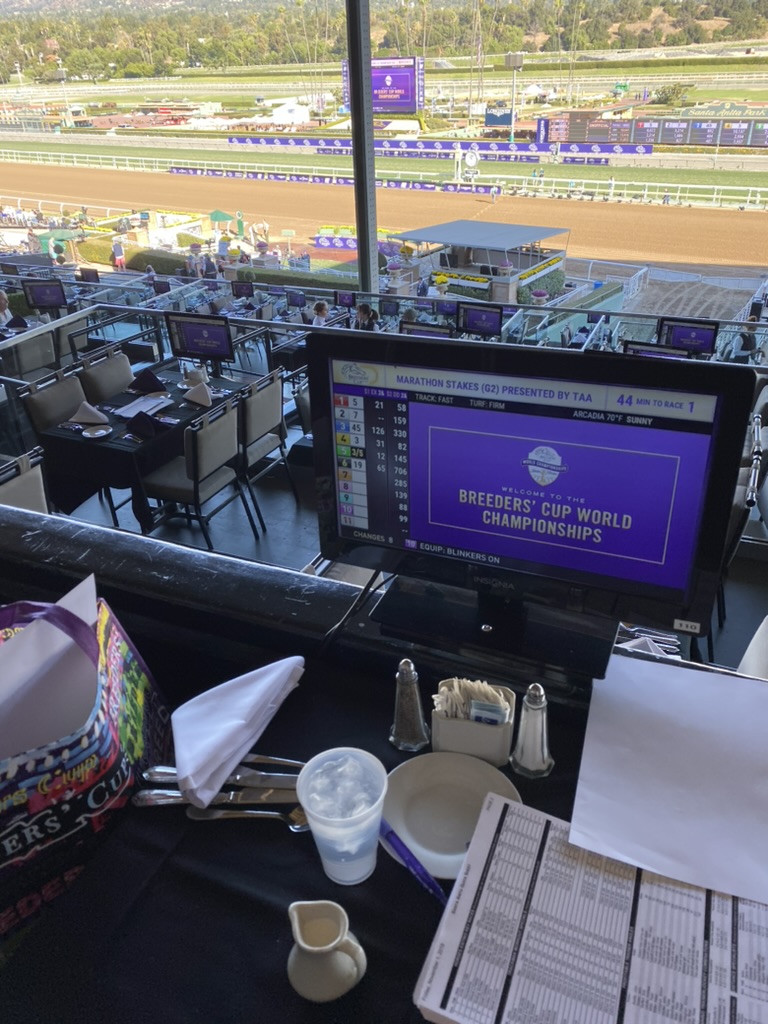
When the TVs Told You the Truth
Back then, racetracks had two types of televisions:
- Most TVs showed the live NYRA or track feed.
- A select few flashed rolling changes to the exotic pools—daily doubles, and exactas, before they were mainstream.
And under those TVs stood a dozen or so regulars, pads and pencils in hand, charting every flash. Every tick. Every anomaly. They weren’t reading tea leaves; they were reading the money.
They tracked where exotic pools diverged from straight-win odds. If a 10-1 shot was paired with a 3-1 favorite in an exacta at a surprisingly low payout, the chart men noticed. If a horse’s double probables collapsed despite flat win odds, they noticed that too. These were tells—money moving where only certain people bothered to move it. Even less saw it.
It was the hunt for what they believed was the “smart money.” An annoyance to everyone else, but a living for them.
As I recall, 8–12 chart men worked the NYRA circuit daily, and a good handful made enough to call it income. In that ecosystem, the retail bettor at least had visual access to the exotic flashes—something you simply cannot get today without hitting refresh like a lab mouse in an Ivy League behavioral study. There was also no simulcasting distractions.
Today: A Forgotten Art
Tracks stopped showing those exotic flashes years ago. You don’t see rolling exacta or double changes on monitors anymore, and unless you use AmWager or manually refresh your ADW every 30 seconds, you’re blind. Today they show other racetrack feeds.
Not a lost art.
A forgotten art—one nobody can practice anymore using the same tools.
And ironically, it disappeared right around the time something else arrived: Simulcasting. Simulcasting changed a lot in the game. Much good, some not so good.
Did CAWs Pick Up Where the Chart Men Left Off?
Now I’ll be clear: I’m not alleging anything illegal. I’m not saying CAWs are past posting. I’m simply saying that it would be naïve to think the most technologically advanced wagering groups in racing don’t, at minimum, replicate what the chart men did—except with computing power, real-time pool access, and last-second batch betting that makes a pencil and pad look like a butter knife at a gun show.
Here’s what we do know:
1. Let’s say CAW groups wager realistically 33–40% of total North American handle.
That’s not speculation; it’s factual, published in industry presentations.
2. They operate with direct tote access, allowing them to:
- Track pool movements in milliseconds
- Watch will-pays change as bets are merged
- Model inefficiencies across dozens of pools at once
- Strike in the final seconds when no retail bettor can react
That, at its core, is charting—except done by machine instead of muscle memory.
3. They specialize in exotic pools where inefficiencies are greater.
The same pools the chart men lived in.
So the theory is simple:
Charting didn’t die. It got outsourced to algorithms.
The Fix Six: The Blueprint That Still Haunts Racing
You don’t need a conspiracy to see how powerful tote visibility can be. Just remember the Breeders’ Cup Fix Six scandal. A CliffsNotes recap:
- A pick six ticket was constructed after four races had already been run.
- It singled the first four winners.
- Then it went ALL–ALL in the final two legs.
- And nobody noticed until Volponi blew up the Classic at 43-1.
That wasn’t charting; that was criminal manipulation. But what it proved is this:
When someone can see more than the public, they can bet smarter than the public.
The Fix Six conspirators didn’t need to know the future.
They needed to know the past results and the tote structure.
And they nearly got away with it.
Volponi was the only horse standing between them and a perfect crime.
Food for Thought: Could CAWs Be the Modern Fix Six—Legally?
Again, not alleging wrongdoing. But here’s a thought experiment:
- Suppose a CAW model detects an inefficiency in the late exacta pool.
- Suppose it also identifies underlays/overlays relative to the win pool.
- Suppose its tote access allows perfect tracking of every penny coming in.
- Suppose it fires $250,000 in the final five seconds.
Is that “smart money”? Is that charting? Is that something the old-school guys with the yellow pads would have killed for? Or is it something more? It certainly explains the repeated phenomenon retail players complain about: A horse at 5-1 turns into 5-2 at the half-mile pole. Doubles and exactas collapse late. Pick five will-pays melt right before loading. Is that CAWs? Is it inefficient markets? Is it just the modern game?
The truth is probably a little of each.
But it is absolutely worth pointing out that the one group with the ability to follow every flash—every pool movement, every late shift—is the same group holding 30–40% of the handle. And the retail player? They get whatever their ADW app loads after buffering.
A Forgotten Skill in an Unfair Fight
Charting wasn’t a perfect science, but it allowed the public to see the money. Today, the public sees only the final number—after the CAW hammer hits. We removed transparency at the precise moment the sport introduced players who thrive on invisibility. That’s not a coincidence. It’s a case study.
The Takeaway
- Charting was an art that rewarded observation.
- Today’s players no longer have the tools to practice it as readily available as it was.
- CAWs do have those tools—and far better ones.
- Tote-based exploitability didn’t disappear; it evolved.
- Racing’s integrity depends not on nostalgia, but on transparency.
The old chart men knew one thing:
Money talks, but only if you can hear it. Today, only a very select few can. And that, at minimum, deserves conversation. If you combine CAW’s methodology, the normal sharks and sharpies in the water, the voluminous amount of information out there if you are willing to look and at times pay for it, the odds drops the game faces make a lot more sense. That doesn’t mean we like it or it helps, but you can understand it. Follow the money.