
Maybe It’s The Water
The California racing circuit, despite its challenges with field size, has become an unexpected proving ground and career revitalizer for a new wave of talented jockeys. In recent years, riders like Hector Berrios and Emisael Jaramillo have not only found new footing but have noticeably elevated their performance, a trend now seemingly extending to newly arrived Florent Geroux. Even seasoned veteran John Velazquez previously sought the Golden State’s embrace to reignite his career.
Hector Berrios’s transformation in California has been particularly striking. After relocating, Berrios’s riding seemed to take on a new dimension. He became a Breeders’ Cup winner, a testament to his improved form, especially on turf courses where his precision and timing appeared sharper than ever. Similarly, Emisael Jaramillo’s move west was met with immediate success, as he quickly established himself among the competitive jockey colony, demonstrating a newfound consistency and knack for finding the winner’s circle. He was primarily known as a speed rider in Florida but in California appears much more well rounded.
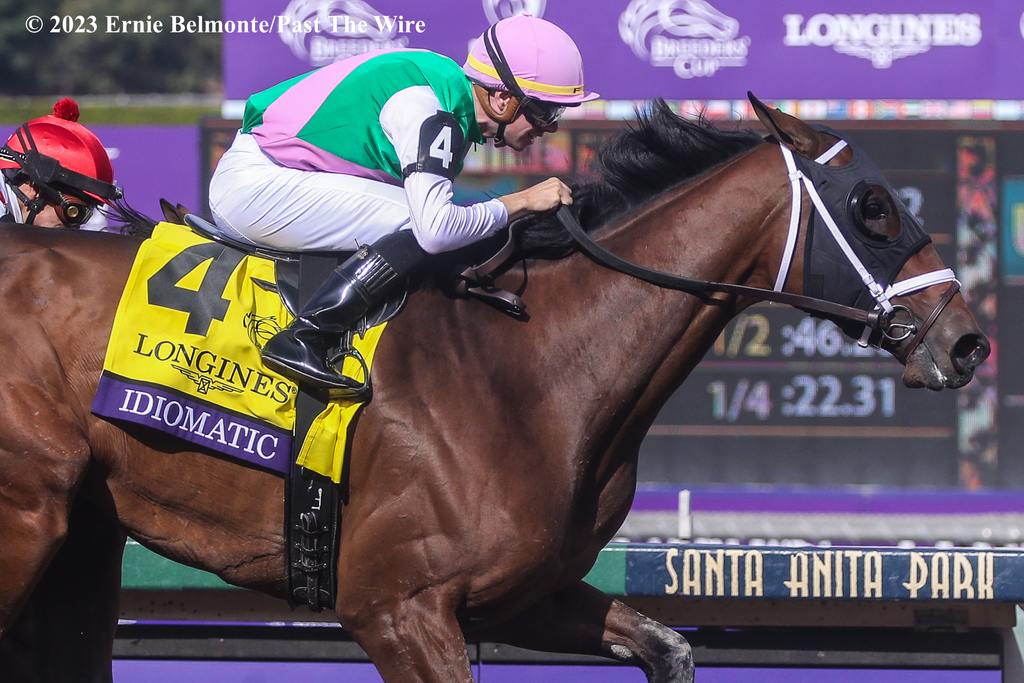
Now, Florent Geroux, a top-level rider and already a Breeders’ Cup winner with horses like Gun Runner, Idiomatic, and Monomoy Girl on his esteemed resume, has followed suit. After a period where his business on the East Coast, particularly with key client Brad Cox, began to slow, Geroux made the decisive move to California. His impact was immediate and significant, securing a victory in the Robert Lewis Stakes aboard Bob Baffert’s Plutarch, instantly establishing a Kentucky Derby contender. This early success mirrors the immediate positive shifts experienced by Berrios and Jaramillo.
The reasons behind this “California Effect” are open to speculation. Could it be the smaller field sizes, paradoxically allowing riders more focus and fewer traffic issues, thus refining their decision-making and race strategy? Or perhaps the stringent safety protocols and different track dynamics demand a heightened level of horsemanship, inadvertently sharpening a jockey’s skills. The less congested racing calendar might also allow for more concentrated preparation and a better work-life balance, contributing to improved mental and physical performance.
This phenomenon isn’t entirely unprecedented. When John Velazquez’s East Coast business experienced a lull, he too ventured west for a period. This move proved instrumental in his career resurgence, highlighted by his strong first-place finish in the Kentucky Derby aboard Medina Spirit, which firmly re-established him as a “go-to” rider. Unfortunately that win was taken away but the impact it had on his career remains intact.
Whatever the underlying causes, California is proving to be a fertile ground for jockeys seeking to recalibrate and elevate their careers. It’s a fascinating trend that suggests the Golden State, despite its unique challenges, offers something in the water that brings out the best in these elite athletes, making California racing an even more compelling watch for enthusiasts.
Just Go Win: