

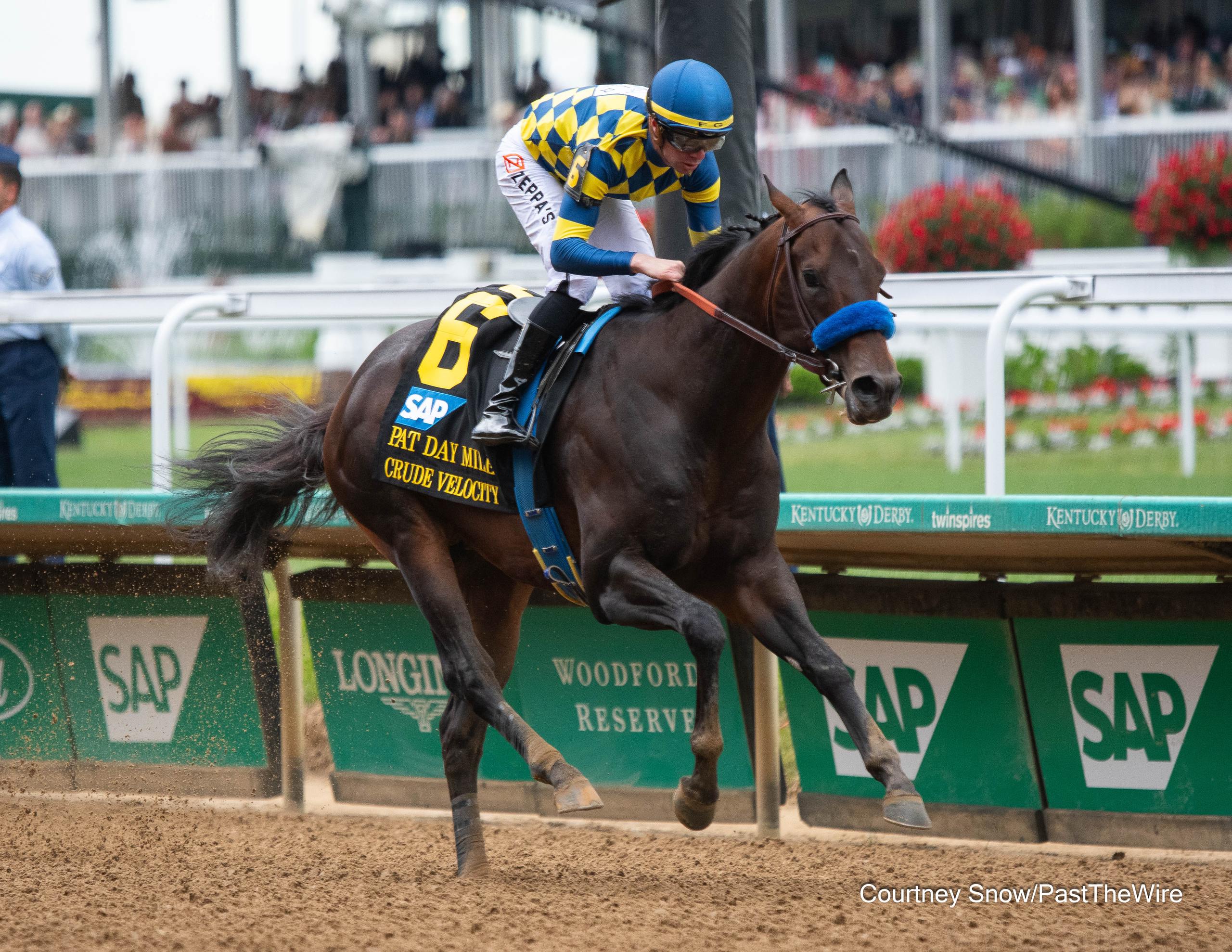

A jockey crosses the wire after a mile and a quarter looking composed enough to hop off and give a calm television interview seconds later. Anyone watching from the grandstand could be forgiven for assuming the horse did all the work while the rider simply held on for the ride. What is actually happening inside that rider’s body during those two minutes tells a very different story, one closer to running a mile at a dead sprint than simply sitting on top of an animal doing the heavy lifting.
The riding position itself is deceptively brutal. A jockey holds what researchers describe as a quasi-isometric squat for the length of an entire race, crouched low with knees and hips flexed to align his center of gravity with the horse’s center of mass, absorbing constant, jarring movement through the legs and core the entire time rather than sitting passively in a saddle.
This position demands sustained isometric strength through the legs, hips, and core simultaneously with an intense cardiovascular effort, a combination that few other sports ask of an athlete at the same time. Most sports separate strength demands from cardiovascular demands to some degree. Racing asks for both, maximally, at once.
Balance adds yet another layer to this already demanding combination. A jockey is not simply holding a static position, but constantly adjusting to an animal moving at speeds exceeding 35 miles per hour, absorbing unpredictable shifts in momentum through the same muscles already working near their isometric limit.
Falls and injuries in the sport bear out just how much precision this balance demand requires, since a rider’s margin for error shrinks considerably once fatigue starts affecting the fine motor control needed to stay in sync with an animal moving that fast. Research tracking jockey injuries over multi-year periods has documented meaningful fall and injury rates that reflect just how physically precarious this balance requirement actually is across a full career spent absorbing this level of repeated physical strain.
Nutrition support becomes a real factor for jockeys managing this dual demand, particularly given the well documented pressure many riders face around body composition. A shake built around clean whey protein gives a rider’s body access to amino acids for muscle repair and maintenance without the volume of a full meal, a practical option for an athlete whose profession places unusual weight considerations on daily nutrition choices. Riders increasingly build this kind of supplementation into a daily routine specifically because it delivers protein density without the bulk that a comparable whole food serving requires.
The cardiovascular data behind race riding is genuinely striking once measured directly. A study published in the Journal of Strength and Conditioning Research monitored heart rate and respiratory rate in jockeys during actual competitive races and found peak heart rates reaching 189 beats per minute, roughly 103 percent of each rider’s previously measured peak heart rate, alongside peak respiratory rates of 50 breaths per minute. The researchers concluded that jockeys perform close to their absolute physiological limit during a race, a finding that places race riding cardiovascularly in the same territory as other elite endurance efforts rather than anything resembling a passive activity.
That finding becomes even more remarkable considering a typical race lasts only one to two minutes, meaning jockeys are reaching near-maximal cardiovascular output almost immediately rather than building toward it gradually the way a distance runner might over a longer effort.
Oxygen uptake measurements from related research place jockeys in a range comparable to other endurance-trained athletes performing near their physiological ceiling, a finding that would surprise most casual racing fans who have never considered the aerobic demand hidden inside a sport built around watching an animal run.
This aerobic demand compounds with the postural and isometric strength requirements in a way that makes race riding difficult to compare cleanly to any single other sport. It borrows the cardiovascular intensity of sprint cycling, the isometric leg and core demand of alpine skiing, and the balance requirements of gymnastics, all layered on top of each other for the length of an entire race.
Few casual fans watching from the grandstand or on television would list horse racing among the most physically demanding sports on a first guess, since the athleticism required lives almost entirely inside the rider’s body rather than in any visible display of power or speed the way a sprinter or a boxer might demonstrate to an audience watching from a distance.
Race day itself compounds these demands considerably, since a jockey often rides multiple races across a single afternoon, each one independently pushing his body to this near-maximal level with only a short recovery window in between. Research examining full race days has found meaningfully different physiological demands between the lower-intensity preparation work jockeys do between races and the near-maximal effort of the races themselves, highlighting recovery between mounts as a genuinely distinct challenge from the riding itself.
Off-horse conditioning has become a more serious focus for jockeys’ rooms in recent years as this research has accumulated, with several studies specifically calling for dedicated, jockey-specific strength and conditioning programs rather than assuming riding itself provides sufficient training stimulus. This mirrors a broader shift seen across many sports where athletes once relied purely on competition to maintain fitness before dedicated off-season conditioning became standard.
Recovery matters considerably for jockeys given how many mounts a top rider takes across a single week, each one independently demanding this near-maximal cardiovascular and isometric effort. A pressurized environment increases the amount of oxygen dissolved in blood plasma, allowing it to reach fatigued or strained tissue more readily than normal air at sea-level pressure, which is the specific reason a portable hyperbaric chamber has become part of some riders’ personal recovery routines between race days, distinct from what stretching or a massage actually does for the body. None of this replaces proper conditioning and rest, but it gives a jockey’s body extra support absorbing a schedule that can include several near-maximal efforts in a single afternoon.
None of this is meant to suggest the horse’s talent and conditioning do not matter, since obviously they matter enormously to the outcome of any given race. It simply means the rider guiding that horse around the track is doing considerably more physical work than a casual glance from the grandstand ever reveals, performing at the edge of his own physiological limit every single time the starting gate opens.
The next time a rider dismounts looking calm enough to give a composed post-race interview within a minute of crossing the wire, it is worth remembering what his heart rate and respiratory rate almost certainly looked like sixty seconds earlier. Few sports ask an athlete to hide that level of physiological strain quite as effectively as horse racing does.
That composure itself, arguably, is its own athletic skill worth acknowledging on top of everything else already documented in the research on jockey physiology. Recovering visible composure within moments of an effort that pushed heart rate to essentially its absolute ceiling says something about a rider’s conditioning that a stopwatch or a finishing photo will never fully capture.