

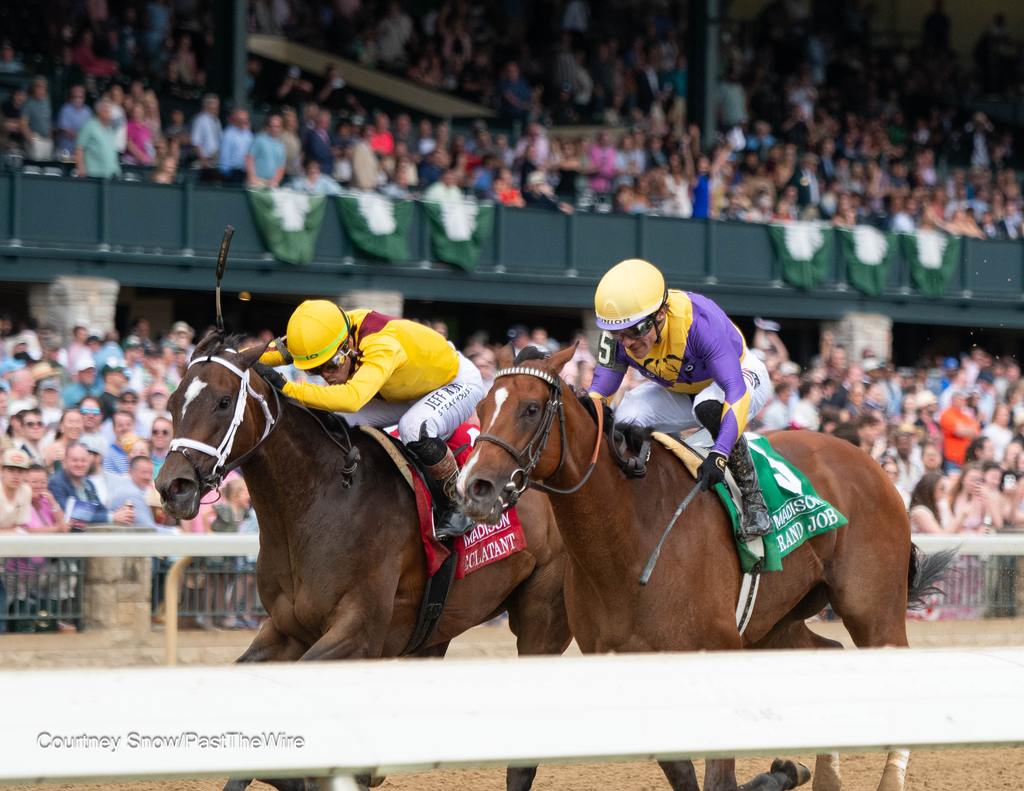
Our open and transparent questions for the HISA Town Hall submitted in advance
On April 21, the Horseracing Integrity and Safety Authority will host a virtual Town Hall — moderated by trainer Ron Moquett and bloodstock agent David Ingordo — featuring HISA CEO Lisa Lazarus, CFO Jim Gates, and outside legal counsel John Roach. The stated agenda includes HISA’s financial processes, its 2025 Annual Metrics Report, and the upcoming Lasix vote.
We want to say something we don’t say often enough about an institution we’ve covered with critical scrutiny: this is a step in the right direction.
Transparency isn’t theater when it’s real. An open forum where leadership sits before the industry and takes questions on the record is exactly what we’ve been calling for. Lisa Lazarus has engaged publicly before — including responding directly on X to our reporting on the Paco Lopez enforcement situation. That kind of accountability, however imperfect, matters.
But transparency only has meaning if the questions asked are the questions that need answering. And after years of document-grounded reporting on HISA’s governance, finances, and enforcement record, Past The Wire has questions.
We are submitting them here, in advance and in public, as we were invited to do.
On HISA’s Financial Relationships With the Entities It Governs
The questions below are not rhetorical. They are grounded in publicly available Form 990 filings, published statements by HISA leadership — including CEO Lisa Lazarus’s May 2023 acknowledgment that the Jockey Club, the Breeders’ Cup, and the NTRA provided loans to HISA, described at the time as “pretty much no interest” — and comments from industry figures including owner Mike Repole, who publicly questioned how private funding from regulated parties to their own regulator is legally and ethically sustainable.
For the record, we are asking:
1. How much did the Breeders’ Cup lend to HISA, and what is the current status of that loan? Is it outstanding, forgiven, or repaid? If repaid, when and in full? Is there an interest rate, and has any interest been paid? Is there a formal repayment schedule, and if so, what are its terms?
2. Do you believe that a regulated entity — one that operates a two-day racing meet that HISA governs — lending money to HISA creates a conflict of interest, or the reasonable perception of one? Are there governing documents, conflict-of-interest policies, or disclosure requirements that address financial relationships between HISA and entities over which it has regulatory authority?
3. How much did the Jockey Club lend to HISA, and what is the current status of that loan? Is it outstanding, forgiven, or repaid? If repaid, when and in full? Is there an interest rate? Is there a formal repayment schedule?
4. Jockey Club appointed stewards officiate at HISA-governed racetracks. Jockey Club members breed and race horses at HISA-governed meets. Do you believe a financial lending relationship with the Jockey Club creates a conflict of interest in HISA’s regulatory and enforcement functions? What formal mechanisms exist to manage or disclose such potential conflicts?
5. The 2025 fee enforcement action against Churchill Downs Incorporated — which resulted in a Board Panel ruling and a threatened signal halt — concluded with a settlement whose terms have not been made public. What were the material terms of that settlement, and why were they sealed? The industry deserves to know whether CDI received treatment different from smaller operators who had no comparable leverage.
On HISA’s Enforcement Record and Regulatory Priorities
6. Under HISA’s jurisdiction, there have been no enforcement actions comparable in scope to the pre-HISA federal prosecutions of trainers Jason Servis and Jorge Navarro — both convicted of operating sophisticated performance-enhancing drug networks involving SGF-1000 and other illegal substances. Does HISA contend that the use of prohibited PEDs at that level has been eradicated from American Thoroughbred racing? Or is HISA’s enforcement framework primarily focused on overages in legal therapeutic medications rather than detection of true performance-enhancing drugs? What is HISA’s position on where the current PED threat actually exists in the sport?
7. HISA has levied penalties for similar violations that have resulted in materially different outcomes for the licensees involved. Those disparities affect livelihoods. How do you justify inconsistent treatment of similar offenses? What is the projected timeline for a final, permanent, and uniformly applied set of standardized rules that apply equally to all offenders?
8. Jockey Paco Lopez served a HISA-issued suspension by riding at Fair Grounds in Louisiana — a jurisdiction that was in active litigation against HISA mandates — accumulating over 100 additional whipping violations during the period he was supposed to be suspended. HISA CEO Lisa Lazarus stated publicly on X that because of the Louisiana court case, those rides and violations could not be counted against Lopez. We understand the legal complexity. What we do not understand is why HISA did not require Lopez to serve the remaining balance of his suspension upon his return to HISA-covered tracks. Was that option available to HISA? If so, why was it not exercised? The practical result was that a suspension issued by HISA was never served.
9. PTW published documented reporting — and video evidence existed widely viewed and shared on social media— of two prominent jockeys who regularly ride at HISA-governed tracks engaging in cockfighting. Cockfighting is a federal felony under the Animal Welfare Act, illegal in all 50 states, illegal in Puerto Rico, and constitutes both animal cruelty, torture, and illegal gambling. We sent questions to HISA seeking comment. We received no response. Was an investigation conducted? If so, what were its findings? If not, why not? What is HISA’s position on licensed participants engaging in conduct that is a federal crime?
On the Lasix Vote
10. The scheduled Lasix vote is listed in the Town Hall agenda. We ask that HISA leadership engage with the peer-reviewed veterinary science on this question rather than industry preference. The published literature on furosemide includes documented studies on its effects on exercise-induced pulmonary hemorrhage and on potential masking properties. We ask: what specific scientific evidence is driving HISA’s current position, and how is that position being reconciled with the documented international consensus that racing without race-day Lasix is achievable and preferable for the long-term integrity of the sport? We provide the following article on lasix science from inside and outside the industry for consideration. THE LASIX QUESTION: WHAT THE SCIENCE ACTUALLY SAYS
Two Additional Questions the Industry Is Watching
11. Jim Gates, HISA’s CFO, spent 14 years at Churchill Downs Incorporated — including seven years as General Manager of Churchill Downs Racetrack and three years as Vice President of Development overseeing mergers and acquisitions. CDI was the only major racetrack company that paid HISA nothing in 2025 and was subsequently the subject of a fee enforcement action with sealed settlement terms. We are not asserting impropriety. We are asking: what disclosures, recusals, or conflict-of-interest protocols governed Mr. Gates’s role in any HISA deliberations or proceedings involving CDI? Why was the settlement sealed?
A Final Word
Past The Wire will be attending this Town Hall.
We do not come to this with hostility toward HISA’s existence. We have said consistently that federal oversight of medication and safety standards was necessary. What we have questioned — through document review, public records, and reporting — is whether the institution being built to deliver that oversight is structurally independent enough to deliver it.
These questions are the record of that inquiry. We are asking them publicly and in advance because we believe the industry deserves to hear the answers, not just the questions.
We look forward to April 21.
Thank you.
Related coverage: The Ethics Gap: Paco Lopez, Cockfighting and the Selective Outrage of Horse Racing | Two Sports. Two Standards. One Question. | The Two Ledgers | The Corner You Built
HISA Town Hall Announcement and Invitation:
2026 Annual HISA Town Hall
Date & Time
Apr 21, 2026 01:00 PM in Eastern Time (US and Canada)
Description
You’re invited to HISA’s upcoming virtual Town Hall on Tuesday, April 21 at 1:00 p.m. EDT, where HISA leadership will host a transparent conversation on our financial processes, add context to our 2025 Annual Metrics Report and answer your questions about all things HISA.
Moderated by multiple graded stakes winning Trainer Ron Moquett and founder of Ingordo Bloodstock, LLC David Ingordo, the two-hour, virtual session will feature HISA leadership having an open conversation regarding HISA’s ongoing mission and answering your questions directly. What we’ll cover – How HISA builds and manages its budget – Where funds are allocated and spent – How those funds help drive progress toward our safety and integrity goals – The upcoming Lasix vote Speakers – Lisa Lazarus: HISA Chief Executive Officer – Jim Gates, CPA: HISA Chief Financial Officer – John Roach: Outside Legal Counsel to HISA
The presentation will be followed by a live question-and-answer session, where we will respond to every question submitted. Ahead of the webinar, participants are encouraged to review “Understanding HISA’s Budget,” a two-page factsheet available on the HISA website that addresses frequently asked questions regarding HISA’s finances and expenditures.
The town hall continues HISA’s ongoing commitment to transparency and open engagement regarding its rules, operations and governance. Recordings of prior town halls are available on the HISA website. Written questions may be submitted both in advance of and during the town hall.
A replay of the event will be made available on the HISA website for those unable to attend live. HISA welcomes participation from all interested members of the Thoroughbred racing community.
© 2026 Past The Wire. All Rights Reserved.